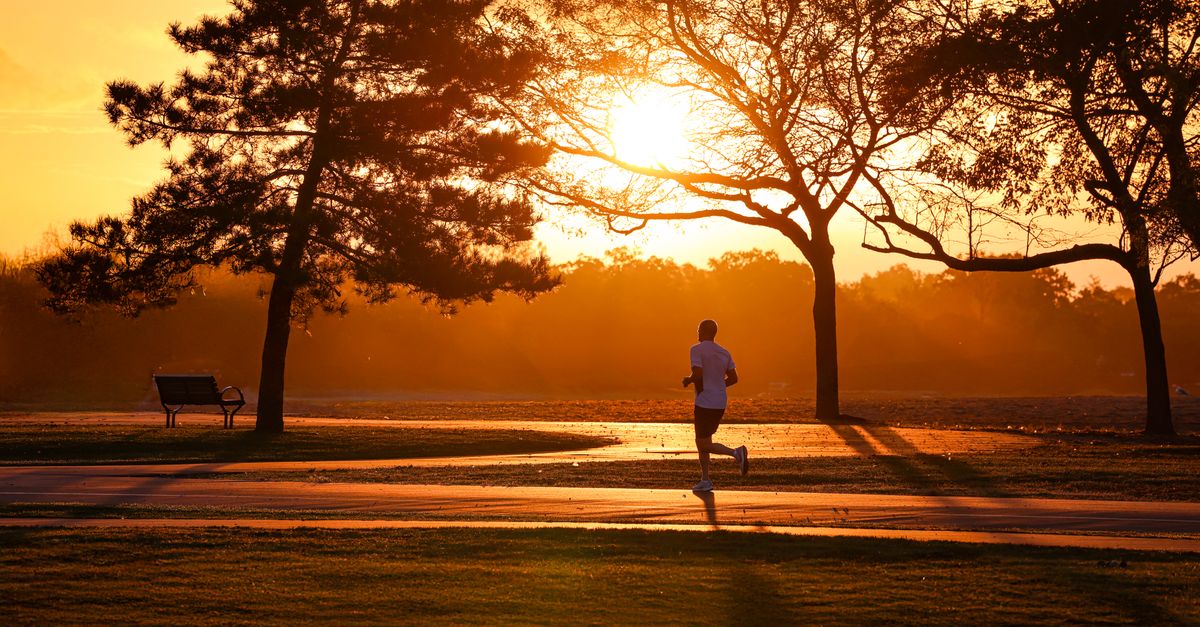
Neither wins by much. Strength and power sit slightly higher in the late afternoon, training before breakfast shifts more of the fuel mix towards fat during the session itself, and evening exercise does not wreck sleep for most people. All of those gaps are smaller than the gap between training four times a week and training twice.
The morning versus night argument has been running long enough that both camps now have merchandise. The useful part is that this is a measurable question and it has actually been measured. Body temperature, insulin, muscle contraction and sleep architecture all move across the day, and researchers have watched what happens when exercise lands at different points on that curve. The differences are real. They are also far smaller than anyone selling a 5am routine would like you to believe.
☀️ Does training before breakfast burn more fat?
During the session, yes. After an overnight fast your insulin is low and your body is more willing to pull fuel out of fat stores, so a workout before food genuinely tips the fuel mix in that direction.
In a trial published in The Journal of Clinical Endocrinology and Metabolism, men with overweight or obesity did six weeks of moderate cycling either before or after taking in carbohydrate. Training before eating increased the use of fat stored inside the muscle fibres themselves. By the end of the six weeks, the train first group showed lower insulin after meals and improved oral glucose insulin sensitivity. The group who ate first did not.
Now the part that never makes it into the reel. Blood sugar responses after a meal were no different between the two groups, and this was a small trial of cycling in men, so it is a promising signal about insulin handling rather than a rule for everybody. Fat burned during an hour of exercise is also not the same thing as fat lost over a month. Your body keeps its fuel accounts over the full 24 hours and quietly settles up later, which is why fasted cardio has never reliably beaten fed cardio on the scale.
- 💧 If you train early, a glass of water before you start does more for how the session feels than most pre workout powders.
- 🥗 Stiff joints in the morning are not imagination. Core temperature is at its lowest overnight, so an early session needs a longer, more deliberate warm up than the same session at six in the evening.
- 🍳 Fasted training suits some people and makes others feel terrible. Both are normal responses, and neither one is a character flaw.
💪 Are you actually stronger in the evening?
A little, and less than the fitness internet claims. Core temperature climbs through the day, warm muscle contracts more efficiently, and most people feel loosest somewhere between mid afternoon and early evening.
A 2024 meta analysis in Frontiers in Sports and Active Living pooled morning against late afternoon testing in professional and semi professional team sport athletes. Countermovement jump was higher in the afternoon, by a mean difference of 1.44 centimetres, and agility was better as well. Isometric strength and squat jump showed no significant difference at all.
So the evening edge is not imaginary. It is also about a centimetre and a half on a jump test in trained athletes, measured on a day when they were fresh. If you are training to feel better and hold on to muscle rather than to shave hundredths off a sprint, that margin will never be the thing standing between you and your goal.
🌙 Does exercising at night ruin your sleep?
For most people, no. The advice to keep exercise away from the evening has been repeated for decades, and the controlled evidence does not really support it.
A systematic review and meta analysis in Sports Medicine screened 11,717 references and pooled 23 controlled studies that compared a single evening exercise session against a no exercise control in healthy adults. Evening exercise did not lengthen the time taken to fall asleep and did not reduce sleep efficiency. Slow wave sleep, the deep restorative stage, rose by 1.3 percentage points, and light stage 1 sleep fell.
Two caveats belong here and they are written straight. The same review found that a higher body temperature at bedtime, and a session much harder than a person was used to, were both linked to poorer sleep, although those links disappeared when one study was removed from the analysis. Treat them as a hint, not a finding. And a review of healthy adults is not a statement about any individual. If training late reliably leaves you lying awake, moving the session earlier or lowering the intensity is a reasonable thing to try, and if the sleep problem persists it is worth raising with a doctor rather than solving with a timetable.
- 😴 A cool down and a shower help body temperature fall, which is one of the signals sleep depends on.
- ☕ Caffeine has a long tail. A late pre workout coffee can outlast the workout by several hours.
- 🌙 A hard session at 10pm and a moderate one at 7pm are not the same question, so judge them separately.
🧬 How do morning and evening workouts compare?
| What you are asking about | Morning | Evening |
|---|---|---|
| Fat used during the session | Higher when trained before eating | Depends mostly on what you last ate |
| Insulin sensitivity after weeks of training | Improved in the before breakfast group in the six week cycling trial | No improvement in the group who ate first in that trial |
| Peak power and agility | Slightly lower | Slightly higher, about 1.44 cm on a countermovement jump in athletes |
| Isometric strength | No measured disadvantage | No measured advantage |
| Warm up needed | More, because tissue is cold and stiff | Less, because you have been moving all day |
| Effect on sleep | Neutral to helpful, and daylight exposure helps set your body clock | Neutral on average, with deep sleep slightly up |
| Turning up week after week | Fewer things can hijack 6am | More energy, more competition from work, friends and fatigue |
⚖️ How do you choose a time you can actually keep?
This is the question that decides the outcome, and it has nothing to do with physiology. The NHS physical activity guidelines for adults ask for 150 minutes of moderate activity or 75 minutes of vigorous activity a week, plus muscle strengthening work on at least two days. Read them closely and you will notice what is missing: there is no clock in them. The guidance is specific about how much and how hard, and silent about when, because the evidence does not justify a when.
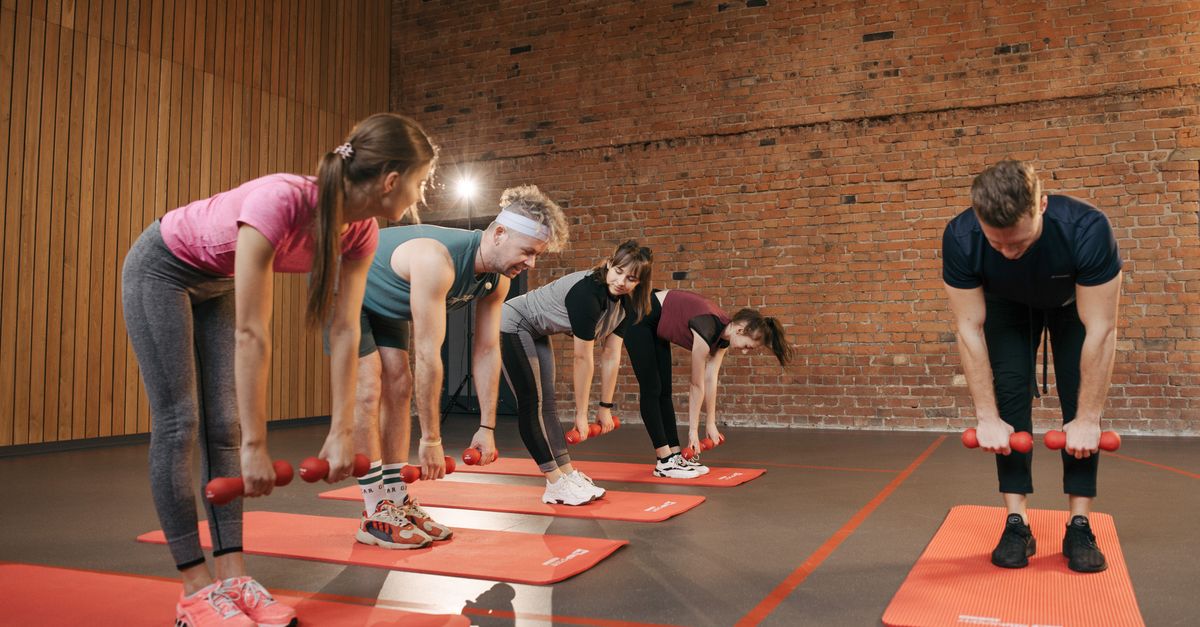
- 🕐 Pick the slot that survives your worst week, not your best one. The hour that works on a calm Tuesday is not the test.
- 🏋 Gyms fill up between about five and eight in the evening. If waiting for a rack quietly ruins your mood, that is a real scheduling factor and not a character defect.
- 🦉 Night owls forced into 5am tend to quit, and early risers dragged into 9pm sessions tend to skip. Working with your own rhythm is cheaper than fighting it.
- 🍽 Shift workers and parents of small children rarely get to choose at all. For them the honest answer is that the best time is whenever the window opens.
- 📅 Give any new slot three or four weeks before you judge it. The first week of a 6am habit feels like evidence and is really just novelty.
🌟 So what actually matters more than the clock?
Total work done over months, done consistently, with enough sleep and enough protein to recover from it. That sentence is much less fun than a chart of hormone curves, which is exactly why the chart of hormone curves sells better.
The measurable time of day effects are genuine and they are small. If two people train the same programme with the same effort, one at dawn and one after work, the difference between them at the end of a year will be swamped by who missed fewer sessions, who slept, and who ate in a way they could keep up. Timing is a tie breaker. Consistency is the actual contest.
If you already have a time that works, the research here is not a reason to change it. If you do not, pick the one you are least likely to cancel, and let the centimetre and a half go.
This article is general information about exercise timing, not personal medical advice. If you have a heart condition, are pregnant, are managing diabetes or another long term condition, or have persistent sleep problems, speak to a qualified professional about what suits your own situation before changing your training routine.
Is it better to work out in the morning or at night for weight loss?
Neither has been shown to beat the other for weight change. Training before breakfast uses more fat during the session, but the body balances its fuel use across the whole day, so that does not reliably translate into a different result on the scale. Total weekly activity and how well you stick to it matter far more than the hour.
Does fasted cardio burn more fat overall?
It burns more fat during the workout itself. Over 24 hours the difference largely evens out. The six week cycling trial in The Journal of Clinical Endocrinology and Metabolism did find better insulin sensitivity in the before breakfast group, which is a metabolic health finding rather than a fat loss one.
How late is too late to exercise before bed?
There is no single cut off that applies to everyone. A meta analysis of 23 controlled studies in Sports Medicine found evening exercise did not delay sleep onset or reduce sleep efficiency in healthy adults. Very hard sessions that leave you hot and wired close to bedtime are the ones most likely to cause trouble, so those are the ones worth moving earlier first.
Am I really stronger in the afternoon?
Slightly, and it depends on the test. A 2024 meta analysis of team sport athletes found countermovement jump and agility were better in the late afternoon, but found no significant difference in isometric strength or squat jump. The effect is real and small.
Should I switch my workout time if I am a night owl?
Only if the current slot is the reason you keep missing sessions. Chronotype is a genuine constraint, and a programme done at the wrong hour still beats a perfectly timed one you skip. Try a new slot for three or four weeks before deciding whether it fits.
Does morning exercise help me sleep better at night?
It can, mostly through daylight rather than the exercise. Getting outside in the morning gives your body clock a strong timing cue, which supports melatonin being released on schedule that night. Evening exercise is not the villain here either, so this is a reason to consider mornings, not to avoid evenings.
Leave a Reply