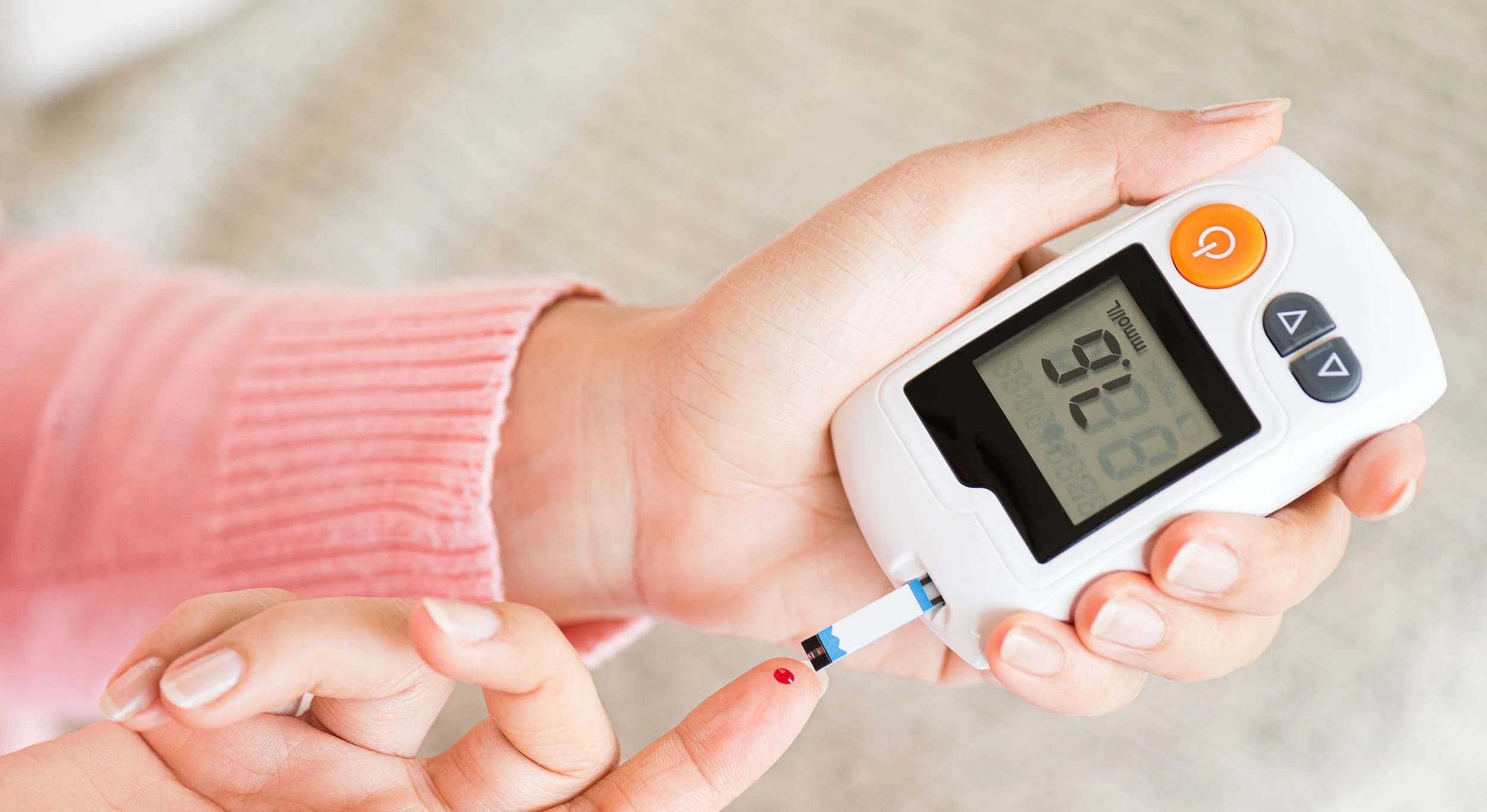
There is no reset button, and nothing you drink at 7am flips one. Insulin sensitivity improves through a short and unglamorous list: losing some weight if you are carrying extra, moving your muscles most days, sleeping properly, and building meals around protein and fibre. The gains are real, measurable, and slower than the word reset suggests.
🔍 What does insulin sensitivity actually mean?
Insulin is the hormone that tells your cells to take glucose out of the bloodstream and either burn it or store it. Insulin sensitivity is how loudly it has to shout before they listen.
When you are sensitive, a small amount of insulin gets the job done. When cells in muscle, fat and liver stop responding well, which is what insulin resistance means, the pancreas compensates by making more. For a long stretch this works. Blood sugar stays normal, nothing feels wrong, and the system holds the line by quietly working harder. The NIDDK is blunt that nobody has fully pinned down the root cause, which is worth remembering next time a label claims to have targeted it.
The practical version: insulin sensitivity is not something you feel. It is something a blood test measures, and something you change over months through what your muscles, your sleep and your plate do.
Can your metabolism actually be reset?
Not in the way the word implies. Metabolism is not an appliance with a factory setting, and no sequence of lemon water returns it to one. What can be rebuilt is the inputs, lean mass and everyday movement, which our page on fixing a slow metabolism naturally takes one at a time.
What genuinely changes is better than the marketing anyway. In the Diabetes Prevention Program, 3,234 adults at high risk of type 2 diabetes were randomised to intensive lifestyle change, metformin, or placebo. The lifestyle group worked toward a 7 percent weight loss and 150 minutes of moderate activity a week. Over an average of just under three years, that group developed type 2 diabetes 58 percent less often than placebo. Metformin reduced it by 31 percent. We set out what that trial did and did not prove, alongside four other studies, in our evidence guide to losing weight with insulin resistance.
The shape of that result matters more than the numbers. Walking and eating differently outperformed a drug, in a trial run by the drug’s own field. That is the closest thing to a reset anyone has demonstrated, and it took years.
Nothing in that trial was proprietary. No berry, no tea, no morning ritual. The intervention was people being helped to walk more and eat differently, for a long time, which is why it never got a landing page.
🏋 What actually moves it, and by how much?
| What | How much it moves insulin sensitivity | What the evidence looks like |
|---|---|---|
| Losing 5 to 7 percent of body weight, if you carry extra | The most, by a distance | Large randomised prevention trials |
| Regular movement, including plain walking | A lot, and it starts the same day | Controlled trials plus a clear mechanism |
| Resistance training | A lot, over months | Muscle is where most glucose ends up |
| Sleeping seven to nine hours | More than almost anyone expects | Short sleep measurably lowers it within a week |
| Protein and fibre built into meals | Moderate, mostly indirectly | Helps fullness and total intake |
| A consistent, earlier eating window | Small to moderate | Small trials, promising, still early |
| Vinegar, cinnamon and similar | Small at best, and briefly | Short term post meal effects only |
| Detox teas, cleanses and resets | Nothing worth counting | No mechanism, no trials |
The top four rows carry this entire article. Everything under them is optimisation, and optimisation stacked on top of nothing is just shopping.

🚶 Why does moving after meals matter so much?
Muscle is the largest customer for glucose in the body, and a contracting muscle pulls glucose in through a route that barely involves insulin. That is why movement works fast, and why it still works on a day when everything else went sideways.
In a randomised crossover trial published in Diabetes Care, overweight and obese adults sat for five hours after a test drink on three occasions: uninterrupted, broken up with two minutes of light walking every twenty minutes, or the same in short moderate bursts. Both walking conditions lowered the glucose and insulin response compared with sitting still, and light did about as well as moderate.
Two minutes. Not a workout, not a class, not new shoes. The active ingredient is interruption, not intensity. ✅ What that looks like in a normal week:
- 🚶 A short walk after the meal that usually leaves you sluggish, rather than after all three
- ⏱ Standing up and moving every twenty minutes or so on desk days
- 🏋 Two or three resistance sessions a week, because more muscle means more places for glucose to go

This is also the part that keeps paying when the scale stalls. Activity improves how muscle takes up glucose whether or not weight is moving, which is worth knowing during the weeks when nothing else looks like progress. Visceral fat, the deeper kind, tends to respond early while the visible layer is still deciding.
🌙 How much does short sleep really cost?
More than most habit lists admit, and this is one of the few items here with an effect you can measure inside a week.
In a study of 20 healthy men published in Diabetes, one week of five hours in bed per night reduced insulin sensitivity by about 20 percent as measured by intravenous glucose tolerance test, and by about 11 percent on the more rigorous euglycemic clamp. Most of the men measured got worse. These were healthy young adults with nothing else going wrong.
The effect is real, and the gap between 20 percent and 11 percent in the same men is a standing reminder that how you measure metabolism changes the number you get. Which is why a single tidy percentage on a supplement label deserves more suspicion than admiration.
🍽 Does when you eat matter, or only what?
Mostly what. But when is not nothing.
In a small crossover trial in men with prediabetes, eating all meals inside an early six hour window improved insulin sensitivity and blood pressure compared with a twelve hour window, with food intake and weight deliberately held constant. Eight men, five weeks per condition. Genuinely interesting, genuinely tiny, and not a mandate for anyone to skip meals and call it science. Skipping breakfast has its own consequences, and they are not all in the direction people assume.
The honest reading is that a consistent eating window, ending earlier rather than later, may help a little. It will not compensate for the top four rows of that table, and no eating schedule ever has.
🥦 What does a meal that actually helps look like?
Protein first, fibre alongside, and carbohydrate that arrived in its original packaging. The trials behind that fibre line, and the lentil and Mediterranean studies, are set out in which foods for insulin resistance the evidence actually supports.
- 🍳 Protein at every meal: eggs, fish, dal, paneer, yoghurt, whatever you will still want tomorrow
- 🥦 Vegetables in volume, because fibre slows the whole process and fills the plate
- 🌾 Whole carbohydrates more often than refined ones, most days rather than every day
- 🥤 The biggest single change for many people is what they drink, not what they eat
None of it is exotic, which is precisely its commercial problem. Nobody has ever built a sales funnel around dal. It works anyway.
🫖 What about vinegar, cinnamon and the supplement shelf?
This is where the evidence thins out and the marketing thickens up. Vinegar before a carbohydrate heavy meal does blunt the glucose response somewhat in short studies. It is a seasoning with a modest side hustle, not a reset. Cinnamon is delicious and has been asked to carry a great deal more than it can. The detox tea has never been in a room with a control group and would not enjoy the experience.
Compounds sold for blood sugar are not inert. Anything that lowers glucose can interact with diabetes medication, and some interact with more than that. Anyone taking metformin, insulin or a sulfonylurea, anyone pregnant, and anyone with kidney or liver problems should speak to a doctor or pharmacist before adding a supplement, not afterwards. Supplements are also loosely policed for what is genuinely in the bottle, so independent third party testing is the minimum bar worth applying to any of them.
Where insulin resistance is part of a wider picture, that is a medical conversation rather than a shopping one. Insulin resistance sits at the centre of PCOS for many people, and it is managed alongside a clinician.
Where does this usually go wrong?
Two ways, reliably.
The first is doing all the small things and none of the large ones. Cinnamon in the coffee, five hours of sleep, no walking. Seasoning is excellent on a meal that has been cooked and does very little on an empty plate.
The second is expecting a feeling. Insulin sensitivity does not announce itself. You will not wake on day nine and sense your cells responding better. What shifts first is unglamorous: steadier energy through the afternoon, fewer sharp hunger spikes, and eventually a blood test that reads differently. Anything promising a fast transformation you can feel is describing something other than your metabolism.
How long does it take to improve insulin sensitivity?
Parts of it move quickly. A single walk lowers that meal’s glucose response, and a few nights of proper sleep can shift measurements inside a week. Lasting change in how your cells respond is counted in months, and it is tracked with blood tests rather than with how you feel on a given morning.
Can insulin resistance be reversed?
It can improve a great deal, and at the prediabetes stage many people move their blood tests back into the normal range. Whether that counts as reversed depends on the definition used and on the changes continuing. This is a conversation to have with your doctor about your own results.
Do I need a continuous glucose monitor?
Not in order to make the changes that matter. A monitor shows how you respond to specific meals, which some people find motivating and others find stressful. It measures, it does not treat. The habits at the top of the table work whether or not anyone is watching them work.
Does cutting carbohydrates fix insulin resistance?
It lowers the demand on the system, which is why blood sugar readings often improve quickly. Whether the underlying sensitivity improves depends more on weight change, muscle and activity than on the carbohydrate number itself. Both approaches can help, and neither is a reset.
Is belly fat a sign of insulin resistance?
They travel together often enough that waist measurement is used as a risk marker, but one is not a diagnosis of the other. Plenty of people who dislike their waistline have normal insulin sensitivity, and some people without a large waist do not. A blood test settles it, a mirror does not.
Does exercise help even when the scale does not move?
Yes, and this is one of the more encouraging findings in the area. Activity improves how muscle takes up glucose independently of weight change, which is a good reason to keep going through a stretch where nothing else appears to be happening.
This article is general information, not medical advice, and is not a substitute for care from a qualified healthcare professional. Speak to your doctor about your own situation.
Leave a Reply