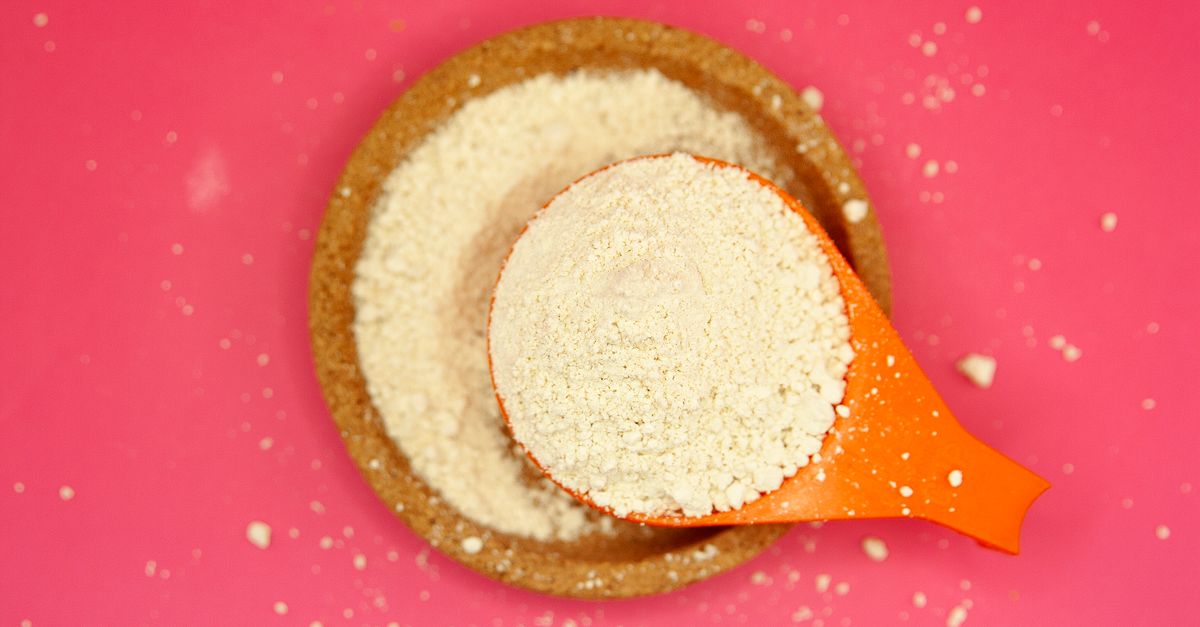
Creatine helps your muscles rebuild ATP, the fuel they burn in the first few seconds of a hard effort. Filling up muscle stores makes short, maximal work measurably better, and over months of training that adds up to more work done. It is not a fat burner, and on its own it does nothing at all.
Creatine is the most studied product on the supplement shelf and the one most likely to be described in a changing room as basically legal steroids. It is neither thrilling nor a steroid. It is a piece of cellular plumbing, and the plumbing explains exactly what creatine can and cannot do.
🧬 What is creatine, and where does the body keep it?
Creatine is a compound the liver and kidneys build from three amino acids: arginine, glycine and methionine. It is not a hormone, not a stimulant and not a steroid, which is why so much of the gym mythology around it is confidently wrong.
Roughly 95 percent of the body’s creatine sits in skeletal muscle, with the small remainder in the brain and testes, according to the International Society of Sports Nutrition position stand on creatine. Most of that pool is stored as phosphocreatine, the form that matters when you are trying to move something heavy. About half the daily requirement comes from food and the rest the body makes itself.
Vegetarians start lower, at 90 to 110 mmol per kg of dry muscle in the same document, which is also why they tend to show the largest response when creatine is added.
⚙️ How does creatine actually work inside a muscle?
Muscles run on ATP, a superb fuel and a dreadful battery. A maximal effort drains the stored supply in seconds, which is why the last rep of a heavy set feels like a different exercise from the first.
Phosphocreatine is the spare charge. It donates a phosphate group to spent ADP and rebuilds ATP almost immediately, faster than the body can make it from glucose or fat. More phosphocreatine in the tank means the rebuild keeps pace a moment longer, and in an effort measured in seconds, a moment is most of the event.
Supplementing raises muscle creatine and phosphocreatine by roughly 20 to 40 percent, the position stand reports. There is a ceiling: once a muscle is saturated, extra powder achieves nothing except expensive urine.
💪 What does creatine measurably improve?
Once stores are full, performance in high intensity and repetitive exercise generally rises by 10 to 20 percent, depending on how much muscle phosphocreatine actually went up. Read that carefully. It describes the sprint and the set, efforts counted in seconds. It is not an endurance figure and it is not a statement about anyone’s body.
| What people hope creatine does | How strong the evidence is |
|---|---|
| Repeated sprints and maximal sets | Strong and consistent. Everything else is built on this. |
| Strength and lean mass across a training block | Strong, with a catch: the training does the work, creatine lets you do more of it. |
| Recovery between hard sessions | Moderate, and less consistent than the performance data. |
| Memory and processing speed | Small effects on specific tasks rather than across the board. |
| Endurance and long aerobic events | Weak. The mechanism runs out well before the finish line. |
| Burning fat by itself | ❌ None. Nothing creatine does touches fat directly. |
The lean mass line needs a caveat. Part of the early gain is water pulled into muscle cells, not new tissue. Across months of training the added muscle is real enough, but the first week on the scale is mostly plumbing.
🍽️ Can you get enough creatine from food?
Some of it. Creatine occurs naturally in red meat and fish, and the position stand puts a pound of uncooked beef or salmon at about 1 to 2 grams. Cooking degrades a share of that, so what reaches the plate is less than what left the fridge.
That is the practical wrinkle. Matching the quantities used in research through steak alone would be a second job with a butcher’s bill attached, and for anyone eating little or no meat the gap is wider still.

⏱️ How long does creatine take to work?
It depends on how full the muscle is, not on when you swallow it. The position stand describes two routes used in studies: about 5 grams four times a day for 5 to 7 days, which fills stores quickly, or around 3 grams a day for 28 days, which arrives at the same place more slowly. Those are descriptions of what trials did, not a plan for a reader to copy.
Creatine works by saturation, and the same document notes that elevated muscle stores take roughly 4 to 6 weeks to drift back to baseline. A missed day is not a crisis, and timing around a workout is a far smaller variable than the labels suggest.
🧠 Does creatine do anything for the brain?
Something, probably, and less than the current enthusiasm implies. Brain tissue burns ATP too, and creatine supplementation has been shown to raise brain creatine content by around 5 to 15 percent.
A 2024 systematic review and meta analysis in Frontiers in Nutrition pooled 16 randomised controlled trials covering 492 adults. It found small but statistically significant improvements in memory, attention time and processing speed, and no significant improvement in overall cognitive function or executive function. Specific and modest, rather than the brain fuel framing printed on the tub.
💡 The clearest signals turn up where the brain is already under strain, such as sleep deprivation or ageing.
⚖️ Does creatine help with fat loss?
Not directly, and the popular chain of reasoning is thinner than it sounds. The argument runs: creatine builds muscle, muscle raises metabolism, therefore fat loss. Every link holds and the last one is tiny. The resting energy cost of muscle tissue is modest, so a few extra kilos of it does not rewrite a daily calorie total.
The realistic version is duller. Creatine may let you do more total work in the gym, and more work across months is worth having. Pulling the other way, the scale can rise early because of muscle water, which makes creatine an awkward companion for a daily weigh in. Nothing has gone wrong. It is water in a place you cannot see.
🧪 Is creatine monohydrate better than the fancier forms?
Monohydrate is the form used in the overwhelming majority of the research, including every trial in that 2024 cognition analysis. Newer forms tend to be sold on absorption claims, and absorption is not the same thing as a demonstrated advantage in a comparable trial.
| Form | The claim | What the published research supports |
|---|---|---|
| Creatine monohydrate | Nothing exotic | ✅ The form behind almost all the evidence, and the cheapest. |
| Creatine HCL | More soluble, gentler on the stomach | ⚠️ Solubility is real. A performance advantage over monohydrate is not shown. |
| Buffered creatine | Better absorption | ❌ No established advantage over monohydrate. |
| Liquid creatine | Convenience | ❌ Creatine breaks down in solution over time. |
One consumer point. Supplements are not pre approved for content the way medicines are, so a third party testing mark on the tub is the only practical check that what is inside matches the label.
⚠️ Is creatine safe, and what is the water weight about?
The safety record in healthy adults is unusually well documented. In the position stand, athletes taking creatine for up to 21 months showed no clinically significant differences from controls in markers of renal function, liver enzymes, electrolytes, blood lipids or urinalysis. A 2021 review in the Journal of the International Society of Sports Nutrition counts more than 500 peer reviewed publications on creatine and calls it relatively well tolerated at the amounts commonly studied.
Two things belong beside that. Both papers come from author groups who declare research funding, advisory roles or product donations from creatine manufacturers. That does not make the findings wrong, but a reader is entitled to know it. And safe in healthy adults is not the same as safe for everyone.
Anyone with existing kidney disease, anyone who is pregnant or breastfeeding, and anyone taking prescription medication should speak to a doctor before starting creatine rather than relying on a population average.
| Common claim | What the evidence says |
|---|---|
| Creatine is a steroid | ❌ Not a hormone. It is a compound the body already makes. |
| It damages the kidneys in healthy adults | ❌ Not shown in the safety data. Existing kidney disease is a separate question for a doctor. |
| It causes bloating | ⚠️ Water moves into muscle cells, which is not abdominal bloating. |
| It is only useful for men | ❌ Nothing in the mechanism is sex specific, and in the pooled cognitive trials the effects were larger in women. |
The water itself is real, and it sits inside the muscle cell rather than under the skin. It is not fat, and it is not the same thing as feeling bloated.
🌟 What is worth remembering?
- 🧬 It rebuilds ATP fast, so it helps efforts measured in seconds, not minutes.
- 💪 The published gain in high intensity work is 10 to 20 percent, tied to how much muscle phosphocreatine rises.
- 🧪 Monohydrate is the form the evidence was built on, and the cheapest on the shelf.
- ⚠️ The safety data covers healthy adults. Kidney disease, pregnancy and prescription medication are conversations for a doctor.
🧩 Creatine builds nothing on its own. It lets you do slightly more of the work that does, which is a smaller claim than the tub makes and a far more reliable one.
Frequently asked questions
Does creatine cause kidney damage?
In healthy adults, the published safety data does not show it, including athletes followed for up to 21 months with no clinically significant changes in markers of renal function. That is not a green light for someone who already has kidney disease. Anyone with a diagnosed kidney condition, or taking medication that affects kidney function, should ask their doctor before starting.
Is creatine only useful for men?
No. Nothing about the mechanism is sex specific, and in the pooled analysis of cognitive trials the subgroup effects were larger in women. The worry about bulking up is misplaced: the early change on the scale is water inside muscle cells, and visible muscle is built by training over months, not by a powder over days.
Will creatine make me gain weight?
Usually a small, quick rise in the first week or two, and it is water drawn into muscle cells rather than fat. Anything beyond that comes from the training, not from the creatine. If a daily weigh in is part of your routine, expect the number to jump early and settle.
Does creatine work if I do not train?
For performance there is very little to amplify. Creatine lets you do slightly more hard work, so with no hard work the effect has nowhere to land. The cognitive trials did not require exercise, and the effects found there were small and confined to specific tasks such as memory and processing speed.
Do I need to cycle off creatine?
Nothing in the research requires it. Long term use has been studied, including athletes supplementing for up to 21 months without clinically significant changes in health markers. Stopping is undramatic too: once muscle stores are elevated, they take roughly 4 to 6 weeks to drift back to baseline.
Is creatine suitable for teenagers?
Published reviews report no evidence that creatine, at the amounts studied, poses a health risk to people under 18, and they treat it as acceptable for younger athletes only within specific conditions, including supervision and a diet that already meets their needs. For a teenager this is a conversation with a doctor, not a decision to make from an article.
This article is general information, not medical advice, and is not a substitute for care from a qualified healthcare professional. Speak to your doctor about your own situation.
Leave a Reply