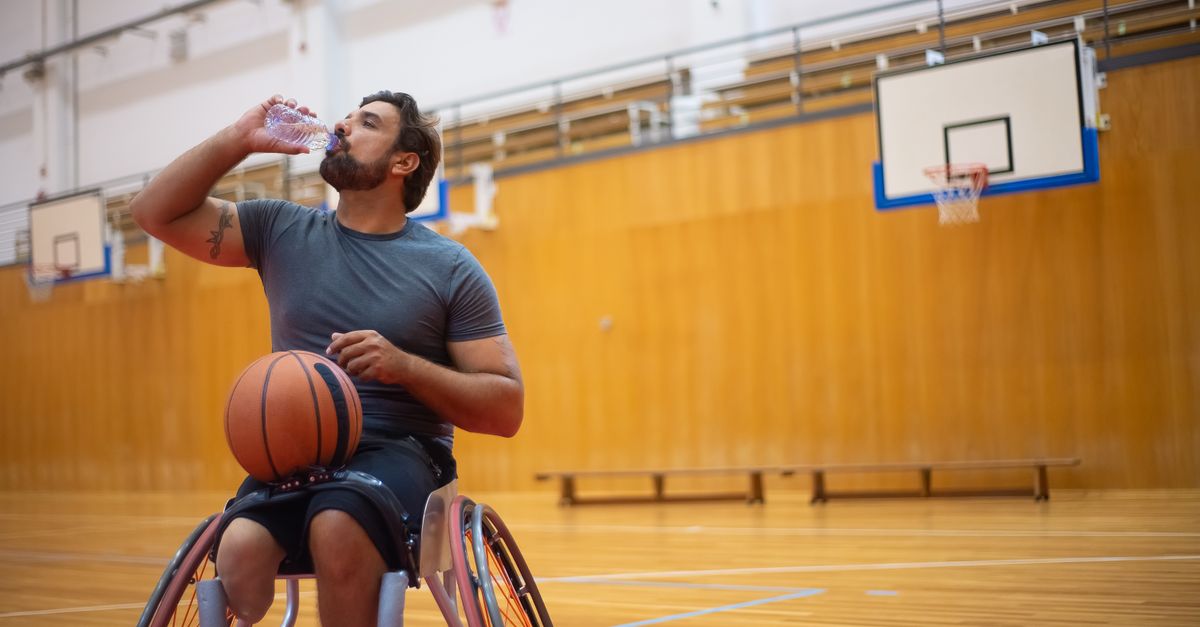
Water covers most training. Once a session runs long, hot or genuinely sweaty, what matters is sodium and fluid volume rather than the label on the bottle. Milk based drinks and proper rehydration solutions hold fluid best, coconut water performs about like plain water, and tart cherry juice helps strength return faster than it helps soreness.
🥤 What are you actually replacing after a hard session?
Three things leave the body during hard training, in wildly different quantities. Water is the obvious one. Sodium goes out with it, in amounts that vary enormously between people, from mildly salty sweat to the sort that leaves white tidemarks on a running vest. Glycogen, the carbohydrate stored in muscle, drains slowly over long or repeated efforts.
Almost every drink sold for recovery is some combination of those three, plus flavouring and a story. The useful question is therefore not which drink is best in the abstract, but which of the three you actually ran down. Forty minutes of lifting in an air conditioned gym depletes very little that water and your next meal will not fix. Four hours on a bike in August is a different problem wearing the same lycra.
For baseline fluid, the NHS notes that the Eatwell Guide recommends 6 to 8 cups or glasses a day, and that people active for long periods may need more. Training sits on top of that figure rather than replacing it.
⚡ Which drinks put fluid back fastest?
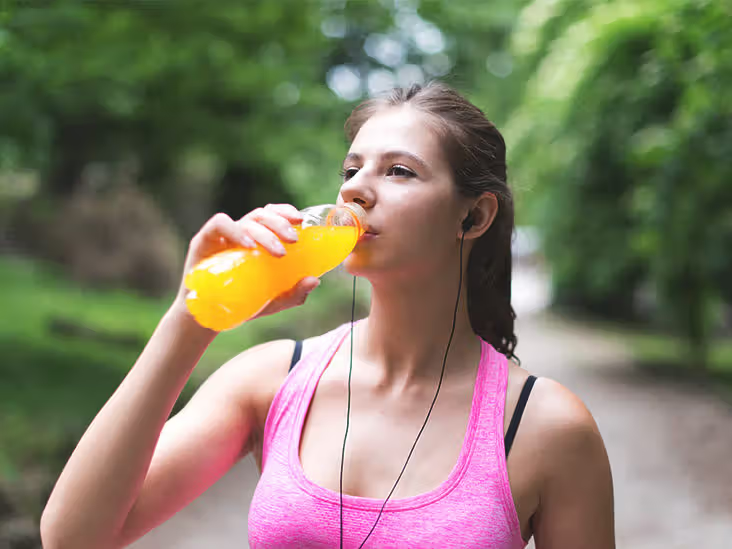
This is the one question here with clean trial data behind it. In a randomised, double blind trial published in Nutrients in 2023, 26 athletes trained without drinking until they had lost 2.6 percent of body mass, then drank back the full amount. Three and a half hours later, the share of that fluid still retained was 58 percent for plain water, 74 percent for a sports drink, and 77 percent for an oral rehydration solution with more sodium and less sugar.
Look at the shape of that result, not the winner. The sports drink and the rehydration solution finished level. What separated both from water was sodium. Not sugar, not colour, not the tennis player on the front.
| Drink | What it mainly supplies | What the evidence actually supports |
|---|---|---|
| Water | Fluid only | Fine for most sessions, retains least once truly dehydrated |
| Electrolyte sports drink | Fluid, sodium, about 6 percent carbohydrate | Clearly beat water for fluid retention above |
| Coconut water | Fluid, potassium, some sugar | No measured advantage over plain water |
| Skimmed or low fat milk | Fluid, sodium, protein, carbohydrate | Beat water in four reviewed studies |
| Chocolate milk | The same, with more sugar | Same logic, plus carbohydrate for glycogen |
| Protein shake | Protein, sometimes carbohydrate | Good for daily protein, nothing for hydration |
| Tart cherry juice | Anthocyanins, sugar | Faster force recovery, no effect on soreness |
| Green tea | Fluid, caffeine, catechins | Hydrating. Recovery evidence thin |
🥥 Is coconut water really nature’s sports drink?
It is a nice drink with a lot of potassium and an unusually good marketing department. A systematic review in the Journal of Athletic Training examining alternatives to carbohydrate electrolyte drinks found three trials comparing fresh coconut water with ordinary water after exercise, and reported no differences in hydration measures at multiple time points.
The reason is not mysterious. Potassium is not the mineral you are short of after sweating heavily. Sodium is, and coconut water carries relatively little of it. That does not make it a bad choice: if it is the bottle you will actually finish, it beats the sensible one left on the bench. It simply is not doing anything tap water was not.
🥛 Why do milk and chocolate milk beat water for rehydration?
The same review found something more interesting on the other side of the ledger. In four of the studies it examined, skimmed or low fat cow’s milk, drunk on its own with no food alongside, improved hydration status compared with plain water.
Milk turns out to be quietly well designed for the job: fluid, naturally occurring sodium, protein that slows how fast the stomach empties, and carbohydrate. Chocolate milk adds sugar, genuinely useful after a long endurance session and largely beside the point after twenty minutes of gentle cycling.
- 🍫 The 3 to 1 carbohydrate to protein ratio quoted everywhere is a rule of thumb, not a research finding. Missing it slightly does nothing.
- Lactose intolerance is a real limit, and lactose free milk keeps the sodium, protein and carbohydrate.
- Plant milks vary enormously in protein. Soy sits in the same ballpark as dairy, most oat and almond versions do not.
🍒 Does tart cherry juice really reduce soreness?
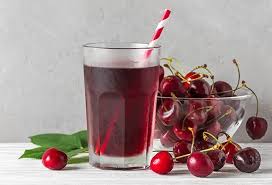
Here the popular claim and the pooled evidence part company. A 2026 systematic review and meta analysis in Sports Medicine Open gathered 19 trials of tart cherry juice in trained athletes. It found a consistent benefit for recovery of maximal voluntary contraction, the standard measure of muscle force, at every time point out to 96 hours, plus reductions in C reactive protein, a marker of inflammation.
What it did not find was an effect on soreness. Across the pooled trials there was no significant benefit for muscle soreness, creatine kinase, range of motion, or most inflammatory markers. Heterogeneity was high, the reviewers’ polite way of noting that the individual trials disagreed with each other a great deal.
So the honest version is narrower than the headline and rather more interesting. Tart cherry juice looks like it helps muscles produce force again sooner. The thing most people buy it for, feeling less sore tomorrow, is the one outcome the pooled data does not support.
Do you have to drink protein within 30 minutes of training?
The anabolic window turned out to be a considerably larger room than the phrase implied. Total protein across the whole day matters far more than beating a half hour stopwatch after the last set. If you train fasted, or the next proper meal is genuinely hours away, drinking something with protein in it sooner is sensible. If you are eating normally within a couple of hours, the timer is decoration.
Shakes are convenient rather than magic: food in a bottle, for people who find a bottle easier than a plate after a hard session. Where they earn their place is the following day, when appetite has gone quiet and reaching a protein target from meals alone becomes a grind. Our piece on why protein matters for muscle growth covers the mechanism underneath this.
🍵 Where do green tea and coffee actually fit?
Mostly in the pleasure and caffeine column, which is not an insult. Green tea contains catechins, and catechins do measurable things in a laboratory. The step from there to faster recovery in a person who actually trains is where the evidence thins out badly, and the packet runs a long way ahead of it. Caffeine itself is among the better supported performance aids, which is a separate question from recovery. The old worry that caffeinated drinks dehydrate you does not survive contact with the data either: the mild diuretic effect is smaller than the fluid the drink delivers, so a mug of tea is a net gain.
Caffeine late in the day interferes with sleep, and sleep does more for recovery than any drink on this page. Anyone who is pregnant, has a heart rhythm problem or high blood pressure, or takes medication that interacts with stimulants, should discuss caffeine intake with a doctor or pharmacist rather than with an article.
🧠 Are you really flushing out lactic acid?
No, and it is worth knowing why, because that single idea drives an enormous amount of drinking behaviour. Lactate returns to baseline within roughly an hour of finishing, long before the soreness that peaks a day or two later has even shown up. A 2022 review published in Metabolites notes that studies in the 1980s largely refuted lactate’s role in delayed onset muscle soreness, and that the belief persists anyway, among clinicians as well as gym members. That paper argues lactate may still play a subtler part through nerve signalling, so the picture is not entirely closed. What is closed is the simple version: acid pooling in the muscle until you rinse it away with the right beverage.
The soreness comes from mechanical damage caused by unaccustomed lengthening contractions: downhill running, the slow lowering phase of a lift. No drink rinses that out. Time does.
💬 So what actually belongs in your bottle?
It depends on the session, which is less satisfying than a ranked list but happens to be true. Four variables decide it: how long you went, how hot it was, how heavily you sweat, how soon you eat again.
- Under an hour, indoors, food coming soon: water, and no further thought required.
- ⚡ Long, hot or heavily sweaty: something carrying sodium, whether a sports drink, a rehydration solution or milk.
- 🍫 Back to back training days: fluid plus carbohydrate plus protein, which is exactly where chocolate milk earned its reputation.
- Weighing yourself before and after a hard session is the cheapest way to see how much fluid you personally lose.
No drink changes body composition on its own. Hydration affects how you feel, perform and recover, which matters, but the bottle is not the lever. For timing, our schedule for drinking before, during and after a workout lays it out, and the food side sits here.
If you routinely finish sessions dizzy, cramping severely, or passing very dark urine that does not clear with fluids, that is worth raising with a doctor rather than solving with a different bottle.
Frequently asked questions
What is the single best drink for athletes after training?
There is not one, and any list that names one is skipping the question that matters. For short or moderate sessions, water is genuinely enough. For long, hot or heavily sweating sessions, a drink carrying sodium retains more fluid than water does, and milk performs well for the same reason.
Is coconut water better than a sports drink?
Not for rehydration. A systematic review of alternatives to carbohydrate electrolyte drinks found no difference between fresh coconut water and plain water on hydration measures after exercise. It is high in potassium, and potassium is not the mineral heavy sweating depletes most.
Does chocolate milk really work as a recovery drink?
It holds up better than most things with a reputation. Reviewed studies found skimmed and low fat milk improved hydration status compared with water, and milk supplies sodium, protein and carbohydrate together. The much quoted 3 to 1 carbohydrate to protein ratio is a rule of thumb rather than a finding.
Does tart cherry juice stop muscle soreness?
A 2026 meta analysis of 19 trials found it improved recovery of muscle force and lowered C reactive protein, but found no significant pooled effect on soreness itself. Trials disagreed with each other considerably, so the evidence is promising for strength recovery and weak for the outcome most people want.
Do I need to drink protein within 30 minutes of finishing?
Almost certainly not. Total protein across the day matters far more than the timing of any one serving. The window is worth thinking about only if you trained fasted or the next meal is several hours off, in which case something with protein sooner is reasonable.
Do recovery drinks help with weight loss?
Not directly, and it is worth separating the two questions. Hydration affects performance, appetite signals and how you feel, but drinks do not change body composition by themselves, and many recovery drinks carry meaningful calories. Anyone managing weight alongside training is best speaking to a doctor or a registered dietitian about their own situation.
This article is general information, not medical advice, and is not a substitute for care from a qualified healthcare professional. Speak to your doctor about your own situation, particularly if you have a heart, kidney or blood pressure condition that affects fluid or sodium intake.
Leave a Reply