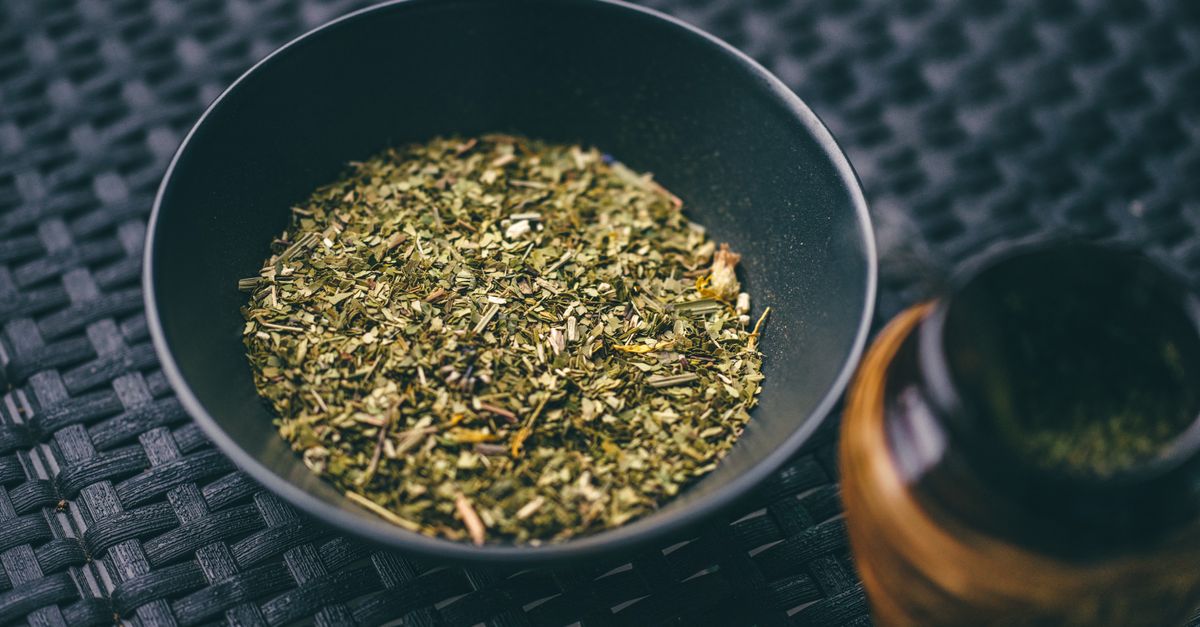
Yerba mate is a caffeinated South American tea that gives a mild, measurable lift to energy expenditure and fat burning, mostly because of the caffeine. Small trials suggest it modestly helps body composition. It will not override what you eat or how you move, and how hot you drink it matters more than most people realise.
What is yerba mate, and what is actually in it?
Yerba mate is brewed from the dried leaves of Ilex paraguariensis, a holly that grows in the Atlantic rainforest across Paraguay, northern Argentina, southern Brazil and Uruguay. The Guarani were drinking it centuries before anyone had a word for thermogenesis, and it is still a daily social ritual there: a gourd, a metal straw called a bombilla, and a flask of hot water that goes round the group until somebody has to admit defeat.
The leaf contains caffeine, a smaller amount of theobromine (the same mellow stimulant in cocoa), and a large family of polyphenols, mostly chlorogenic acids, plus saponins that give mate its bitter, grassy edge. That is the honest ingredient list. How much caffeine ends up in your cup is genuinely hard to pin down, because the leaf gets steeped again and again and everybody packs the gourd differently, but it sits broadly in the same neighbourhood as tea or a modest coffee.
Anything you read beyond that list, the enzyme diagrams, the talk of cellular awakening, is usually coming off a label rather than out of a laboratory.

Does yerba mate really speed up your metabolism?
In the narrow sense, yes, and so does any caffeinated drink. Caffeine raises energy expenditure for a few hours and shifts which fuel your body reaches for. Mate is caffeinated. The maths is not complicated.
The problem is what the word metabolism is asked to carry. Most of your daily energy burn is set by things no tea can touch: your body size, how much lean tissue you carry, your age and your genes. What a hot caffeinated drink moves is the small, adjustable slice at the edge. Calling that a faster metabolism is a bit like calling a new doormat a house extension.
There is human trial evidence, and it is worth being precise about how much. A 12 week randomised, double blind, placebo controlled trial gave 30 adults with obesity yerba mate capsules or a placebo. The mate group finished with lower body fat mass, lower percent body fat and a lower waist to hip ratio than the placebo group, and no meaningful safety signals turned up. Thirty people is still thirty people. That is a promising pilot rather than a settled answer, and a capsule of extract is not the same thing as a gourd shared across an afternoon. The same gap between a measured effect and a useful one shows up across every well studied metabolism supplement ingredient.
What did the 24 percent fat burning figure actually measure?
This number is real, which is exactly why it travels so badly. In a crossover trial published in Nutrition & Metabolism, fourteen healthy adults took 1000 mg of yerba mate extract in capsules an hour before an incremental cycling test. At exercise intensities below roughly 70 percent of their peak oxygen uptake, fat oxidation and the energy coming from fat rose about 24 percent compared with placebo. Peak performance was unaffected.
Now notice what that sentence does not say. It does not say anyone burned 24 percent more calories. It does not describe anything happening on the sofa. It measured which fuel fourteen people reached for during moderate exercise, after swallowing an extract. The finding is genuine, small and very specific. By the time it reaches a product page it has been sanded down to burns 24 percent more fat, which is a completely different claim wearing the same number.
How does yerba mate compare with coffee and green tea?
| Drink | Main stimulants | What the evidence supports | Worth knowing |
|---|---|---|---|
| Yerba mate | Caffeine, theobromine | Modest rise in energy expenditure and fat oxidation, mostly shown around exercise | Traditionally drunk very hot, which is the part that carries a real risk |
| Coffee | Caffeine, chlorogenic acids | Same short term energy expenditure effect, studied far more heavily | Easier to overdo, and what you add to it usually matters more than the coffee |
| Green tea | Caffeine, catechins | Small effects on fat oxidation, inconsistent across trials | Gentler caffeine load, so a reasonable swap if mate keeps you awake |
| Marketed detox or slimming teas | Often senna or other laxatives | Nothing for fat loss | Anything the scale reports the next morning is water and gut contents |
The pattern across that table is not that one drink wins. It is that caffeinated plant drinks all nudge the same small dial, and the one that helps you is the one you actually enjoy enough to drink instead of something sweeter.
Does yerba mate genuinely curb appetite?
Here the evidence gets thin quickly. Preliminary work has looked at mate and satiety ratings, and animal studies point at appetite related hormones including GLP-1. Human data is limited, short and mostly small. That is not nothing, but it is a long way from proof.
Meanwhile the internet has settled on calling mate nature’s Ozempic, and that comparison does not survive contact with the pharmacology. The GLP-1 medicines are drugs given at doses chosen to produce a specific hormonal effect. A tea does not do that, and a tea that did would be regulated as a drug.
The plainer explanation is probably the true one. A hot, bitter, caffeinated drink between meals puts warm liquid in your stomach, occupies your mouth and hands, and buys you twenty minutes. That is a real and useful effect. It is just not a hormonal one.
Is yerba mate safe, and what about the cancer headlines?
This is the part most articles about mate leave out, so it is worth stating carefully.
In 2016 the International Agency for Research on Cancer reviewed the evidence and classified drinking very hot beverages, above 65 degrees Celsius, as probably carcinogenic to humans, based on limited evidence linking them to squamous cell cancer of the oesophagus. In the same review, drinking mate that is not very hot was placed in the category for evidence too weak to classify either way. The risk that appeared in those studies tracked the temperature, not the leaf.
Traditional mate is often drunk scalding through a metal straw, which is a large part of why the association showed up in South American populations at all. Letting it cool before you drink is not a fussy detail.
Yerba mate is caffeinated, and caffeine is not neutral for everyone. If you have a heart rhythm problem, uncontrolled high blood pressure, reflux or an anxiety disorder, or you take prescription medication, speak to a doctor or pharmacist before making mate a daily habit. In pregnancy the NHS advises no more than 200 mg of caffeine a day from all sources, and mate counts towards that total.
So what actually decides whether it helps you?
The honest answer is that mate is a lever, and a short one. It sits alongside a much longer set of levers that do the real work:
- ✔ total energy intake, averaged over weeks rather than judged by any one day
- ✔ protein, which protects lean tissue while you are eating less
- ✔ sleep, which quietly governs appetite and how much you move the next day
- ✔ muscle, because lean tissue is most of what sets your resting burn
- ✔ everyday movement outside deliberate exercise, which adds up faster than most people expect
Mate helps at the margins, and the margins are allowed to matter. It replaces a sugary drink. It makes a fasted morning more bearable. It gives you something warm to hold at four in the afternoon when the biscuit tin starts making conversation. Those are small wins, and small wins repeated are how body composition actually changes.
What it is not is a metabolic furnace, a herbal weight loss drug, or a reason to leave the rest of your diet unexamined. And if the mate you are drinking arrives in a can with sugar in it, the sugar is by far the bigger story.
This article is general information, not personal medical advice. Weight, metabolism and blood sugar are individual matters, and anyone with concerns about theirs should speak to a qualified healthcare professional about their own situation.
Does yerba mate burn fat?
It modestly increases fat oxidation, mainly during moderate exercise, and mostly through its caffeine. That is a real effect measured in small trials, not a mechanism that removes fat on its own. Overall energy balance still decides what happens to body fat.
Is yerba mate better than coffee for weight management?
There is no good evidence that it is. Both are caffeinated plant drinks with similar short term effects on energy expenditure, and coffee has been studied far more. The practical difference is usually taste, tolerance and what you add to the cup.
How much caffeine is in yerba mate?
It varies a great deal. The amount depends on how much leaf is used, how hot the water is and how many times the gourd is refilled, so a traditionally shared mate and a supermarket teabag are not comparable. Broadly it sits between tea and coffee.
Can you drink yerba mate while fasting?
Plain unsweetened mate contains almost no calories, so it does not meaningfully interrupt a fast. Many people find it makes a fasting window easier to sit through. Anything added to it, sugar, milk or honey, changes that answer.
Does yerba mate cause cancer?
The evidence points at temperature rather than the leaf. Very hot drinks above 65 degrees Celsius are classified as probably carcinogenic to humans, while mate that is not very hot was judged too weakly evidenced to classify. Letting it cool is the sensible precaution.
Is yerba mate safe during pregnancy?
It is caffeinated, so it counts towards the 200 mg daily caffeine limit the NHS advises in pregnancy. Because the caffeine content of mate is hard to estimate, anyone who is pregnant should discuss it with their midwife or doctor rather than guessing.
Leave a Reply