
Love handles shrink when total body fat falls. There is no exercise that empties fat from your sides on demand, and where your body stores it is set largely by genetics, sex and age. What you control is the energy balance, the protein and the sleep that decide how much of the loss comes from fat.
What are love handles, and why do they sit where they do?
Love handles are ordinary subcutaneous fat lying over the sides of the waist, above the hip bone and below the lowest rib. The name describes a location, nothing more. The tissue is the same fat you carry everywhere else, on the same terms: more energy in than out and it grows, the reverse for long enough and it shrinks.
What makes the area feel different is that it rarely goes first. Where your body parks fat, and the order in which it hands it back, is shaped by inherited pattern, sex hormones and age. Men tend to store more around the abdomen and flanks, women more around the hips and thighs until menopause shifts that pattern inward. Two people can lose the same amount of fat and watch different areas change. That is biology, not a failure of effort.
One distinction is worth having straight. The fat you can pinch is subcutaneous, sitting between skin and muscle. Visceral fat sits deeper, around the organs, and carries far more of the metabolic risk. The handful you grab in the mirror is mostly the less dangerous kind, which is one reason a tape measure beats a mirror for tracking progress.
Can you burn fat off your sides specifically?
Not to a degree worth planning around, and the research hinting otherwise is very small.
The idea has a name, spot reduction, and it has been tested for decades. A 2021 randomised trial in the International Journal of Environmental Research and Public Health ran participants through a circuit alternating targeted resistance work with endurance intervals, and did find a localised drop in abdominal subcutaneous fat. But it produced no equivalent change at the triceps despite training them the same way, only fourteen people were analysed, and the authors flagged large variation in their own results.
Read honestly, that is a faint signal at one body site in a very small group, not a licence to do three hundred side bends. What reliably shrinks love handles is a fall in total body fat, which draws down every store you have in whatever order your genetics dictate.
| Lever | What it reliably does | What it will not do |
|---|---|---|
| A sustained energy deficit | Reduces total body fat, the only thing that empties the sides | Let you pick which store empties first |
| Protein at every main meal | Keeps you fuller per calorie and protects lean tissue | Burn fat by itself |
| Strength training | Preserves muscle, so a larger share of what you lose is fat | Add much resting metabolism on its own |
| Twists, side bends, planks | Build the muscle underneath and a trunk that braces properly | Remove the fat sitting on top of it |
| Sleep of a normal length | Protects the share of your loss that comes from fat | Cause loss with no deficit behind it |
| Cutting one food group | Helps only if it removes calories you were not missing | Target the sides |
How do you tell whether your waist is actually a problem?
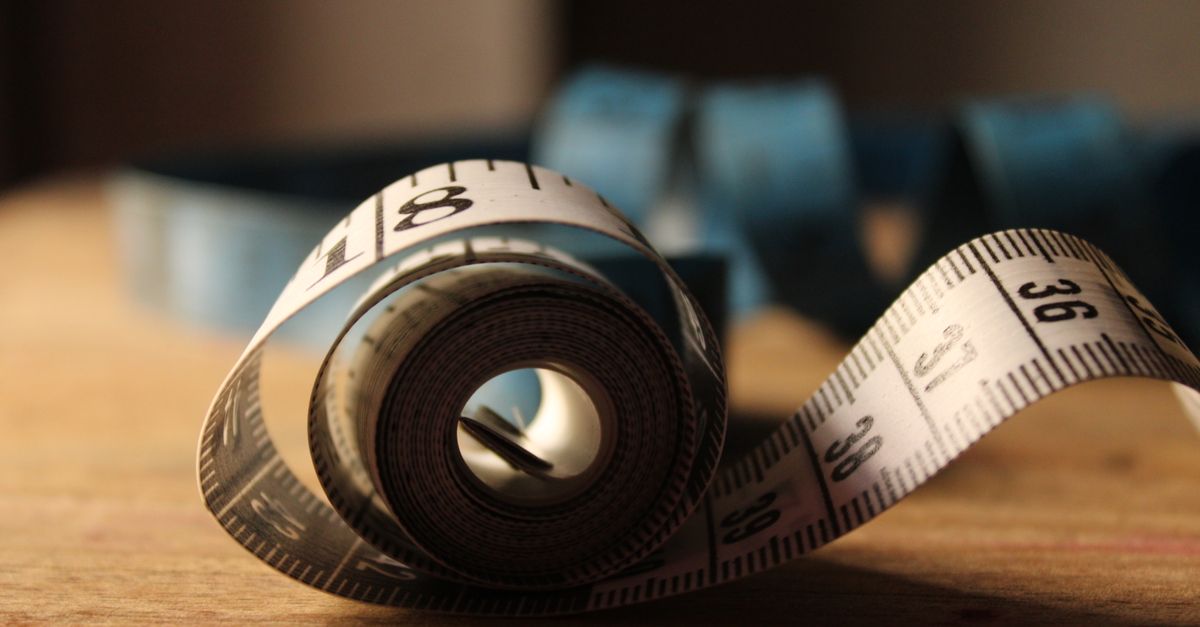
Use a number rather than the mirror. The NHS recommends checking your waist against your height. Find the midpoint between the bottom of your ribs and the top of your hips, wrap a tape there, breathe out normally, and divide by your height in the same units. Below 0.5, a waist under half your height, is the target. From 0.5 to 0.59 counts as increased health risk, and 0.6 or above as a further increase.
NICE guidance for adults recommends using that ratio alongside BMI, as a practical estimate of central fat that BMI alone misses. As a goal it beats “flatter sides”: it moves before your clothes do, and it is tied to your health rather than to how you photograph.
What does a plate that supports fat loss look like?
There is no love handle diet, and anything sold as one is selling the location rather than the mechanism. What empties fat stores is a modest energy deficit held long enough to count, so the real question is how to hold one without being hungry all day.
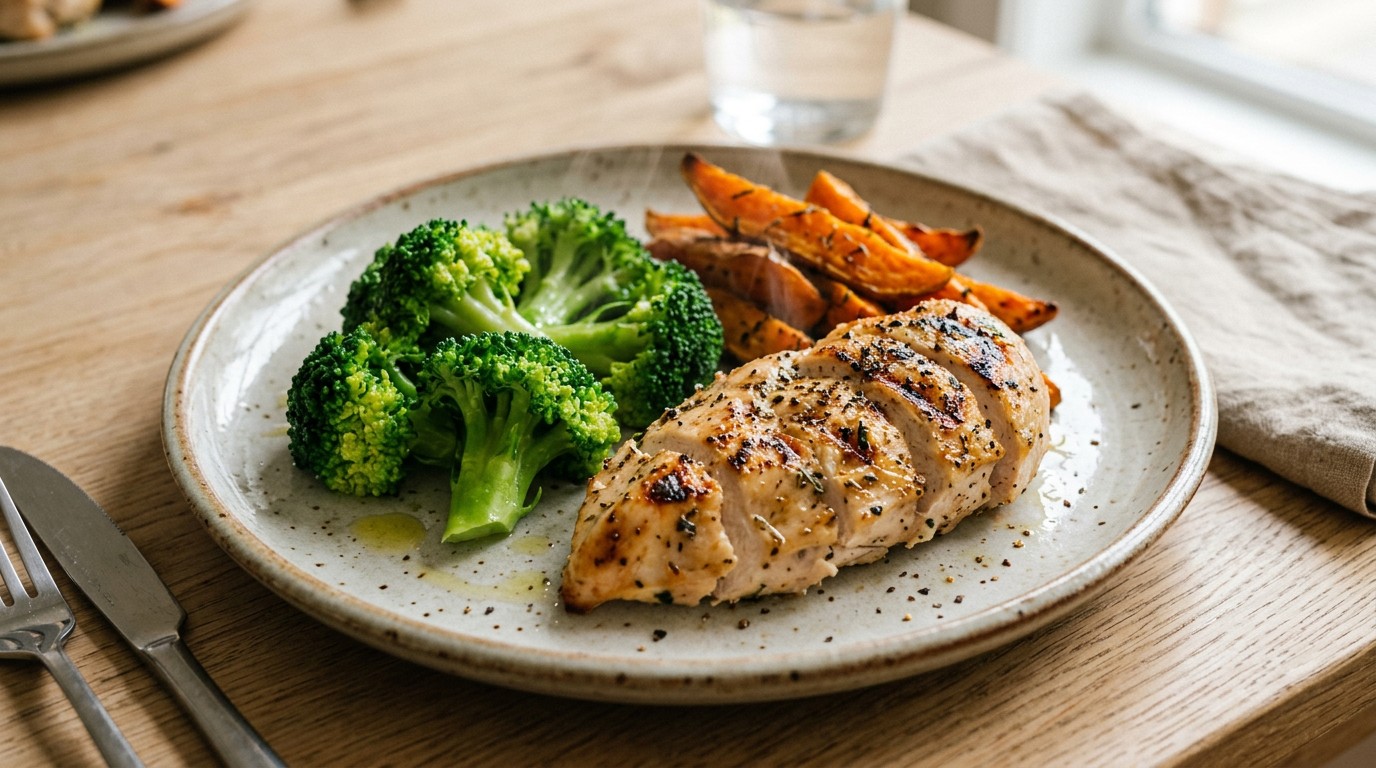
Protein does most of that work. Per calorie it is the most filling of the three macronutrients, and it protects lean tissue while you eat less, which matters because the aim is to lose fat rather than muscle. A palm sized portion at each main meal is rough but workable. Vegetables then buy volume for very few calories, and volume is most of what makes a smaller intake feel normal.
Carbohydrate is a portion question, not an exclusion question. The claim that it gets stored at the waist because of insulin has a real mechanism buried in it: insulin rises after eating and suppresses fat release while elevated. But across a whole day it is total energy balance that decides whether stores fill or empty, and dropping bread does not route fat away from your flanks. Sugary drinks and bakery snacks are worth cutting for a plainer reason: a lot of calories, and you are no fuller afterwards.
Does walking after a meal actually do anything?
More than the effort suggests, though not in the way it is usually sold. A 2023 systematic review with meta-analysis in the journal Sports Medicine, pooling trials of exercise before and after eating, found that walking soon after a meal reduced the rise in blood glucose more than the same walk taken beforehand, and that exercise before a meal showed no significant effect at all.
Be clear about what that is. It is glucose handling, not a fat burning shortcut. Fifteen minutes on foot after lunch burns few calories. What it buys is better tolerance of the meal you just ate, plus a few hundred steps, twice daily, for years.
Why does sleep change how much of the loss comes from fat?
Because it changes the composition of what you lose, not only the total. In a controlled crossover study at the University of Chicago, ten adults with overweight went through fourteen days of identical calorie restriction twice, once with 8.5 hours in bed and once with 5.5. Weight lost was similar either way. The split was not: on short sleep, roughly half as much came from fat and more from fat free tissue, and participants reported feeling hungrier.
Ten participants in a laboratory is a small study, so hold the exact figures loosely. The direction sits comfortably with the wider literature, and the practical reading is not controversial: cutting sleep to make room for a workout is a poor trade.
Which exercises earn their place, and what is each one for?
| What to do | Roughly how often | The job it is actually doing |
|---|---|---|
| Full body strength training | 2 to 4 sessions a week | Holds on to muscle, so more of the weight lost is fat |
| Cardio you will genuinely repeat | Most days, in any form you tolerate | Adds to the deficit and improves fitness |
| General daily movement and steps | Every day | The largest and most overlooked slice of daily energy use |
| Side planks, dead bugs, controlled twists | 2 or 3 short sessions a week | Builds the trunk muscle under the fat |
Notice what the last row does not claim. Core work does not remove the fat above the muscle, and no volume of it will. It is worth doing anyway, because a trunk that braces properly makes every other lift easier. Expecting fat loss from it is how people end up doing hundreds of twists and concluding their body is broken.
Loaded side bends deserve a footnote. The warning that they thicken the waist is repeated far more often than it is demonstrated. Light to moderate loads are still sensible, for a reason unrelated to waist width: bending sideways under a heavy weight puts an awkward demand on the lower back.
How long does it take to see a difference?
There is no honest number, and anyone offering one is guessing. The rate depends on the size of the deficit, how consistently you hold it, and how much fat you start with. Someone whose pattern favours the flanks may find the waist changes last whatever the training looks like.
What you can control is the measurement. Take the waist and height ratio weekly at the same time of day, and read the trend across a month rather than any single figure. It helps to know that much of what looks like love handles on a given morning is not fat at all. A salty meal, waistband pressure and overnight fluid shifts move the picture daily and say nothing about the store underneath.
If the measurement has not moved across a couple of months of genuine consistency, or if weight is changing in a direction you did not intend, that is worth raising with a doctor rather than treating as a reason to cut harder.
This article is general information, not medical advice, and is not a substitute for care from a qualified healthcare professional. Speak to your doctor about your own situation.
Frequently asked questions
Can you lose love handles without losing weight overall?
Not really. The fat at your sides only shrinks when total body fat falls, and total body fat falls when you use more energy than you take in. You can change how the area looks by building trunk and back muscle, and posture makes a visible difference, but the fat layer itself follows the whole body rather than the local training.
Do side bends and twists get rid of love handles?
No. They train the oblique muscles sitting under the fat, which is useful for a stronger and more stable trunk, but they do not remove the layer on top. Fat loss at the flanks follows a whole body energy deficit, in whatever order your own pattern gives it back.
Why are my love handles the last thing to go?
Where fat leaves first is set largely by inherited pattern, sex hormones and age rather than by anything you do in the gym. The flanks are a late store for many people, particularly men. It is frustrating but it is not a sign the approach is wrong.
Is the fat at my sides the dangerous kind?
The fat you can pinch is subcutaneous and carries less metabolic risk than visceral fat packed around the organs. Both tend to rise and fall together, though, which is why a waist to height ratio of 0.5 or above is treated as a marker of increased health risk.
Does cutting carbohydrate target love handles specifically?
No food group is stored preferentially at the waist. Cutting refined carbohydrate often helps in practice because it removes calories that were not making you full, not because carbohydrate lands at your sides in particular.
Should I weigh myself or measure my waist?
Both, weekly, at the same time of day. Daily readings mostly reflect fluid, food volume and salt, which move far more over a day than fat does. The waist to height ratio is the more useful of the two for this particular question.
Leave a Reply