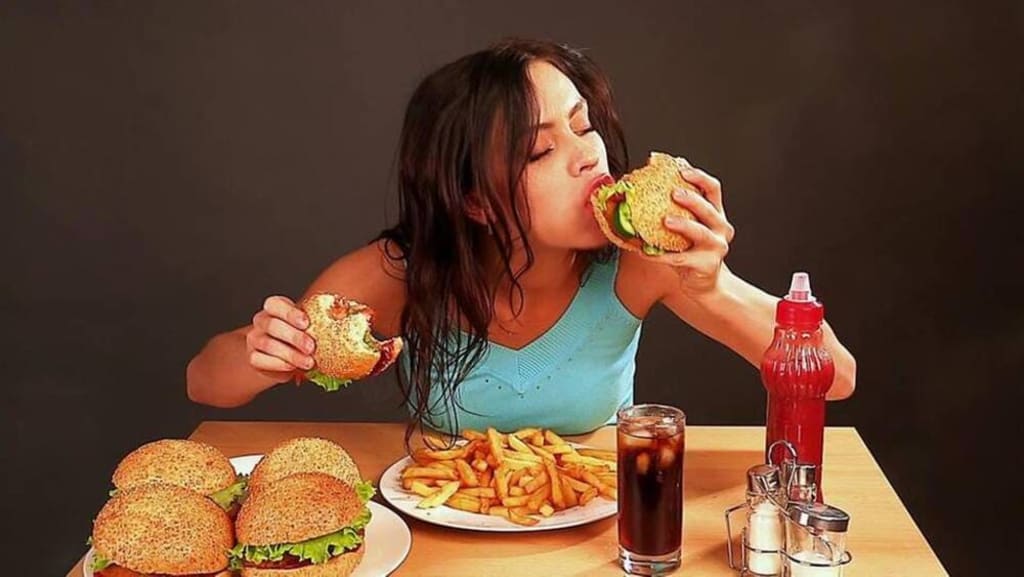
Not by trying harder. Emotional eating is a learned response to a feeling, so what changes it is noticing the feeling before the food, and having something else that reliably answers it. That takes practice rather than willpower, and for some people it takes professional help.
🌧️ What is emotional eating, actually?
Eating because you feel something rather than because your body needs fuel. That is the whole definition, and it covers far more behaviour than the phrase usually suggests. Birthday cake you were not hungry for is emotional eating. So is the biscuit at four o’clock because the meeting was a disaster. So is the second helping because dinner is the only good thing that has happened all day.
Most of that is ordinary and nobody needs to fix it. Food has carried meaning for as long as there have been people, and a species that ate purely for calories would have declined every wedding invitation it ever received. The real problem is narrower. It is when eating becomes the main tool you own for handling a feeling, so it gets used on everything, including the feelings it cannot touch.
You will often see a confident percentage for how many people eat emotionally. Treat those figures carefully. The surveys behind them use different questionnaires and different definitions of the same word, and a behaviour this common and this blurry does not come with a tidy number attached. What is clear is that it is normal rather than rare.
💭 How do you tell emotional hunger from physical hunger?
The classic distinction is genuinely useful, with one caveat: it is a rule of thumb, not a test. The two overlap constantly, and a stressful afternoon can sit on top of a real, unfed appetite. Use the pattern below to notice what is happening, not to grade yourself in front of an open fridge.
| Physical hunger | Emotional hunger |
|---|---|
| Builds gradually over a few hours | Arrives suddenly, usually after something happened |
| Most foods would do the job | Only one specific food will do |
| Felt in the body, as emptiness and flagging energy | Felt in the head and chest, as urgency |
| Eases once you have eaten enough | Carries on past comfortably full |
| Ends in satisfaction | Often ends in regret |
One question, asked before the first bite rather than after the third, does most of the work here: what am I actually hungry for? Even when the honest answer is still crisps, you have made a choice instead of running a reflex, and choices are the things that can change.
🧬 Why does food work so well as a coping tool?
Because it works. That is the uncomfortable part, and any article that skips it is not being straight with you. Something rich and sweet produces a small, fast lift in mood, it is legal, it is cheap, it is available at eleven at night, and it asks nothing of anybody else. If you set out to design a coping mechanism for a tired person with no spare time, you would struggle to beat it.
Your brain treats that as learning, not as a moral event. The feeling arrives, the food follows, the relief follows that, and the link between them gets a little stronger every time. It is the same machinery that makes you check your phone in a lift for no reason. Emotional eating is a well practised habit doing exactly what habits are supposed to do.
Stress pushes from a second direction. When it is sustained, appetite regulation shifts and cravings tend to run towards energy dense food rather than towards celery, which is an unhelpful piece of design but not a personal failing. Short sleep pushes the same way, nudging hunger signalling upwards and making everything feel more urgent than it is.
⚙️ What actually breaks the pattern?
Noticing comes first. Not stopping, noticing. For a week or two, write down what happened immediately before you ate without being hungry.

- 📍 Where were you, and what had just happened?
- 💭 What were you feeling, in one word?
- ⏱️ Did you eat quickly, and did you taste any of it?
- 🌤️ How did you feel twenty minutes afterwards?
It is a dull exercise and it beats any list of substitute snacks, because the trigger almost always turns out to be one or two specific situations rather than a general shortage of resolve. You cannot plan around "stress". You can plan around Thursday evenings.
Then comes the pause. Between the feeling and the food there is a gap, and the gap is where the choice lives. A few minutes is enough. You are not trying to argue yourself out of eating, which mostly fails and adds a layer of guilt on top. You are trying to find out what the urge is really asking for.
Naming the feeling helps more than it has any right to. In a UCLA neuroimaging study, putting an emotion into words reduced activity in the amygdala, the region that drives the alarm response, and increased activity in a prefrontal area involved in reining it in. "I am not hungry, I am furious about that email" is a very short sentence that does real work.
🌿 What do you do instead?
Substitution advice is usually useless because it is generic. A bubble bath does not answer loneliness and a glass of water does not answer boredom. What matters is matching the replacement to the thing the urge is actually about.

| What the urge is really about | What tends to answer it |
|---|---|
| Stress after a hard day | Something physical: a walk, a shower, ten minutes outdoors |
| Loneliness | Contact with an actual person, even a two minute call |
| Boredom | Something that occupies your hands or your attention |
| Exhaustion | Sleep, or simply accepting that the day is over |
| Real hunger that arrived late | Food, eaten properly, sitting down |
Two things make this work. Decide the list in advance and keep it short, because nine at night is nobody’s finest hour for inventing new coping strategies. And expect the replacement to feel worse than the food for the first few weeks, because it is competing against something with years of practice behind it. That is not the method failing. That is what a new habit feels like from the inside.
There is one more piece that gets left out of almost every list, and it is probably the most important. Eat enough during the day. Severe restriction from breakfast onwards is one of the most reliable ways to produce a loss of control in the evening, and a good deal of what gets filed under emotional eating is an underfed body wearing a psychological costume. If the pull towards food runs in the background all day, the related question of what food noise is and whether you can turn it down is worth reading alongside this.
🪜 What about the guilt afterwards?
The guilt is not a footnote, it is part of the engine. Eat to feel better, feel worse about eating, then eat about that: this loop is where most people are genuinely stuck, and it is not solved by more disapproval. Self criticism is a form of stress, and stress was on the trigger list to begin with.
So the useful response to an episode is flat curiosity rather than punishment. What happened just before it. What was going on that day. What would have helped at the time. Every episode is information about your own triggers, which makes it more valuable than a clean week you cannot explain.
Emotional eating is not a character defect. It is a habit built on a real feeling, and habits are learned things, which is the entire reason they can be unlearned.
🌻 Does any of this have evidence behind it?
Some, and it is more modest than the internet implies. A 2023 systematic review and meta analysis of emotional eating interventions in adults living with overweight or obesity pooled 34 studies. Psychological interventions did reduce emotional eating, but the pooled effect was small, the studies varied enormously in what they measured and how, and the authors found clear signs of publication bias. Cognitive behavioural therapy came out strongest of the approaches compared.
Read that as encouraging rather than settled. It says the general direction is right, that structured psychological work does better than gritting your teeth, and that anybody promising to fix your relationship with food in a fortnight has gone a long way past the evidence.
💬 When is this more than a habit?
Some patterns need proper help rather than a self help article. If eating regularly feels out of control, if you eat a large amount in a short time and feel distressed afterwards, if you hide eating from the people you live with, or if food and your body take up most of your thinking, that is worth raising with a doctor. The NHS page on binge eating disorder sets out the symptoms and the treatments available, and it is a condition that responds well to treatment.
The same applies if low mood, anxiety or a difficult period is driving the eating. Treating what sits underneath usually works better than managing the eating on its own, and a GP is the right place to start.
Frequently asked questions
Is emotional eating a sign that something is wrong with me?
No. It is a very common learned response, and using food for comfort is something nearly everybody does at some point. It becomes worth addressing when it is the only tool you have for difficult feelings. If eating feels genuinely out of control, that is a separate question and a doctor is the right person to ask.
How long does it take to break emotional eating?
There is no honest number. It depends on how long the habit has been running, what is driving it, and whether anything else is going on underneath. Progress usually looks like shorter episodes and faster recovery rather than a clean stop, and anyone selling you a fixed timeline is guessing.
Does drinking a glass of water instead actually help?
Occasionally, for the small share of urges that were really thirst or restlessness. It does nothing at all for stress, loneliness or boredom, which is most of them. It is a reasonable first check and a poor strategy.
Should I just keep tempting food out of the house?
It reduces the number of decisions you have to make when you are tired, which is a genuine benefit. It does not touch the trigger, though, and for some people strict restriction makes the urge stronger rather than weaker. Useful as one tool among several, not as the whole plan.
Can a supplement or appetite suppressant stop emotional eating?
No. Emotional eating is a response to a feeling, and nothing you swallow addresses the feeling that started it. Products marketed on that promise are selling the promise. Any medication that affects appetite is a matter for a doctor, not a checkout page.
Is emotional eating the same as binge eating disorder?
No. Binge eating disorder is a recognised medical condition involving repeated episodes of eating a large amount with a sense of loss of control and real distress afterwards. Emotional eating is a behaviour, not a diagnosis. If what you experience looks closer to the first description, speak to a doctor.
This article is general information, not medical advice, and it is not a substitute for care from a qualified healthcare professional. Speak to your doctor about your own situation.
Leave a Reply