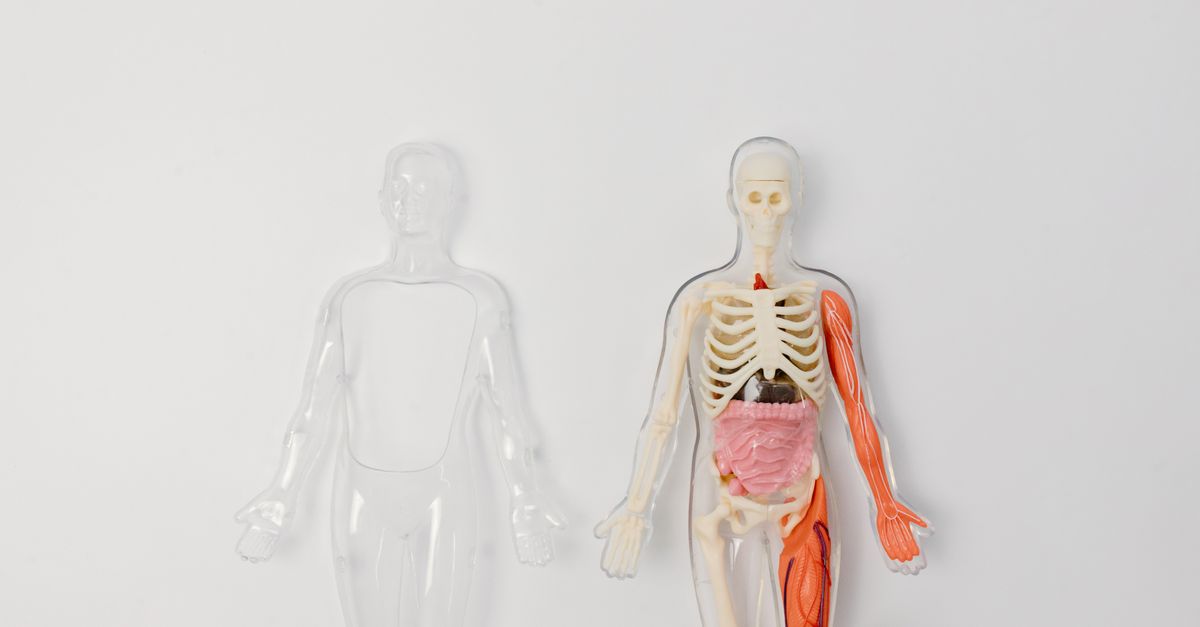
Hormones are chemical messengers that set the pace of your metabolism, appetite, mood, sleep and reproduction. Insulin, thyroid hormone, cortisol, estrogen, progesterone, testosterone, melatonin and serotonin each do one main job. When one drifts, the symptoms overlap heavily, which is why a blood test beats guessing from a symptom list.
What do hormones actually do all day?
A hormone is made in one place, travels in the blood, and acts somewhere else entirely. Your thyroid sits in your neck and changes how fast a muscle cell in your calf burns fuel. The quantities involved are tiny, and almost all of them run on feedback: the brain reads the level in the blood and dials the gland up or down, the way a thermostat handles a room.
That thermostat is the reason so much hormone marketing quietly fails. Nudge one hormone from the outside and the loop usually notices and corrects. It is also the reason symptoms are such poor detectives. Tiredness, weight change, low mood and broken sleep sit downstream of energy handling, and several hormones touch energy handling at once. So do iron levels, sleep debt, medication and an ordinary rough month.
Which hormones do what?
Here is the short version of the eight that come up most often, and the sign that usually brings each one to a doctor’s attention.
| Hormone | Made by | Main job | Typical sign it has drifted |
|---|---|---|---|
| 1️⃣ Insulin | Pancreas | Moves glucose out of the blood into cells | Rising fasting glucose or HbA1c, often silent for years |
| 2️⃣ Thyroid hormone | Thyroid gland (T4 and T3) | Sets the resting metabolic rate | Cold hands, fatigue and a slow pulse, or the opposite |
| 3️⃣ Cortisol | Adrenal glands | Runs the daily stress and wake rhythm | True excess is rare and shows purple stretch marks and thin skin |
| 4️⃣ Estrogen | Ovaries, plus fat tissue after menopause | Menstrual cycle, bone density, blood vessels | Hot flushes, night sweats, cycle changes |
| 5️⃣ Progesterone | The ovary after ovulation | Prepares the uterus lining each cycle | Irregular, absent or unpredictable periods |
| 6️⃣ Testosterone | Testes, ovaries and adrenals | Maintains muscle and bone, drives libido in both sexes | Low drive and low mood in men, acne and excess hair in women |
| 7️⃣ Melatonin | Pineal gland | Signals biological night to the rest of the body | Falling asleep hours later than intended |
| 8️⃣ Serotonin | Mostly the gut, a little in the brain | Gut movement in the body, mood signalling in the brain | No useful routine blood test exists |
What does insulin actually control?
Eat, and blood glucose rises. The pancreas releases insulin, and insulin opens the door for glucose to enter muscle, liver and fat cells. In insulin resistance those cells answer the knock more slowly, so the pancreas knocks harder. Insulin runs high while glucose still looks respectable, which is why the early years of this are so quiet.
There is a whole genre of online quiz that will diagnose your insulin resistance from ten questions about bloating and the 3pm slump. A fasting glucose or HbA1c test costs very little and is the thing that actually answers the question. The NHS type 2 diabetes information sets out who gets offered testing and why.
What genuinely improves insulin sensitivity is unglamorous. Working muscle pulls glucose in without needing much insulin at all, so walking and strength training both help. Losing some body fat helps. Regular sleep helps. None of that photographs well next to a bottle.
Does an underactive thyroid explain a large weight gain?
Thyroid hormone sets your resting metabolic rate, so an underactive thyroid does slow the engine. The size of the effect is smaller than most people expect. The American Thyroid Association puts it at roughly 5 to 10 pounds of weight related to the thyroid, depending on severity, and notes that most of that gain is retained salt and water rather than fat.
An overactive thyroid runs the other way, though the same source points out that it also raises appetite, so some people gain weight instead of losing it. Diagnosis is a blood test, not a symptom list, and the NHS guidance on an underactive thyroid covers the symptoms and the treatment. We have gone deeper into what an underactive thyroid actually does to the body separately.

💥 Is cortisol really the reason for belly fat?
Cortisol is not a villain, it is a schedule. Levels peak in the early morning to get you upright and fall to their lowest around midnight. Because of that rhythm, a single random blood cortisol is close to uninterpretable on its own, which does not stop it being sold as a standalone panel.
Genuine pathological excess is Cushing syndrome. It is uncommon and it does not present as a vague sense of being frazzled. The NHS page on Cushing syndrome lists what it actually looks like: purple stretch marks, skin that bruises easily, a rounded face, muscle weakness at the hips and shoulders. Anyone with those signs needs a doctor, not a supplement.
Which leaves the everyday version. Chronic stress does affect body weight, but the mechanism is easier to demonstrate through sleep, appetite and what ends up on the plate at 10pm than through a direct cortisol to fat pathway. Adrenal fatigue, meanwhile, is not a recognised medical diagnosis, however confidently the saliva test kit is marketed.
What happens to estrogen, progesterone and testosterone over time?
Estrogen and progesterone move together across the menstrual cycle, with progesterone rising only after ovulation. Both fall away at menopause, and the NHS menopause and perimenopause pages describe the symptom pattern that follows. After menopause, fat tissue becomes the main site where estrogen is made, which is one reason body composition and hormones are so tangled together.
One claim deserves a quiet retirement: you cannot sweat out excess estrogen. Estrogen is broken down by the liver and leaves through bile and urine. Exercise can lower circulating estrogen, but the route is body composition and liver metabolism, not your pores.
Testosterone matters in both sexes. In men it maintains muscle, bone and libido, and it declines gradually with age rather than falling off a cliff. In women it is present in much smaller amounts, and it is a raised level that causes trouble, as in polycystic ovary syndrome. The direction of travel differs by sex, which is part of why male and female hormones handle fat differently.
Do melatonin and serotonin work the way people think?
Melatonin is a timing signal rather than a sedative. It tells the body that night has started, and it takes its cue from light, which is why an hour of bright screen at midnight pushes the signal later. It is a medicine as well as a hormone, and the NHS melatonin medicines page sets out what it is licensed for and what it interacts with. That part is worth reading before buying anything.
Serotonin is the bigger surprise. Over 90 percent of the body’s serotonin sits in the gut, and peripheral serotonin cannot cross the blood brain barrier, according to a 2019 review in Advances in Nutrition. The gut pool and the brain pool are effectively separate systems that happen to use the same molecule.
So the happiness hormone framing does not survive contact with the physiology, and neither does the turkey story. Tryptophan, the raw material, has to compete with other amino acids for the same transporter into the brain, and a protein rich meal supplies plenty of competitors. Dinner is dinner, not a mood intervention.

🌿 What actually moves your hormones, and what does not?
Sorting the two is most of the job. On the side that has something behind it:
- ✅ A regular sleep and light schedule. Melatonin follows the light and dark you actually get, not the bedtime you intended.
- ✅ Strength training and everyday walking. Contracting muscle takes up glucose largely independently of insulin.
- ✅ Protein and fibre at meals. Both flatten the glucose rise and keep appetite signals steadier between meals.
- ✅ Less alcohol. It fragments sleep and adds to the liver’s workload, and the liver is where several hormones are cleared.
- ✅ Treating an actual diagnosis. Thyroid disease, diabetes and polycystic ovary syndrome have real treatments, and a herbal blend is not one of them.
And on the side that does not:
- 🔸 Detox teas and hormone reset cleanses. There is no cleanse step anywhere in endocrine physiology. The liver and kidneys were already doing it.
- 🔸 Cortisol blockers sold against belly fat. Cortisol excess large enough to change your shape is a diagnosis, and it is treated in a clinic.
- 🔸 Sweating estrogen out. Covered above, and still not a thing.
- 🔸 Adrenal fatigue saliva panels. The condition they claim to measure is not recognised, so neither is the result.
⚖️ When is it worth getting tested?
Because these symptoms overlap so much, testing is what separates them. A doctor can order a TSH test for thyroid function, HbA1c or fasting glucose for blood sugar handling, and sex hormone tests timed to the menstrual cycle where that matters. Which tests apply depends on your history, not on a checklist found online.
Make an appointment if symptoms persist for weeks, and sooner for a lump or swelling in the neck, periods that stop or become very irregular, unexplained weight change, or persistent low mood. Do not start, stop or change any medicine on the strength of a symptom list, including this one.
Frequently asked questions
Can you fix a hormone imbalance with diet alone?
It depends entirely on what has gone wrong. Insulin sensitivity responds well to food, movement and sleep. Thyroid disease, Cushing syndrome and type 1 diabetes are medical conditions that need medical treatment, and diet supports that treatment rather than replacing it.
Which blood tests are used to check hormones?
TSH for thyroid function, HbA1c or fasting glucose for blood sugar handling, and sex hormone tests timed to the cycle where relevant. Cortisol needs tests that account for its daily rhythm rather than one random sample. A doctor decides which apply to your symptoms.
Does stress cause weight gain through cortisol?
Chronic stress is linked to weight gain, but the clearest route runs through disrupted sleep, appetite and eating patterns rather than a direct cortisol to fat pathway. Cortisol excess big enough to change body shape on its own is a specific diagnosis with specific signs.
Do flaxseed and soy really change estrogen levels?
They contain phytoestrogens, plant compounds that bind estrogen receptors far more weakly than the body’s own estrogen. Trial results on menopausal symptoms are mixed and generally modest, and eating soy foods is not the same as taking a concentrated extract.
Is it safe to take melatonin every night?
Melatonin is a medicine, not a shelf supplement, and in the UK it is prescription only. It is a timing signal rather than a sleeping tablet, and it can interact with other medicines. Whether it suits you is a question for your doctor or pharmacist.
Why do so many hormone problems share the same symptoms?
Fatigue, weight change, low mood and poor sleep all sit downstream of how the body handles energy, and several hormones influence that at once. Non hormonal causes such as low iron, sleep debt and medication produce the same picture, which is why testing beats guessing.
This article is general information, not medical advice, and is not a substitute for care from a qualified healthcare professional. Speak to your doctor about your own situation.
Leave a Reply