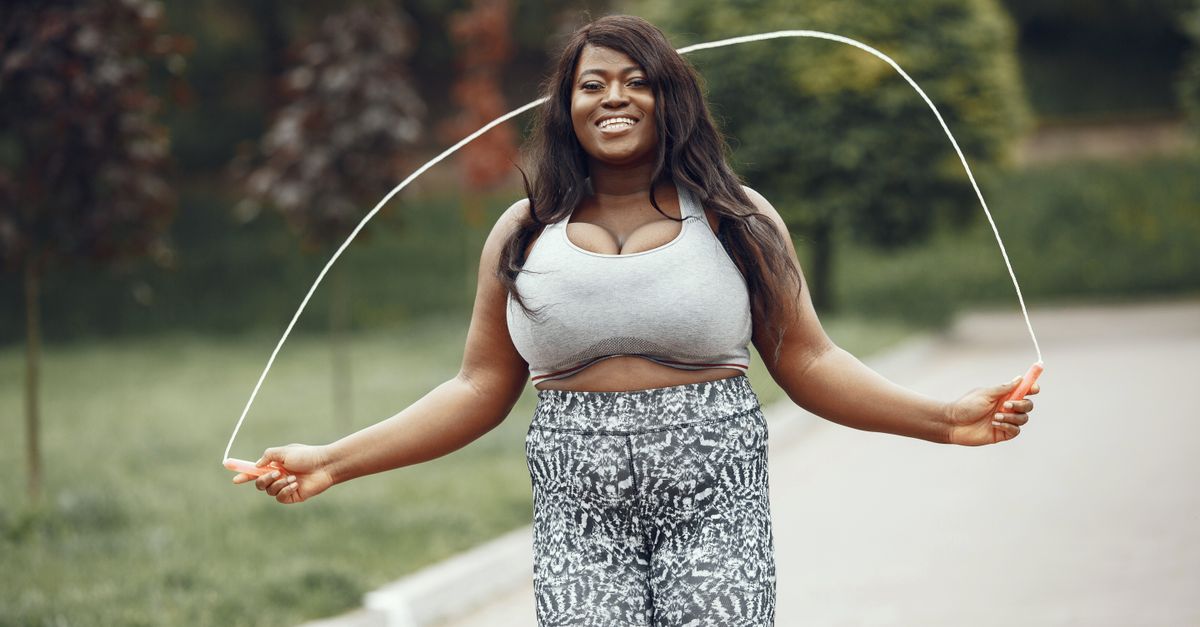
A 30 day jump rope challenge reliably builds skipping skill, calf and foot resilience, and cardiovascular fitness. Whether it changes your weight depends almost entirely on what happens at the table, because a realistic session burns roughly 100 to 200 calories. Rope work is the stimulus. Energy intake is the lever.
Does jumping rope really burn more calories than running?
The claim that a rope beats a run is the most repeated line in skipping, and it hides the one detail that decides the answer: pace, and how many minutes of it you can actually hold. The Adult Compendium of Physical Activities, the reference table researchers use to score the energy cost of activities, rates rope jumping at a slow pace, under 100 skips a minute, at 8.3 METs. A moderate pace comes in at 11.8 METs, and a fast pace of 120 to 160 skips a minute at 12.3 METs. One MET is roughly what your body uses sitting still, so those figures sit firmly in the vigorous band.
Intensity was never the weak point. Duration is. Rate per minute is only half of the calculation and minutes are the other half. Someone who has not picked up a rope since school will manage thirty to sixty seconds before the rope catches a heel, while that same person can often walk or jog for twenty minutes without stopping. Skipping therefore wins comfortably per minute and frequently loses on the total, at least for the first two or three weeks. That gap narrows as coordination improves, which is the genuine reason a first month is worth doing.
How many calories does a jump rope session actually burn?
You can estimate it rather than guess. Multiply the MET value by 3.5, multiply that by your body weight in kilograms, then divide by 200, and the result is calories per minute. The figures below are for ten minutes of rope actually turning, not ten minutes of standing in the garden holding one.
| Body weight | Slow pace, 8.3 METs | Moderate pace, 11.8 METs | Fast pace, 12.3 METs |
|---|---|---|---|
| 60 kg | 87 kcal | 124 kcal | 129 kcal |
| 75 kg | 109 kcal | 155 kcal | 161 kcal |
| 90 kg | 131 kcal | 186 kcal | 194 kcal |
Two caveats keep those numbers honest. Estimates built on METs include the energy you would have burned sitting on the sofa anyway, so the extra burn credited to the session is smaller than the headline figure. And a fifteen minute session is not fifteen minutes of skipping. A standard beginner structure of thirty seconds of work against sixty seconds of rest contains about five minutes of rope inside a fifteen minute block. That is why the widely repeated figure of 200 to 300 calories per quarter hour only holds for a heavier person skipping fast and almost continuously, which is not what anybody’s first month looks like.
Why does the scale so often not move by day 30?
Because exercise on its own is a weak lever on body weight. That is not a discouraging opinion, it is one of the better replicated findings in the field. The Cochrane review of exercise for overweight or obesity, which pooled 43 trials and roughly 3,500 participants, found that exercise used as the only intervention produced small weight losses, and that results improved markedly when exercise was paired with a change in diet. The same review found something more encouraging: blood pressure, triglycerides and fasting glucose improved with exercise even where body weight did not.
Skipping in particular has been put to the test. A pilot randomised trial published in Nutrients ran undergraduates through eight weeks of either calorie restriction, rope skipping, or both. The groups that cut calories lost weight. The group that only skipped showed no significant change in body weight, body mass index or body fat from where it started. Combining the two produced the best cardiometabolic picture among the participants who were overweight, which is the practical headline: the rope earns its place next to a dietary change rather than instead of one.
The mechanism is not mysterious. Vigorous exercise tends to raise appetite, and for some people it quietly reduces the incidental movement in the rest of the day. A session worth 150 calories is cancelled by one carelessly chosen recovery snack. None of that makes skipping pointless. It makes it a fitness intervention with a modest energy side effect, which is a more useful thing to understand on day one than on day 29.

What does a sensible 30 day progression look like?
The usual failure mode of a 30 day challenge is not laziness. It is calf and shin pain somewhere in the second week, caused by going from no impact at all to daily impact inside seven days. Progression is better governed by how your lower legs feel the following morning than by a chart. Three sessions a week is a reasonable opening position, building towards four.
| Week | Rope time per session | Work to rest | What is actually adapting |
|---|---|---|---|
| 1 | 5 to 8 minutes | 30 seconds on, 60 seconds off | Timing, wrist rotation, soft landing |
| 2 | 8 to 12 minutes | 45 seconds on, 45 seconds off | Calf and Achilles tolerance |
| 3 | 12 to 15 minutes | 60 seconds on, 45 seconds off | Sustained effort and rhythm under fatigue |
| 4 | 15 to 20 minutes | 90 seconds on, 45 seconds off | Pacing, and repeating a session without soreness |
The rests are useful time rather than dead time. Filling them with squats, press ups or a plank turns the session into a circuit without adding any more impact, which is the same logic behind structured interval training. If your calves are complaining, swap a rope day for something flat and low impact such as a steady walking routine instead of pushing through it. Nothing in the calendar is more important than arriving at day 30 uninjured.
What does skipping ask of your calves, shins and feet?
Every skip is a landing. The calf complex and the Achilles tendon absorb and return most of that load, and the shin bone takes what is left. Tendon and bone adapt more slowly than the heart and lungs do, and that mismatch is exactly why enthusiasm outruns tissue in week two. The fitness arrives before the structure is ready to carry it.
- Land on the balls of the feet with the heels brushing down lightly, rather than dropping flat onto them.
- Keep the jump low. Two centimetres of clearance is enough for the rope to pass.
- Rotate the rope from the wrists, not the shoulders, so the arms stay quiet and the effort stays in the legs.
- Choose wood, rubber matting or short grass over concrete and tile where you have the option, and wear shoes with some cushioning under the forefoot.
- Treat pain that persists after the session, particularly along the front of the shin or at the back of the heel, as a reason to take days off rather than a sign of progress.
Who should be careful before starting a jump rope challenge?
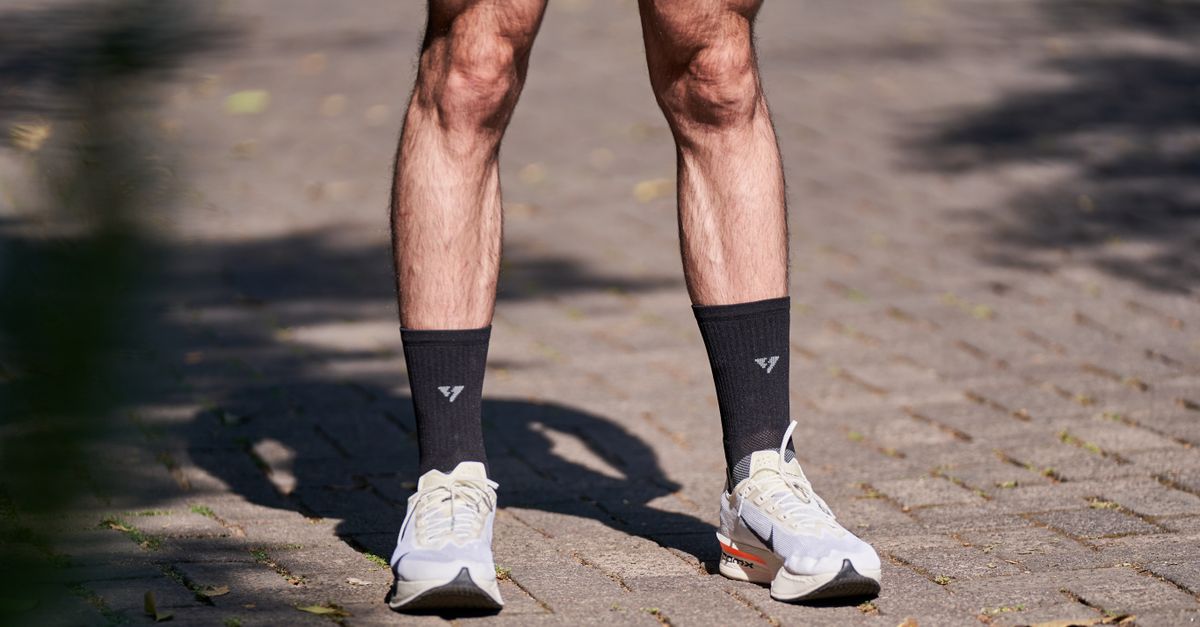
Skipping is high impact, and that changes the calculation for some people. Anyone with knee, hip, ankle or back problems, anyone recovering from a lower limb injury, anyone pregnant or recently postpartum, and anyone with pelvic floor symptoms has a genuine reason to speak to a doctor or a physiotherapist before committing to repeated impact work. A high starting body weight does not make skipping unsafe by itself, and it does raise the load on every landing, which usually means fewer and shorter sets at the start. Where a heart condition or blood pressure is not yet well controlled, that conversation comes first. Low impact cardio, including pool based work, can build the same aerobic base while the joints are the limiting factor.
What actually decides whether the 30 days change anything?
Four things, roughly in order of weight. Whether you finish the month at all, which is mostly a question of whether the progression was gentle enough to avoid a shin problem. Whether energy intake changed alongside it. Whether sleep held up, since short sleep makes appetite harder to regulate and makes the sessions feel worse. And whether anything continues past day 30, because a month is long enough to build a skill and a habit, and too short for body composition to be the sensible measure of success.
Judged as a fitness project, thirty days with a rope is an excellent use of twenty minutes a day. You finish able to do something you could not do at the start, with better rhythm, stiffer and more resilient ankles and a higher aerobic ceiling. Judged as a standalone weight loss project, it is a small nudge. Both of those are true at once, and knowing which one you are buying is what stops the month feeling like a failure when the scale disagrees with the effort.
Frequently asked questions
How long should a beginner jump rope each day?
Five to eight minutes of actual rope time, broken into short sets, is plenty in the first week. The limiting factor is rarely your lungs, it is the calves and shins, and those adapt over weeks rather than days. Including a warm up, the rests and some stretching, the whole session lands at around twenty minutes.
Will jumping rope give me bigger calves?
It is unlikely to add noticeable size. The loading is light and highly repetitive rather than heavy, which builds endurance and stiffness in the calf and Achilles more than bulk. Calves often feel tighter and look more defined in the early weeks, which is a different thing from growing.
Is a PVC, beaded or weighted rope better for a beginner?
A beaded rope is usually easiest to learn on, because you can hear each strike and it holds its arc outdoors in wind. Thin PVC speed ropes turn faster and punish poor timing. Weighted ropes add shoulder and forearm load and are worth leaving alone until the basic bounce is reliable.
Can I jump rope every day for 30 days?
You can, and a large share of people who try it stop early with sore shins. Three to four sessions a week with rest days in between is a more reliable route to day 30 intact. If you want to move daily, alternate rope days with walking or another low impact option rather than stacking impact on impact.
Do I need a mat or a special surface?
Not strictly, though the surface matters more than most people expect. Wood, rubber matting and short grass all reduce the load compared with concrete or tile. A mat is worth buying mainly if concrete is your only option, and shoes with some cushioning under the forefoot help either way.
What if I keep tripping on the rope?
Tripping is a length and timing problem, not a fitness one. Stand on the middle of the rope and the handles should reach roughly to your armpits. Then jump lower, rotate from the wrists rather than the elbows, and count a steady rhythm out loud. Most people stop catching the rope within the first week.
This article is general information, not medical advice, and is not a substitute for care from a qualified healthcare professional. Speak to your doctor about your own situation, particularly before starting repeated high impact exercise.
Leave a Reply