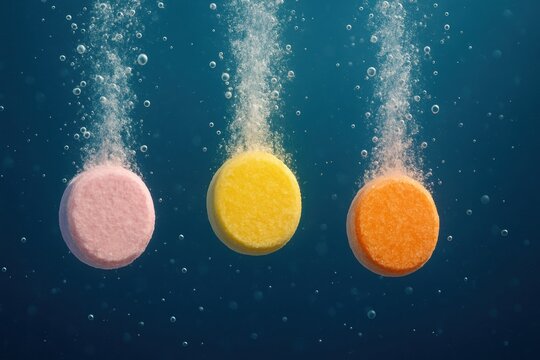
Fizzing is a delivery format, not a mechanism. A tablet that dissolves in water reaches the gut faster and tastes better, and neither of those things changes body fat. What matters is only what is dissolved in it. The scale can still move in the first few days, because water is not fat.
The comparison in the title is the wrong shape. An effervescent tablet is not a method sitting opposite a method called real weight loss. It is a way of packaging something. Two tablets that fizz identically can contain completely different things.
What is actually happening when the tablet fizzes?
Effervescent tablets contain a carbonate or bicarbonate salt, usually a sodium one, pressed together with a dry acid such as citric or tartaric acid. Both sit inert while the tablet is dry. Add water and they react, releasing the carbon dioxide you can see. The design breaks the tablet apart in seconds, hides bitter tastes, and turns something you swallow into something you drink. Pharmacists have used it for decades.
So it is a choice about how a product feels to take, not about what happens afterwards. Most of the gas leaves the glass before you drink it, and the acid and carbonate end up as ordinary salts in solution. Nothing in that reaction reaches fat stores, appetite, or the energy your body uses in a day. Any effect comes from whatever else is in the tablet, and would be identical from a plain capsule.
The format also does persuasive work its chemistry cannot support: something that visibly reacts reads as active in a way a capsule does not. That is a design outcome, not evidence.
| What the format does | What that affects | What it leaves untouched |
|---|---|---|
| Breaks the tablet apart in water | How fast the contents are absorbed | Whether the contents do anything |
| Releases carbon dioxide | Taste and mouthfeel | Energy balance |
| Adds sodium salts to the dose | Your sodium total for the day | Fat stores |
| Looks like something is happening | Expectation | Body composition |
Why does the scale move anyway?
Because scale weight is not a measurement of fat. Body water shifts within a single day in response to sodium, carbohydrate, heat, hormones and whatever is in your digestive tract. A kilogram between two mornings is ordinary. How far it shifts, and why the first week of any diet flatters you, is set out in our page on how to drop water weight, with the glycogen arithmetic behind it.
Two things explain most early drops. The first is glycogen: carbohydrate stored in muscle and liver is held alongside water, roughly three grams of water per gram of glycogen, so anything that cuts carbohydrate releases water in the first week. The second is any diuretic effect, caffeine included, which moves fluid out and shows up the next morning. Both reverse when normal eating resumes.
| What changes | How fast it shows on the scale | Is it fat? |
|---|---|---|
| Body water and sodium balance | Within a day | No |
| Glycogen and its stored water | A few days | No |
| Food still in the gut | Hours | No |
| Muscle | Weeks to months | No, and losing it is not the aim |
| Fat | Weeks to months | Yes |
Which is why the first week of almost any new routine looks impressive and the fourth does not. There is more here on the difference between weight loss and fat loss, and on why the scale moves slowly even when you eat less. The same early drop is what powers most quick weight loss methods, from juice cleanses to sweat suits, and it is worth knowing which of them ever reach fat.
What does the evidence say about weight loss supplements generally?
The National Institutes of Health Office of Dietary Supplements maintains the reference summary, and it is blunt: there is little scientific evidence that weight loss supplements work. Studies on individual ingredients tend to be small, short and of poor quality, and some of the supporting data comes from laboratory or animal work rather than from people. The same fact sheet notes that some ingredients interact with medicines, and advises talking to a healthcare provider first.
Two structural points follow. In the United States, supplements need no approval from the Food and Drug Administration for safety or effectiveness before sale, so being on shelves carries no evidential weight. And a study on an ingredient is not a study on a product containing some unstated amount of it.
Is there a downside to the effervescent format itself?
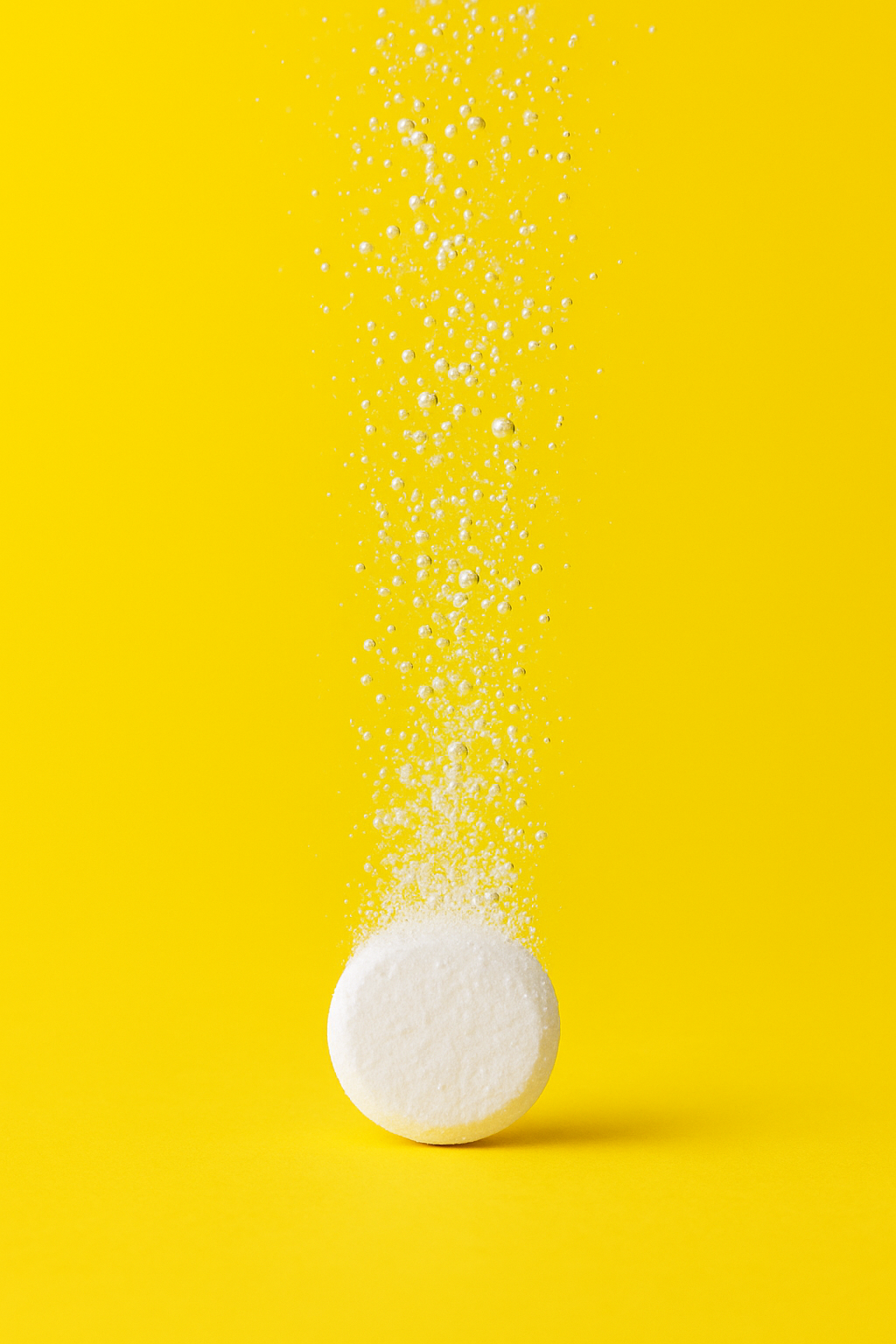
One that gets little attention: the sodium. The carbonate producing the fizz is usually a sodium salt, so sodium is structural here rather than optional. A cross sectional study in BMJ Open in 2023 measured it. Effervescent supplement tablets sold in Germany averaged about 284 mg of sodium each, ranging from 76 mg to 565 mg, and the American products sampled had a median near 190 mg. That puts one tablet between 4 and 28 percent of the World Health Organization maximum of 2,000 mg a day, before any food.
Whether that matters depends on the rest of the diet and on the person. A 2013 nested case control study in The BMJ, following more than 1.2 million patients, found that people prescribed sodium containing effervescent, dispersible and soluble formulations had higher odds of cardiovascular events and of newly recorded high blood pressure than people on non sodium versions of the same medicines. Two caveats: it studied prescription medicines rather than supplements, and being observational it cannot establish cause.
Anyone advised to watch their sodium, for blood pressure, heart or kidney reasons, has reason to read the label on anything effervescent, including products bought for reasons unrelated to weight.
So what actually governs whether you lose fat?
Energy balance over time, and then everything that decides whether you can hold that position for months instead of days. The second half is where attempts differ, and none of it is interesting enough to sell.
- Total intake across the week rather than the day. There is a fuller explanation of what a calorie deficit actually is here.
- Protein, which affects fullness and how much muscle you keep while losing.
- Sleep, which changes how manageable appetite feels more than most people expect.
- Resistance training, which largely decides how much of the loss is fat rather than muscle, plus ordinary daily movement.
- Whether the approach survives a bad week, which matters more than any of the above.
None of that comes with a number attached, because how much and how fast depends on where somebody starts, what else is happening medically, and what they can sustain. Anyone offering you a figure has not met you. The same ground, applied to one area, is covered in how belly fat actually comes off.
How do you tell a real claim from a marketing one?
- A specific amount of weight, or a specific timeline. Nobody can know either for a stranger.
- Photographs used as proof. That is selection, not evidence.
- A study on one ingredient offered as evidence for a finished product.
- A mechanism described in place of an outcome. Mechanisms are easy to make convincing.
- Urgency, limited stock or a countdown. Evidence does not expire.
When is this worth taking to a doctor instead?
If weight has changed without an obvious reason, if approaches that used to work have stopped, or if there are other symptoms alongside it, that is a medical question rather than a shopping one. Thyroid function and medications that affect weight are common, checkable, and outside what an article can assess. Regulated medical treatments also exist, prescribed and monitored, which is a different category from anything sold as a supplement. If food or body image has become something you think about constantly, that is worth raising too.
Frequently asked questions
Does an effervescent tablet work faster than a normal one?
It dissolves faster, which can mean the contents are absorbed sooner. That is about timing, not effect. If what has been dissolved does nothing useful, delivering it earlier changes nothing.
Is the fizzing itself doing anything?
No. The bubbles are carbon dioxide from a carbonate and an acid reacting in water, and most of the gas leaves before you drink it. It makes the tablet break up quickly and taste less bitter.
Why did the scale drop in the first week and then stop?
Usually water. Carbohydrate is stored alongside water, so anything that cuts carbohydrate or increases fluid loss shows quickly and reverses just as quickly. Fat changes over weeks, which is why it never produces a dramatic first week.
Is the sodium in effervescent products worth worrying about?
It depends on the rest of the diet and on your own health. A 2023 BMJ Open study found effervescent supplement tablets averaging roughly 190 to 284 mg of sodium each, a meaningful share of the World Health Organization daily maximum of 2,000 mg. Anyone limiting sodium has reason to check the label with a pharmacist.
Are any weight loss supplements proven to work?
The position of the NIH Office of Dietary Supplements is that the evidence is generally weak, with small, short and low quality studies behind most individual ingredients. That is why no product is recommended anywhere on this page.
What is worth doing instead?
The unexciting list, which is also the one with evidence behind it. Enough protein, enough sleep, resistance training, daily movement, and an intake you can hold for months rather than weeks. If progress has stalled despite that, a doctor can check things an article cannot.
This article is general information, not medical advice, and is not a substitute for care from a qualified healthcare professional. Speak to your doctor or pharmacist about your own situation, including before starting any supplement.
Leave a Reply