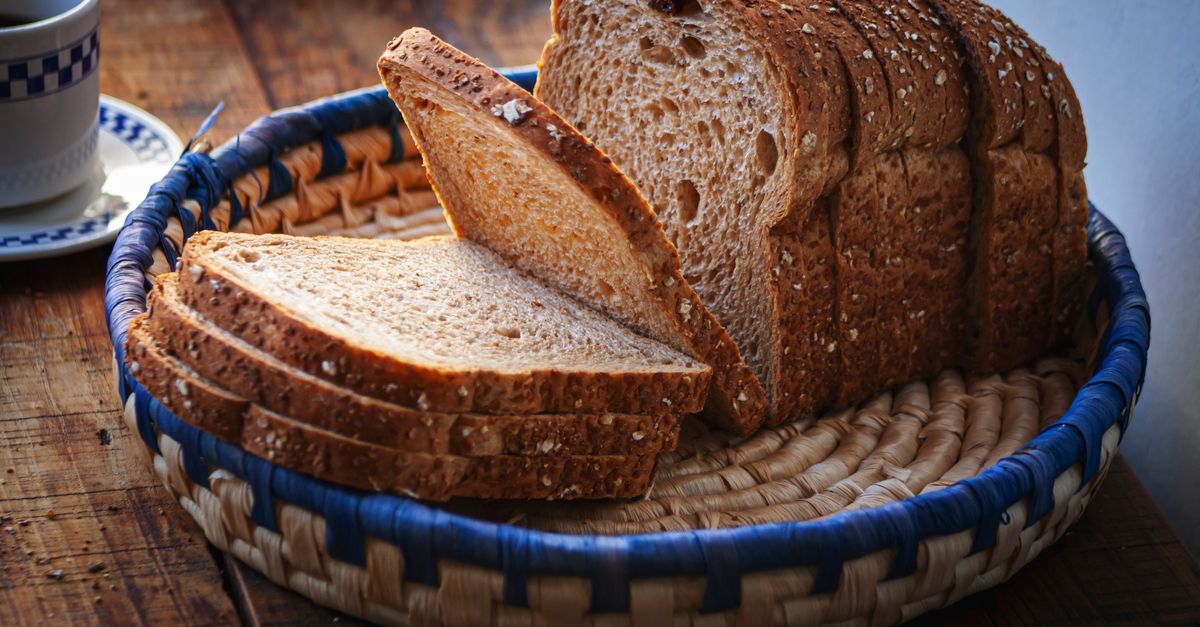
Roti made from whole wheat or millet flour has a lower glycaemic index and more fibre than most sliced bread, so it raises blood glucose more gently after a meal. Neither one burns fat on its own. Total intake, protein, fibre and portion size decide fat loss, and the glycaemic index moves it far less than people assume.
Is roti actually lower on the glycaemic index than bread?
The glycaemic index ranks how quickly a fixed amount of carbohydrate from a food raises blood glucose, measured against a reference. A score of 55 or below is called low, 56 to 69 is medium, and 70 or above is high. On that scale most packaged sliced bread sits high and most flatbreads made from coarsely milled whole grain sit lower. That part of the popular claim holds up.
The clearest pooled numbers come from a meta analysis of millet studies published in Frontiers in Nutrition. Drawing on 39 studies and 111 observations for glycaemic index, it put the mean for millets at 52.7, against 74.2 for refined wheat and 71.7 for milled white rice. That is a gap of roughly a third, and it is the strongest evidence behind the case for roti.
Whole wheat roti sits between those poles. Published tests mostly land between the low 50s and the low 60s, and the spread is not measurement noise. How finely the atta is milled, how thin the roti is rolled and what is eaten alongside it all shift the result. It is also why a wholemeal loaf loses most of its apparent advantage: the flour is milled fine enough that the starch still meets digestive enzymes quickly. Wholemeal on a label does not mean slow.
| Food | Glycaemic index reported | Band | What that means here |
|---|---|---|---|
| Refined wheat products, white bread included | 74.2 on average | High | The refined comparison used in the millet meta analysis |
| Milled white rice | 71.7 on average | High | Included for scale |
| Wholemeal sliced bread | Usually close to white bread | Medium to high | Fine milling cancels much of the fibre advantage |
| Whole wheat roti | Roughly low 50s to low 60s in published tests | Low to medium | Moves with milling, thickness and the rest of the meal |
| Millets as a group, ragi, jowar, bajra and others | 52.7 on average | Low to medium border | Averaged across 39 studies and 111 observations |
| Ragi, finger millet, on its own | 61.1 on average | Medium | Well above the figure of 35 that circulates online |
Does a lower glycaemic index mean you lose more fat?
This is where the popular version comes apart. A lower glycaemic index genuinely changes the shape of the blood glucose curve in the two hours after a meal. It does not follow that it changes body weight over months, and that second step is the one almost everybody skips.
The most careful summary available is the 2023 Cochrane review of low glycaemic index and low glycaemic load diets in people with overweight or obesity. Pooling the randomised trials, its authors concluded there may be little to no difference in the main outcomes between low glycaemic index diets and higher glycaemic index diets, or indeed any other diet, and rated the certainty of that evidence as moderate to very low. Body weight was among the outcomes assessed.
That is not a verdict against roti. It is a verdict against the idea that swapping one staple for another does the work by itself. When trials hold total intake roughly steady and change only the glycaemic index, the effect on weight is small. The levers that reliably move weight, how much you eat overall, how much protein and fibre arrive with it, and whether the pattern is one you can keep, sit outside the glycaemic index entirely.
The insulin story bolted onto this argument goes further than the evidence does. Insulin does rise more after a fast digesting carbohydrate, which is a normal response rather than a fault. The stronger claim, that this rise itself causes fat gain regardless of how much you eat, is actively contested and not settled. Treating it as established is how a reasonable point about fibre turns into a story about bread making you fat.
What actually differs between a slice and a roti on the plate?
Compare like with like and the two are closer than the internet suggests. A medium roti made from around 30 grams of atta and a medium slice of white bread land in broadly similar territory for calories. The differences that matter are elsewhere, and most of them are behavioural rather than metabolic.
- Fibre. Whole grain and millet flours carry more of it. The NHS puts the adult target at 30 grams of fibre a day and notes most adults manage only about 20, so anything that narrows that gap is worth having.
- What goes on top. Bread is a delivery system for butter, jam, cheese and spreads, and it is usually eaten in twos. Roti more often arrives with dal, sabzi or curd. Much of the real calorie difference lives here, not in the flour.
- What else is in it. Packaged bread commonly contains added sugar, added fat and preservatives. Roti made at home is flour, water and heat.
- How fast it goes down. A soft slice takes seconds. A roti takes chewing, and food that takes longer to eat is generally harder to overeat.
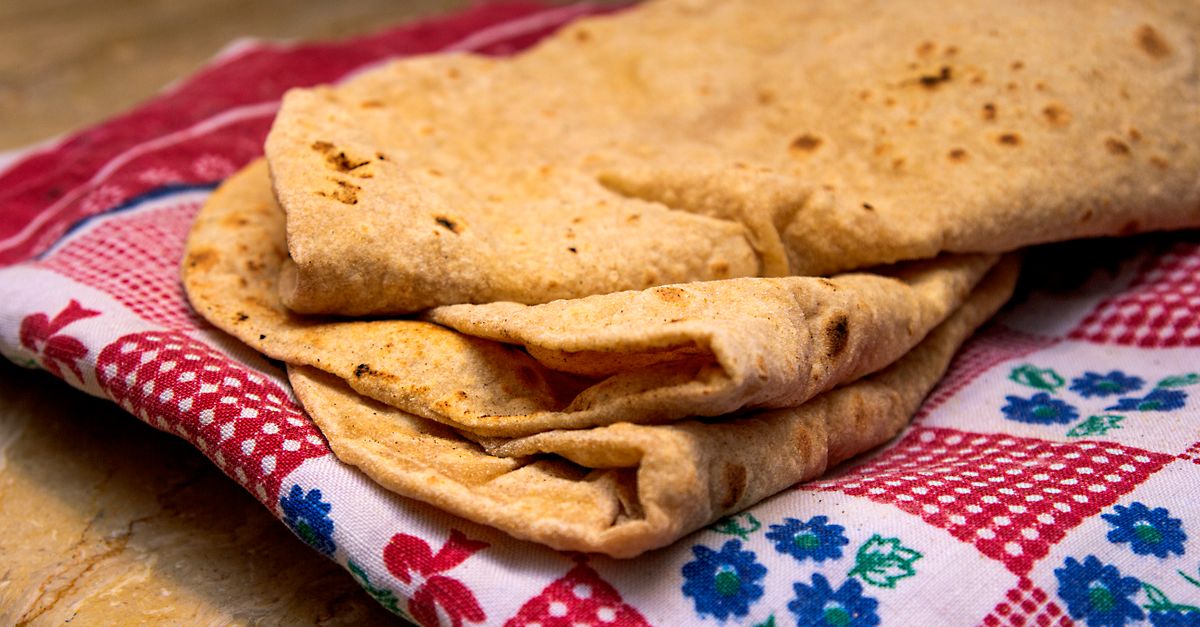
None of this makes bread a problem food. It makes bread easier to overeat and easier to eat with fat and sugar attached. That is a behaviour difference, and for most people it matters more than the glycaemic index difference.
Which atta has the lowest glycaemic index?
Millet flours as a group test lower than wheat, and that is the honest core of the ragi claim. What does not survive checking is the specific number attached to it.
Ragi, or finger millet, is routinely quoted online at a glycaemic index of about 35. In the pooled data its mean is 61.1, which places it in the medium band rather than the low one. It still beats refined wheat comfortably. It is simply not the outlier that 35 implies, and any ranking of attas built on that figure orders them wrongly.
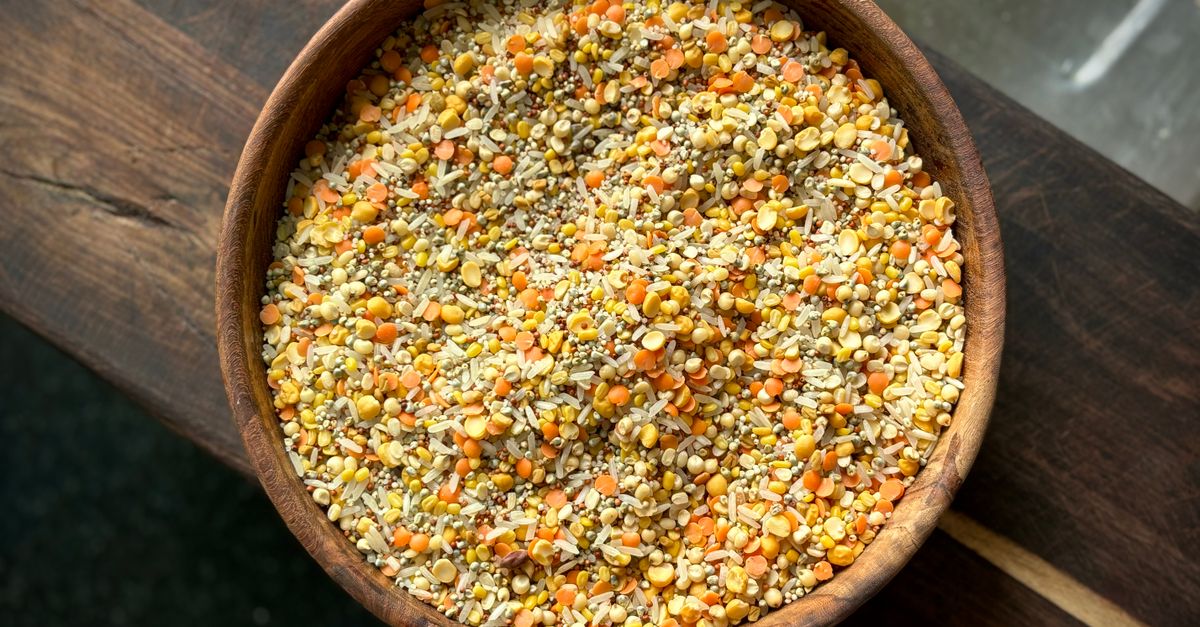
Jowar and bajra sit in a similar region, and individual measurements for all three swing widely, because a flatbread is not a standardised food. Two households making bajra roti from the same sack of flour can produce breads that test differently. A tidy league table of attas, ranked to one decimal place, claims more certainty than the measurements support.
- Millet flours, ragi, jowar and bajra, generally test lower than refined wheat and bring more fibre and minerals with them.
- Whole wheat atta is a sound everyday base, and it is much closer to millet flour than to white bread.
- Adding besan to the atta, or simply putting dal on the plate, lowers the glycaemic load of the meal more reliably than hunting for the perfect flour.
- Ragi, jowar and bajra contain no gluten. That matters for coeliac disease and gluten sensitivity. It has nothing to do with fat loss.
Does any flour speed up your metabolism?
No. Nothing that goes into a roti raises resting metabolic rate by an amount you would ever notice. The idea that bajra heats the body and therefore burns more is folk physiology rather than measurement, and the matching claim that bread slows your metabolism over time has no support behind it either.
Food does have a thermic effect, the energy spent digesting it, but it is modest and driven mostly by protein rather than by which cereal you chose. Where fibre and protein earn their reputation is appetite. They change how full you feel, fullness changes how much you eat, and intake changes weight. That chain is real, but it runs through appetite, not metabolic rate.
How do you choose between bread and roti day to day?
The useful question is not which food wins in the abstract but which one fits the meal in front of you.
- When a meal is already heavy on carbohydrate, the flour matters least. Portion size does almost all of the work.
- Roti from whole atta or millet flour is a sensible default for most Indian meals, largely because of fibre, chewing time and what it is normally served with.
- If bread is what actually fits your morning, a dense wholegrain or seeded loaf eaten with protein is far closer to a roti meal than the same loaf eaten with jam.
- Judge the plate rather than the flour. Dal, vegetables and curd change the glycaemic response of a meal more than swapping ragi for jowar ever will.
NHS guidance on starchy foods and carbohydrates puts starchy food at just over a third of what you eat and suggests choosing wholegrain versions where you can. That is roughly where this whole comparison lands. The staple is not the enemy. The version of it and the amount of it are the parts you get to choose.
This article is general information about food and metabolism, not personal medical advice. Blood sugar, insulin resistance and weight are shaped by medication, thyroid function and other conditions, so anyone with a specific concern is best served talking it through with a doctor or a registered dietitian.
Is roti better than bread for weight loss?
Roti from whole wheat or millet flour is usually the better everyday choice, mainly because it carries more fibre, takes longer to chew and tends to be eaten with dal or vegetables rather than spreads. It is not better because it burns fat. Total intake still decides the outcome, and neither food changes that on its own.
Is the glycaemic index of ragi roti really 35?
No. The figure of 35 circulates widely but does not match the pooled measurements. A meta analysis of millet studies puts the mean glycaemic index of finger millet at 61.1, which is in the medium band. Ragi still tests well below refined wheat, so it remains a good choice. The specific number is just wrong.
How many rotis a day is reasonable?
There is no single correct number, because it depends entirely on how much energy a person needs and what else is on the plate. Someone doing heavy physical work and someone with a desk job are not comparable. Counting rotis in isolation is less useful than looking at the whole meal.
Is brown or multigrain bread much better than white bread?
Usually less than the packaging implies. Many brown and multigrain loaves are made from finely milled flour with some added grain, so the glycaemic index stays close to white bread. A dense wholegrain or seeded loaf with visible grain and a higher fibre figure on the label is a genuine step up. The word multigrain on its own is not.
Does eating roti at night cause weight gain?
Eating carbohydrate in the evening does not cause weight gain by itself. What matters is the total across the day rather than the clock. Late eating is sometimes linked with higher intake because it tends to be less planned and more snack driven, but the roti itself is not the mechanism.
Are millet rotis suitable for people avoiding gluten?
Ragi, jowar and bajra are naturally free of gluten, which makes them relevant for coeliac disease and gluten sensitivity. Cross contamination during milling and packing is a real consideration, so certified products matter for anyone with coeliac disease. Avoiding gluten has no benefit for fat loss in people who tolerate it.
Leave a Reply