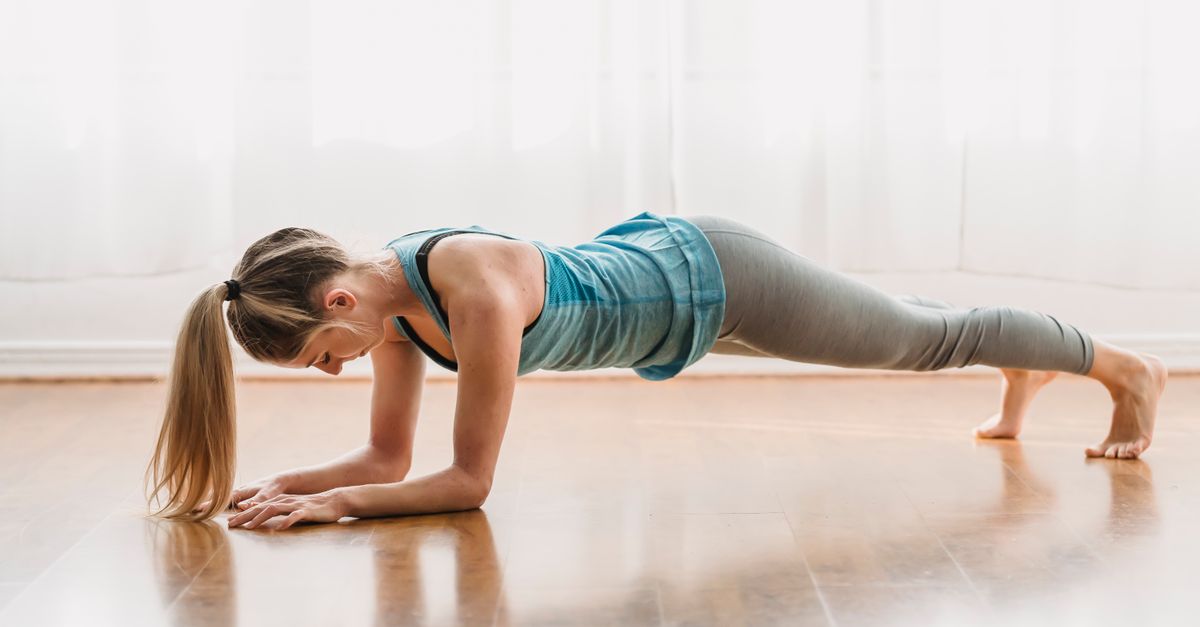
No single exercise is best for your abs, because your abs do several different jobs. The plank is the strongest option for one of them, resisting movement through the spine, and it does that job well. It does nothing for rotation, little for the lower abs, and nothing at all for how visible those muscles are.
The plank earned its reputation honestly, and it is also asked to carry more than any single exercise can. Here is what it trains, what it leaves untouched, and where it belongs.
What does a plank actually train?
Most of what your abdominal wall does in a day is not movement. It is the resistance to movement. When you carry a heavy bag on one side, lift a box off the floor, or stand up from a low chair, the muscles around your trunk are working to stop your spine bending in a direction you did not ask it to.
A front plank is the cleanest version of that. Gravity pulls your hips toward the floor and your abdominal wall stops them arriving. That is called resisting extension, and it is the one job the plank does better than almost anything else. Because it is an isometric hold, the muscles produce force without changing length, so what improves is endurance in a fixed position rather than strength through a range of movement.
The muscles involved go well past the sheet of the rectus abdominis that people call the six pack. The obliques are holding the ribs square, the deeper transverse abdominis is tightening around the waist, and the glutes, quads and shoulders are all working to keep the line straight. That is why a plank shakes: it is not one muscle failing, it is most of the body holding still under load.
Why did the plank become the default ab exercise?
It needs no equipment, takes ten seconds to teach, looks safe on camera, and produces a number you can compare with someone else. A thirty day plank challenge sells in a way that an anti rotation press never will.
There is a serious idea underneath the hype, though. Training the deep trunk muscles to control the spine, known in the research as motor control exercise, has been tested properly. A Cochrane review of 29 trials covering 2,431 people with chronic non specific low back pain found it produced better pain and function than a minimal intervention, and found little or no difference between it and other forms of exercise. The reviewers concluded that because it is not superior to other exercise, the choice should come down to preference, training, cost and safety.
That is a more modest result than the plank’s reputation implies. Core training helps. It is not uniquely powerful, and holding a timed position on the floor is not the only route to it.
Is the plank safer for your back than sit ups?
Sit ups and crunches get called dangerous because they bend the spine repeatedly. That reputation rests largely on laboratory work loading isolated spine segments many thousands of times over, rather than on trials showing that people who do crunches end up with worse backs. It is a reasonable worry, not a settled finding.
The plank does hold the spine in a neutral position, which is a sensible choice if bending forward aggravates your symptoms. But neutral is not automatically safe. A plank held with a sagging lower back loads the spine in extension for a full minute, and there is nothing obviously kinder about that than a slow, controlled crunch.
For ordinary low back pain, the NHS advises staying active and carrying on with daily activities rather than resting in bed, and it does not single out particular abdominal exercises as off limits. The practical rule is the dull one. If a movement provokes your symptoms, leave it out for now, and get pain that is severe, spreading or not settling looked at properly rather than trained around.
Does your core need more than one kind of exercise?
This is where the original question falls apart. Your trunk muscles have several separate jobs, and a front plank trains one of them. Asking which single exercise is best for your abs is a bit like asking which single word is best for a sentence.
| What the core is doing | What it feels like | Example exercise | Does a front plank cover it? |
|---|---|---|---|
| Resisting extension | Stopping the lower back arching under load | Front plank, dead bug | Yes, directly |
| Resisting side bending | Staying square when weight hangs on one side | Side plank, single arm carry | Partly, at best |
| Resisting rotation | Refusing to twist when something pushes across you | Pallof press, single arm press | No |
| Bending the spine under load | Curling the ribs down toward the hips | Cable crunch, reverse crunch | No |
| Controlling the hips against the trunk | Lowering the legs while the back stays flat | Leg lowering, hanging knee raise | No |
A programme built entirely from front planks trains the top row and quietly skips the other four. That is not a fault in the plank, it is what happens when one exercise is asked to cover five functions.
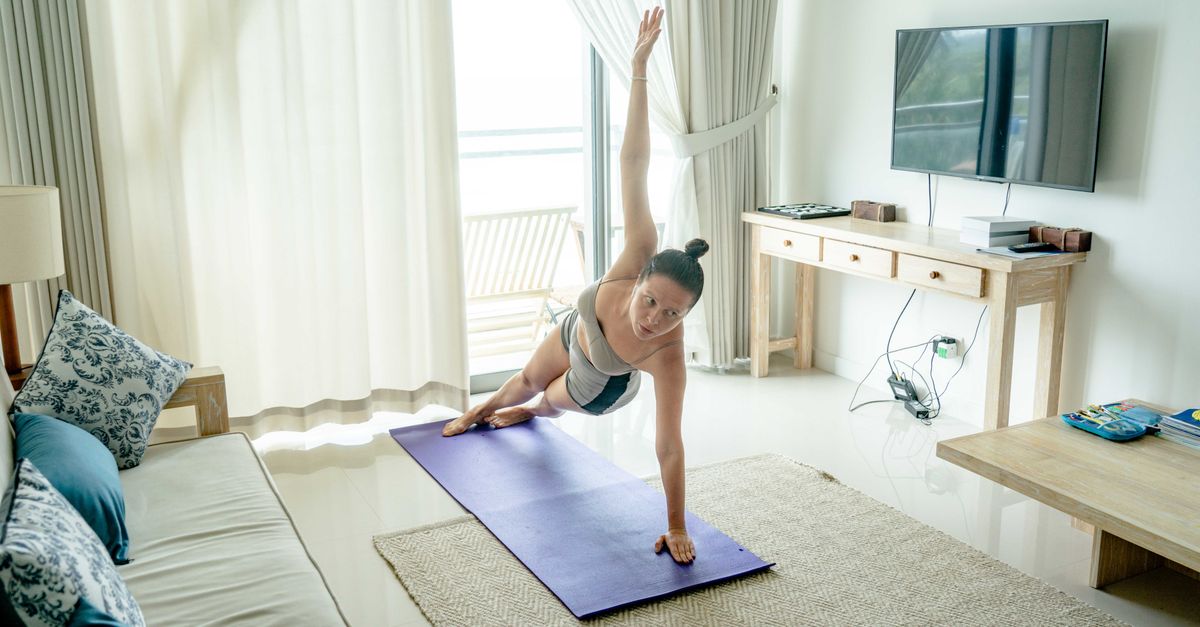
Adding a side plank, a dead bug and something that resists rotation takes a few extra minutes and covers most of that table.
Will planks make your abs visible?
No, and neither will anything else you do on the floor. Visible abdominal muscles need two separate things at once: enough muscle to see, and little enough fat sitting over the top of it. Planks contribute modestly to the first and not at all to the second.
Working a muscle does not strip fat from the skin above it. Fat is mobilised from across the body according to overall energy balance, and where it comes off first is largely a matter of genetics, sex and hormones rather than exercise selection. Training the abdominal wall harder does not redirect that process to the abdomen.
It is worth retiring the idea that the transverse abdominis flattens the stomach, too. It is a deep muscle that raises tension around the waist and it does affect how you hold yourself, but it sits underneath the fat rather than doing anything about it.
The NHS activity guidelines for adults aged 19 to 64 ask for at least 150 minutes of moderate intensity activity a week, or 75 minutes of vigorous activity, plus strengthening work on at least two days that covers all the major muscle groups: legs, hips, back, abdomen, chest, shoulders and arms. Notice the framing. The abdomen is one group on a list of seven, not the centre of the plan.
How long should you hold a plank?
Shorter than most people think, and harder. Once you can hold a genuinely tight plank for roughly forty five to sixty seconds, adding minutes mostly trains tolerance for boredom rather than the muscles.
Making the position harder is the more useful direction:
- Narrow the base. Bring the feet closer together until the hips have to work to stay level.
- Lengthen the lever. Walk the elbows forward of the shoulders, which sharply increases the demand.
- Remove a support. Lift one foot, then one forearm, keeping the hips completely still.
- Add load. A plate placed on the upper back by someone else, once the position is reliable.
- Change the job. Move to a side plank, a dead bug, or a press that resists rotation.
Each of those makes a thirty second hold demanding again, which is the whole point. Quality beats duration, and a tight thirty seconds asks more of you than a loose two minutes.
What goes wrong in most planks?
A good exercise done poorly is a mediocre exercise. The common faults are easy to spot and easy to fix:
- Hips sagging. The lower back takes the load instead of the abdominal wall. Squeeze the glutes hard and tuck the pelvis slightly.
- Hips too high. The position turns into a rest, propped on the shoulders and hips rather than held.
- Neck cranked up. Look at the floor a little ahead of your hands so the head stays in line with the spine.
- Holding your breath. Brace the abdominal wall and keep breathing shallowly through the hold.
- Waiting out the timer. Tension should be deliberate for the whole hold, not switched on at the start and drifting.
Where does the plank belong in a week of training?
Treat it as one item on a short list rather than the list itself. Two or three core exercises chosen so they cover different jobs, done two or three times a week alongside full body strength work and enough general activity, will do more than any amount of accumulated plank time.
The plank is a good exercise being held to an impossible standard. Judged as a foundation for trunk strength it is excellent, and worth keeping. Judged as the thing that produces visible abs, nothing would pass, because that is not a job any exercise does on its own.
This article is general information about exercise and is not personal medical advice. If you have back pain, an existing injury, a hernia, or you are pregnant or recently post partum, speak to a doctor or a physiotherapist about which core exercises suit your situation.
Is the plank better than crunches for building abs?
They train different jobs, so the comparison does not really work. The plank trains the abdominal wall to resist the spine extending, and a crunch trains it to bend the spine under load. Most people get more from doing some of each than from picking a winner.
How long should a beginner hold a plank?
For as long as the position stays tight, which is often 15 to 30 seconds at first. The hold ends when the hips drop or the lower back starts to arch, not when a timer says so. Three short, sharp holds beat one long sloppy one.
Do planks burn belly fat?
No exercise removes fat from the specific area it works. Planks build endurance in the abdominal muscles, while body fat responds to overall energy balance and general activity over months. Where fat comes off first is mostly outside your control.
Are planks safe if I have back pain?
Many people with ordinary back pain tolerate them well and some do not. Standard NHS advice for common back pain is to stay active rather than rest in bed, and pain that is severe, spreading down both legs or not settling needs assessing by a clinician rather than working around.
Should I do planks every day?
Short daily holds are unlikely to cause harm, but the abdominal muscles adapt like any other muscle and respond to progression and recovery. Two or three deliberate core sessions a week, each covering more than one movement, tends to be more productive than a daily timed hold.
Does the plank work the lower abs?
Only indirectly. The rectus abdominis contracts as one sheet, but exercises that bring the hips toward the ribs, such as reverse crunches and leg lowering, load the lower portion more than a static hold does. A front plank does not move the hips at all.
Leave a Reply