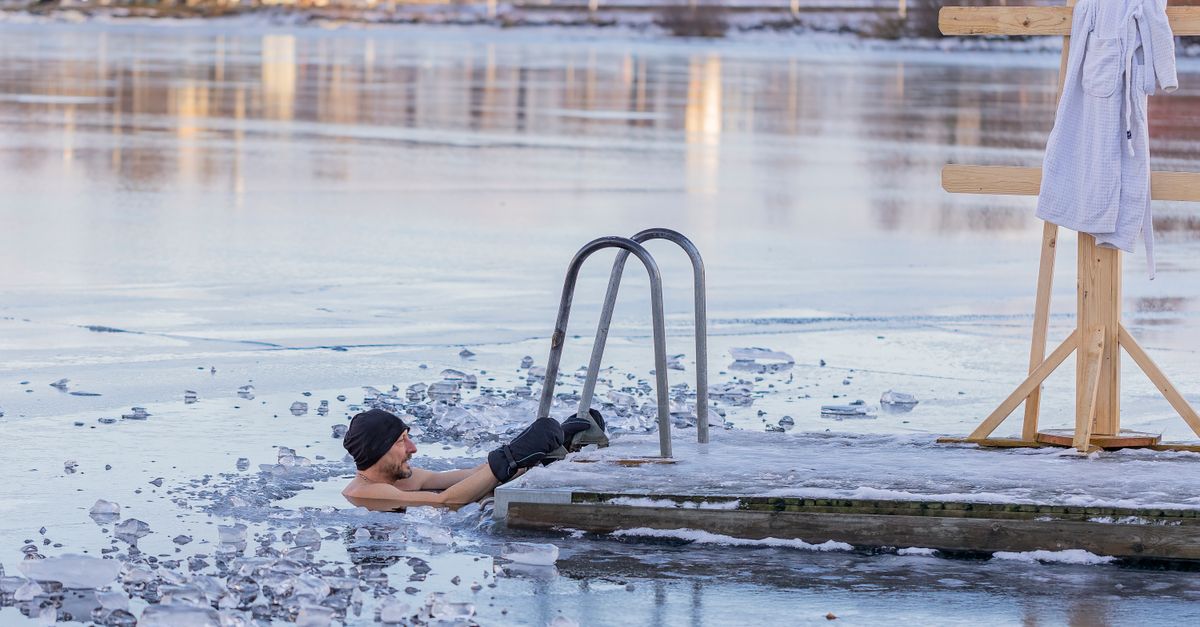
Cold water immersion does raise energy expenditure while you are cold, because your body has to make heat. The amount is small: estimates of what brown fat can contribute top out near 200 calories across a whole day, and only under repeated exposure. An ice bath changes how you recover far more than it changes how much fat you carry.
How many calories does an ice bath actually burn?
The big numbers attached to cold exposure are almost always whole day figures extrapolated from a single short laboratory session, and the extrapolation is where they come apart. A commentary in The Journal of Clinical Endocrinology and Metabolism put the plausible ceiling for brown fat thermogenesis at roughly 10 to 200 calories per 24 hours, and described a 90 minute cold exposure followed by about 20 extra calories burned over the next four hours. Six sessions like that in one day would add up to around 120 calories. Nobody takes six ice baths a day.
That is not nothing, but it is also about a slice of bread, and it sits comfortably inside the ordinary variation in what any one person burns from one day to the next. Cold exposure is real physiology producing a genuinely small number.
What is brown fat, and why does cold switch it on?
Two kinds of fat tissue behave in opposite ways. White fat is storage: it holds energy for later. Brown fat is dense with mitochondria and its job is to spend energy as heat instead of banking it. Adults were long assumed to lose brown fat after infancy, until imaging work from 2009 onward found active deposits around the neck, collarbone and spine in most healthy adults, switching on when the surrounding temperature drops.
There is a middle state too, often called beige fat: white fat cells that start behaving more like brown ones under repeated cold or regular exercise. The catch in all of it is quantity. Brown fat in an adult is measured in tens of grams, not kilograms. How much of it you have varies enormously between people, tends to fall with age, and is often lower in people carrying more weight, which is the opposite of convenient.
Does the cold burn fat, or just move heat around?
Both, and the difference is worth holding on to. Part of the extra heat comes from brown fat oxidising fatty acids. Part comes from shivering, which is skeletal muscle doing mechanical work. Shivering generates considerably more heat than brown fat does, which sets up an awkward tension: the exposure cold enough to move the energy number meaningfully is the one least likely to become a habit, while the calm, tolerable, repeatable session produces the least heat.
The energy also has to be genuinely lost rather than quietly replaced. Cold reliably sharpens appetite. If a 15 minute plunge costs 40 calories and the hot drink and biscuit afterwards return 200, the ledger closed against you before you were dry. Studies measuring cold induced energy expenditure rarely track what participants ate for the rest of the day, so the honest answer is that the net effect on body fat has mostly not been measured at all.
There is one more wrinkle that rarely makes it into the pitch. You adapt to cold. Repeated exposure does appear to increase brown fat activity over weeks, which sounds like the effect getting bigger, but it also reduces how much you shiver at a given temperature, and shivering is the larger of the two heat sources. The net result is that the same plunge tends to feel easier and cost less energy the more often you do it. The thing that makes cold exposure sustainable is the same thing that flattens its calorie cost.
Can an ice bath work against your metabolism?
This is the part that usually gets left out. Muscle carries most of your resting metabolic rate, and building it is the slowest but most durable way to raise daily energy expenditure, which is why it sits at the centre of any serious attempt to lift a sluggish metabolism. A 2024 systematic review and meta analysis in the European Journal of Sport Science pooled eight studies on cold water immersion taken immediately after resistance training and found that gains in muscle size were attenuated compared with training alone. The trials it pooled used water at 10 to 15 degrees Celsius for 10 to 20 minutes, which describes almost exactly what people mean by an ice bath.
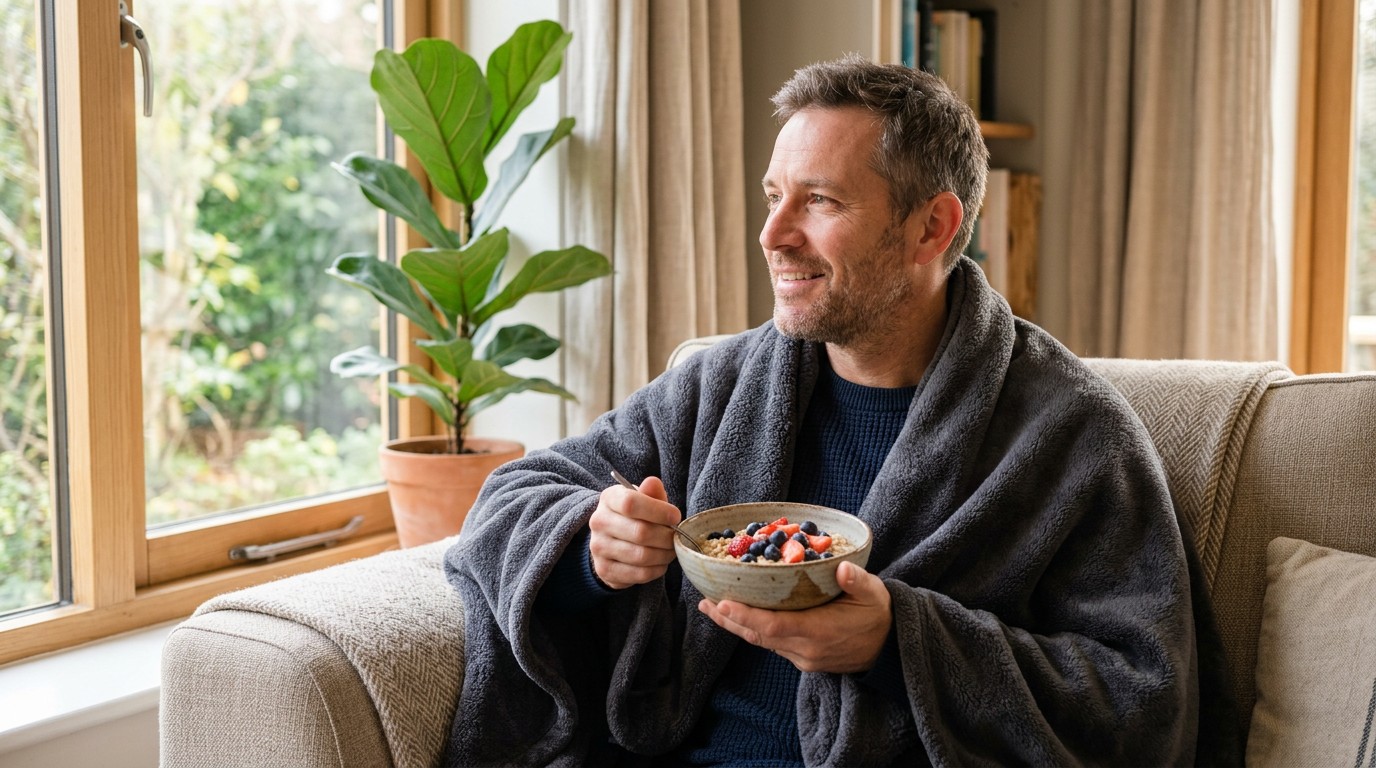
The pooled effect was modest and its credible interval crossed zero, so this is a signal rather than a closed case. Still, for someone lifting specifically to build the tissue that raises resting burn, stepping into cold water straight afterwards is at best neutral and may be quietly working against the point of the session. Putting several hours between the two, or saving the plunge for rest days, sidesteps the question without giving anything up.
Ice bath, cold shower or cryotherapy chamber?
All three cool you, but not equally, and not in the same tissue. Water conducts heat far faster than air, so ten minutes of immersion removes more heat than an hour standing in a cold room. The ordering below is real, but the differences are differences between small numbers.
| Method | Typical exposure | Energy cost while cold | What it is genuinely useful for | Main drawback |
|---|---|---|---|---|
| Cold shower | 2 to 5 minutes of cold water on the skin | Smallest of the three, the skin cools but core temperature barely moves | Easy to repeat daily, a jolt of alertness | Rarely cold enough for long enough to shift energy expenditure much |
| Ice bath or cold water immersion | 10 to 15 minutes at roughly 10 to 15 degrees Celsius | Small but measurable, larger once shivering starts | Soreness after a hard session | May blunt muscle growth when taken immediately after lifting |
| Whole body cryotherapy chamber | 2 to 3 minutes in chilled air | Very brief, cools the skin fastest but the core least | Convenience, no water and no dripping | Expensive, and the least studied of the three |

For fat loss specifically, none of these three is doing the heavy lifting. Choosing between them is really a question about what you will keep doing and what you want out of it, which is the same logic that decides when in the day you train.
What does the evidence actually support?
The strongest evidence for cold water immersion is not about fat at all. A Cochrane review of cold water immersion for muscle soreness found some evidence that it reduces delayed onset muscle soreness compared with resting passively, while stating plainly that there was not enough evidence to draw conclusions about other outcomes, and that most of the trials included did not actively look for adverse events. That is a narrow, specific, honest finding, and it is about how sore you feel.
So the fair summary is that cold exposure has a small and well described effect on heat production, a modest and reasonably supported effect on soreness, a possible cost to muscle gain when the timing is wrong, and no demonstrated effect on body fat over any meaningful stretch of time. What governs body composition is still the boring set of levers: what you eat, how much you move, how much muscle you carry and how well you sleep.
Who should be careful with cold water?
Sudden immersion sets off a gasp reflex and a sharp rise in heart rate and blood pressure. In most healthy people that settles within a minute. For anyone with a heart condition, high blood pressure, Raynaud’s, epilepsy or a history of fainting, cold water immersion is a conversation to have with a doctor before the first session rather than after it.
Cold water also strips heat from the body far faster than cold air, and losing core temperature is the risk that matters more than any comfort threshold. NHS guidance on hypothermia lists the warning signs as shivering, pale cold dry skin with the lips turning blue or grey, slurred speech, slow breathing, and tiredness or confusion. Any of those means getting out and warming up, not pushing for one more minute.
This article is general information about cold exposure and metabolism, not personal medical advice. Anyone with a heart, circulatory or blood pressure condition, or who is unsure whether cold water immersion is appropriate for them, should speak to a qualified health professional about their own situation before starting.
Do ice baths burn fat?
They increase how much energy your body spends while you are cold, because making heat costs calories. The quantity is small and short lived, and there is no evidence that cold exposure on its own changes body fat over time. Treat it as a recovery tool rather than a fat loss tool.
How many calories does a 15 minute ice bath burn?
There is no reliable single figure, because it depends on how cold the water is, how much brown fat you have and whether you shiver. Published estimates of the whole day contribution from brown fat thermogenesis run from roughly 10 to 200 calories, and a single short session sits at the very bottom of that range.
Is a cold shower as good as an ice bath?
For energy expenditure, a cold shower does less: it cools the skin quickly but water flowing over you removes far less heat than being submerged. For consistency it often does more, because most people will take a cold shower on an ordinary Tuesday and will not fill a tub with ice.
Should I avoid an ice bath after lifting weights?
A 2024 meta analysis of eight studies found that cold water immersion immediately after resistance training attenuated gains in muscle size compared with training alone. The effect was modest and not conclusive, but leaving several hours between the session and the plunge, or plunging on rest days, avoids the question.
Does brown fat activity decline with age?
Detectable brown fat tends to decrease with age, and it varies widely between individuals at any age. It is also frequently lower in people carrying more body fat, which limits how useful cold activated brown fat is likely to be as a weight management strategy for the people most interested in one.
Is it safe to take an ice bath every day?
Many healthy people tolerate regular short cold water immersion without trouble, but the cold shock response places real strain on the heart and circulation, and hypothermia risk rises with colder water and longer exposure. Anyone with a cardiac, circulatory or blood pressure condition, or who is pregnant, should ask a doctor before making it a routine.
Leave a Reply