Chronic low grade inflammation does not measurably slow the rate at which you burn calories at rest. What it does is interfere with insulin signalling, which changes how your body handles fuel. It is also mostly a consequence of carrying excess fat tissue rather than the cause of it, which is why the fix runs the other way.
Listen to this article, about 10 minutes. A synthetic voice reads the article and announces each section title as it begins; tables are read row by row and the questions at the end are left out.
Recorded 10 October 2026 from the article as published that day. Press a chapter to jump there; the highlighted line is what is playing. A play button sits beside every section heading, and once you scroll past this player a bar at the bottom of the screen keeps the controls in reach. Tap or click any sentence to hear the reading start from there.
On this page: a detailed comparison table of anti inflammatory interventions, a three step timeline of the visceral fat inflammatory loop, and a habit checklist.
Think you already know this? Five questions, one minute.
Every answer is on this page. Answer from what you know now; the page fills in the rest.
-
1. What is the primary difference between acute and chronic low grade inflammation?
Acute inflammation is a temporary response to injury, whereas chronic low grade inflammation is a persistent, mild elevation in immune signalling with no obvious target. Read the section
-
2. What did researchers find when testing if inflammation explains the relationship between resting metabolic rate and insulin sensitivity?
In their published mediator analysis, researchers found that high sensitivity CRP showed no mediating effect on the relationship between resting metabolic rate and insulin sensitivity. Read the section
-
3. How does chronic low grade inflammation affect how the body handles fuel?
As fat cells enlarge, they release signaling molecules like TNF alpha and interleukin 6, which interfere with insulin signaling as detailed in a review of adipose tissue in obesity related inflammation. Read the section
-
4. What did the Cochrane review find regarding Mediterranean style diets?
Cochrane’s review of Mediterranean style diets found moderate quality evidence of improvement in cardiovascular risk factors and a reduction in strokes for primary prevention. Read the section
-
5. What safety caution is associated with taking concentrated turmeric supplements?
Concentrated turmeric supplements have been linked to liver injury in case reports and can interact with blood thinning medications. Read the section
🌿 What is inflammation, and which kind actually matters?
Inflammation is your immune system showing up to work. Cut a finger and the area goes red, hot and sore for a few days while the repair crew works, then it stops. That is acute inflammation. It is supposed to happen, and a body that could not do it would be in serious trouble.
The kind this article is about is a different animal. Chronic low grade inflammation is a persistent, mild elevation in immune signalling with nothing obvious to fight. No redness, no fever, nothing to point at. It shows up as a slightly raised number on a blood test and otherwise keeps to itself, which is exactly why it is such a profitable thing to sell cures for. An invisible problem is a marketer’s dream.
🧬 Does chronic inflammation slow down your metabolic rate?
Not in the way that phrase implies. Your resting metabolic rate is the energy you spend keeping the lights on, and it tracks almost entirely with how much tissue you carry, especially muscle and organ mass. It is not a dial that inflammation reaches over and turns down.
If anything the immune system is expensive to run. Acute illness raises energy expenditure rather than lowering it, which is why a fever burns through fuel. When researchers tested whether inflammation explained the relationship between resting metabolic rate and insulin sensitivity in adults, high sensitivity CRP showed no mediating effect at all in their published mediator analysis.
So when a page tells you that a silent fire is quietly throttling your calorie burn, it is describing a mechanism nobody has demonstrated. The real story is less dramatic and more useful.
⚖️ Then what is chronic inflammation actually doing?
It is interfering with how your body handles fuel, which is a different problem from how much fuel it burns.
Fat tissue is not inert padding. As fat cells enlarge they become stressed, recruit immune cells, and start releasing signalling molecules including TNF alpha and interleukin 6. Those molecules interfere with insulin signalling inside cells, and the result is insulin resistance. The cell by cell mechanics are set out in a review of adipose tissue in obesity related inflammation.
That matters for weight because it changes the terms of trade. Blood sugar stays higher for longer, the pancreas answers with more insulin, and more circulating insulin makes stored fat harder to release. Nobody is burning fewer calories at rest. The fuel is being managed worse, and over years it shows up on the cluster of measurements the NHS calls metabolic syndrome.
Leptin gets tangled in this too. It is the signal fat tissue sends the brain to report that stores are adequate, and in people carrying more fat the signal is loud while the brain responds to it poorly. Appetite regulation becomes less reliable, which is a fact about biology rather than a verdict on anybody’s willpower.
🍩 Which came first, the inflammation or the weight?
Mostly the weight. This gets flipped around in headlines, and flipping it back matters, because it changes what there is to do about it.
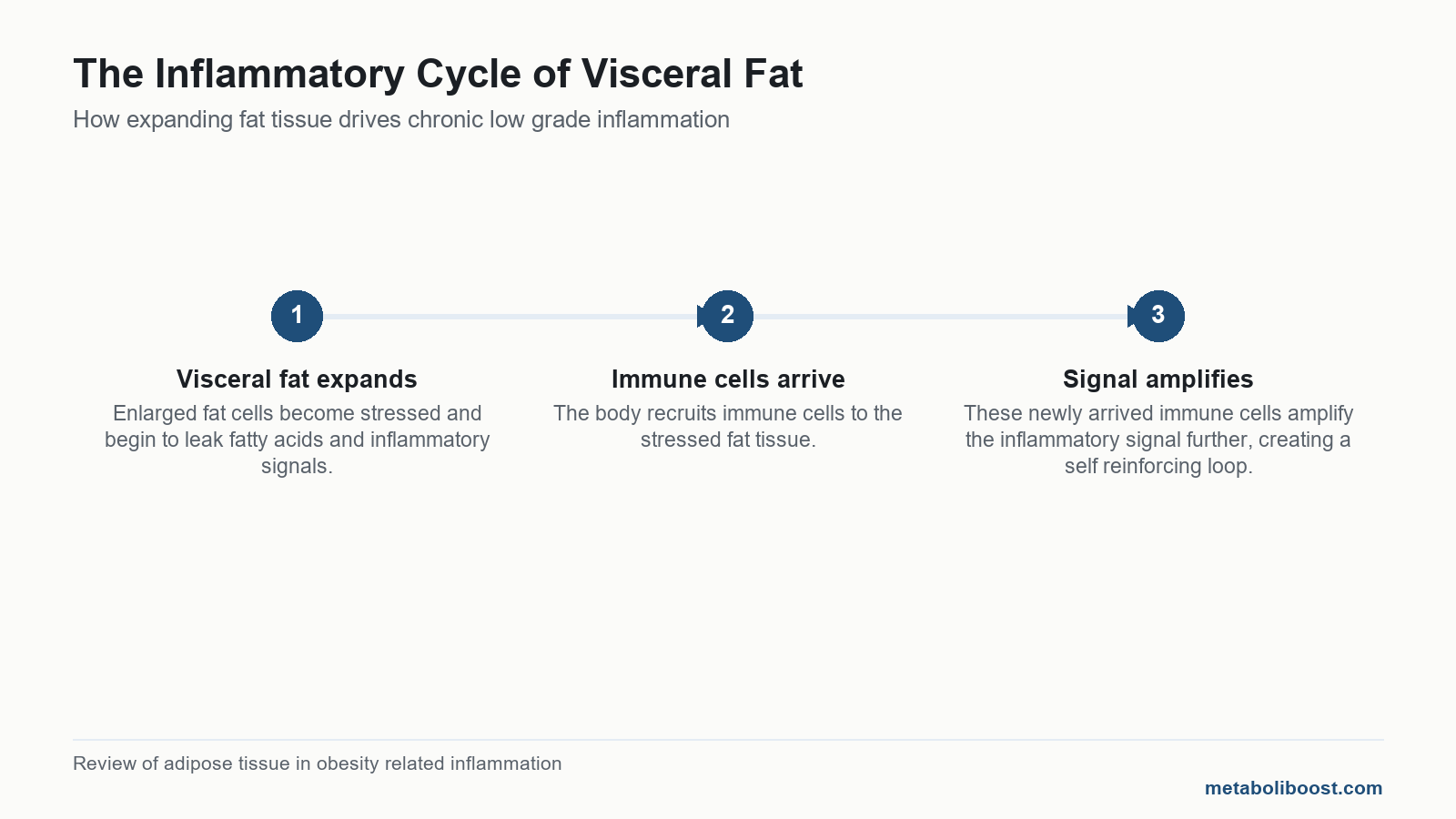
The dominant direction of travel is that expanding fat tissue produces the inflammation, rather than ambient inflammation producing the fat. Enlarged fat cells leak fatty acids and inflammatory signals, immune cells arrive, and those immune cells amplify the signal further. It does run both ways to some degree, and once established the loop is self reinforcing. But the primary driver in most people is visceral fat, not a fire that arrived from outside.
The practical consequence is cheerful, if unglamorous. The things that reduce visceral fat are the same things that reduce inflammatory markers. There is no separate anti inflammation protocol to run alongside your actual life.
🩸 How would you know whether you have it?
From symptoms alone, mostly you would not. It is an unsatisfying answer, which is why almost nobody selling anything gives it to you.
Tiredness, bloating, puffiness and weight that will not shift are all listed as inflammation symptoms by websites that then propose a solution costing forty pounds. Those experiences are real. They are also produced by short sleep, thyroid disease, iron deficiency, perimenopause, medication side effects and coeliac disease. A symptom that everything can cause diagnoses nothing.
Blood tests do exist, and high sensitivity CRP is the usual one. It is a legitimate cardiovascular risk marker. It is also raised by a recent infection, an injury and pregnancy, so a single reading says very little on its own. If you have persistent fatigue, unexplained weight change, or symptoms that are not settling, that is a conversation with a doctor rather than a purchase. Raised inflammatory markers can point to conditions that need proper investigation.
🥗 What actually brings inflammation down?
Here is what the evidence supports, weighed against what gets advertised. The effective levers are dull and the exciting ones are thin. Sorry.
| Lever | What happens to markers like CRP | How strong is the evidence |
|---|---|---|
| Losing excess body fat | Markers fall broadly in line with the fat lost, especially visceral fat | Strong and consistent across trials and cohorts |
| Regular aerobic exercise | Modest reductions in CRP, interleukin 6 and TNF alpha | Moderate. Meta analysed, but the individual trials are small |
| Mediterranean style eating | Improvement in cardiovascular risk factors overall | Moderate certainty for primary prevention in Cochrane’s review |
| Getting enough sleep | Short sleep raises markers, adequate sleep does not | Reasonably consistent, mostly from short laboratory studies |
| Stopping smoking | Substantial reduction in inflammatory markers | Strong |
| Turmeric and curcumin capsules | Small reductions reported in some trials | Weak. Small, short, often industry funded studies |
| Detox teas, cleanses, alkaline water | Nothing that has been measured | None |
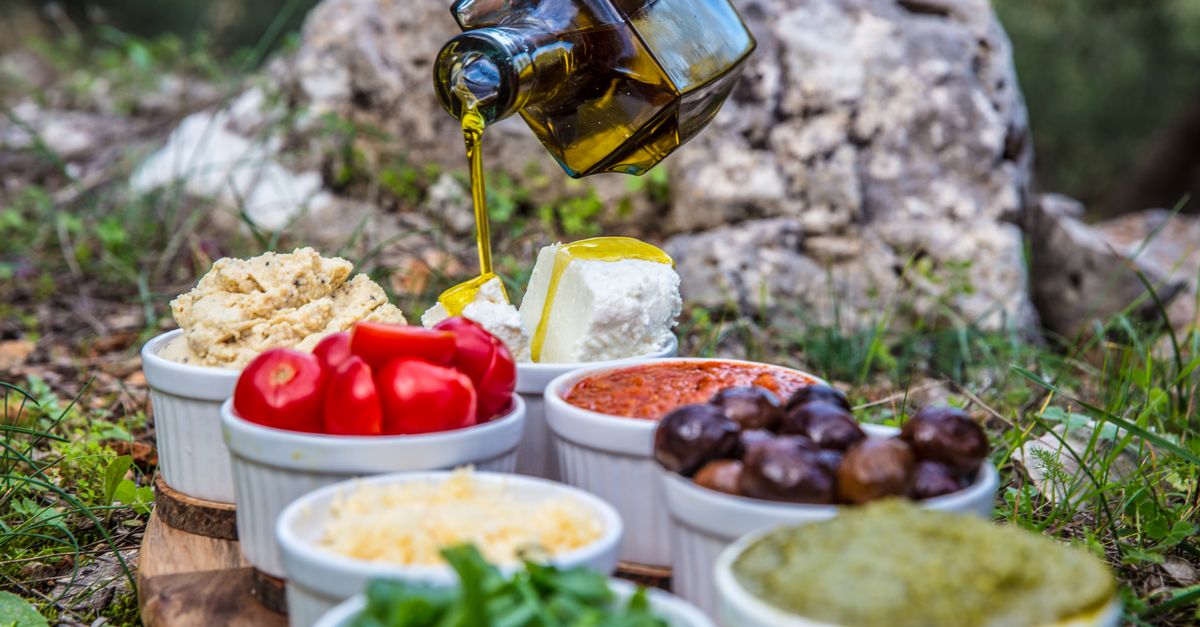
The Mediterranean pattern is the most studied eating approach here. Cochrane’s review of Mediterranean style diets, covering thirty randomised trials, found moderate quality evidence of improvement in cardiovascular risk factors and a reduction in strokes for primary prevention, with weaker evidence in people who already had cardiovascular disease. Notice what that is. Better risk factors, not a metabolic rebirth. It is still one of the better supported things you can do.
Exercise earns its place on similar terms. A meta analysis of aerobic exercise and inflammatory markers in middle aged and older adults found reductions in CRP, interleukin 6 and TNF alpha, while noting the trials were small and the picture is not settled. Strength training helps too, by building the muscle your resting metabolic rate is actually made of.
Sleep belongs here for a boring reason: short sleep raises inflammatory markers and makes every other item on the list harder to do. The NHS guidance on sleep and tiredness contains nothing you could post on social media, and outperforms most things sold in a bottle.
🛑 What about anti inflammatory teas, cleanses and supplements?
This is where the word inflammation has been doing unpaid work for the supplement industry for years. It sounds medical, it cannot be seen, and the customer cannot check the result. If a tea promises to flush inflammation and you still feel tired on Friday, the tea was never going to hand you a number to argue with.
Turmeric is the most defensible of the bunch, which is faint praise. Curcumin trials exist and some report small reductions in inflammatory markers. They are also small, short and frequently funded by people who sell curcumin, which is poorly absorbed anyway. Promising is not the same word as proven.
Some cautions, stated plainly. Concentrated turmeric supplements have been linked to liver injury in case reports, and high dose curcumin can interact with blood thinning medication. Fish oil also affects clotting. If you take prescribed medication, are pregnant or breastfeeding, or have liver or gallbladder disease, speak to a pharmacist or your doctor before adding any concentrated supplement.
🌞 So what is actually worth doing?
If you take one thing from this, take the direction of the arrow. Chronic inflammation sits mostly downstream of visceral fat, poor sleep, smoking and a sedentary week. It is not a separate saboteur working the night shift on your metabolism.
- 🥗 Build meals around protein, vegetables, pulses, whole grains and olive oil, the pattern with the most evidence behind it
- 💪 Keep resistance training in the week, since muscle is what your resting metabolic rate is largely made of
- 🚶♀️ Spread ordinary movement across the day rather than saving it for one heroic session
- 🌙 Protect sleep, which quietly does more than most of the alternatives
- 🚸 Stop smoking if you smoke, which lowers inflammatory markers more reliably than anything you can drink
- 🩸 Take persistent symptoms to a doctor rather than to a search bar
None of it will trend. All of it moves the numbers that matter, for reasons anyone can check.
This article is general information about metabolism and inflammation, not personal medical advice. Inflammatory markers can be raised by conditions that need proper assessment. If you have persistent symptoms, a diagnosed condition, or take prescribed medication, please speak to a qualified healthcare professional about your own situation.
Can you actually feel chronic inflammation?
Usually not in any specific way. Chronic low grade inflammation has no reliable symptom set. Tiredness, bloating and puffiness are commonly blamed on it, but they are produced by many other things including short sleep, thyroid problems and iron deficiency, so they cannot identify it. Blood markers such as high sensitivity CRP are how it is measured, and a single reading is easily distorted by a recent infection.
Does inflammation cause weight gain, or does weight gain cause inflammation?
Predominantly the second. Expanding fat tissue, particularly visceral fat, recruits immune cells and releases inflammatory signalling molecules. The loop does run both ways once it is established, because insulin resistance makes fat easier to store, but the usual starting point is the fat tissue rather than an external source of inflammation.
Will an anti inflammatory diet speed up my metabolism?
It will not raise your resting metabolic rate, because that is governed mainly by how much tissue you carry. What a Mediterranean style pattern can do is improve insulin sensitivity and cardiovascular risk factors, which is a real benefit measured in blood results rather than in calories burned per hour.
Is it worth asking for a CRP test?
It can be useful in context, and it is a recognised cardiovascular risk marker, but it is not a screening test for feeling tired. A raised result has many possible causes including recent illness. Whether testing is appropriate depends on your history and symptoms, which is a decision to make with a doctor rather than alone.
Do anti inflammatory supplements work?
The evidence is weak. Curcumin and omega 3 trials report small changes in inflammatory markers, but studies tend to be small, short and often funded by manufacturers. Detox teas and cleanses have no measured effect on inflammation at all. Concentrated supplements can also interact with medication, so check with a pharmacist or doctor first.
Does losing weight lower inflammation?
Yes, and it is the most reliable lever available. Reducing excess fat, especially visceral fat, lowers inflammatory markers broadly in proportion to the fat lost. The scale of the change varies a great deal between individuals, so it is better understood as a direction than as a number you can predict in advance.
Finished the page? The same five questions from the top, to see what stuck.
Evidence Based Habits Checklist
Focus on the high leverage habits that science shows actually lower inflammatory markers and support your metabolism.
Ticks are saved on this device only.
Leave a Reply