
Evening sugar cravings are mostly normal biology, not weak willpower. Your body clock raises hunger and appetite for sweet food towards evening on its own schedule. Short sleep, low protein and eating too little earlier amplify it, and habit supplies the cue. What governs the urge is those inputs, not resolve.
Is wanting sugar at night a willpower problem?
Almost never, and treating it as one is why the same evening keeps repeating. Four things converge after dark: an internal appetite rhythm, whatever sleep you had, whatever the day actually contained, and a cue trained by repetition. Naming those four is more useful than resolving to try harder, because three of them can be changed and effort is not really one of them.
The order matters too. If sleep has been short all week, tidying up the smaller inputs will not do much. The craving is a readout of those four rather than a separate problem sitting on top of them.
What does your body clock do to appetite after dark?
More than most people expect. In a study by Scheer, Morris and Shea published in Obesity in 2013, twelve healthy adults spent thirteen days in a laboratory in very dim light with every behaviour scheduled, including meals and sleep, so that habit, daylight and meal timing could not explain the result.
Hunger still followed a clear internal rhythm. It sat at its lowest in the biological morning, around 8 AM, and peaked in the biological evening, around 8 PM, a peak to trough difference of 17 percent. Appetite for sweet, salty and starchy foods followed the same shape, with peak to trough differences between 14 and 25 percent.
Nobody in that room was choosing to want sweets at a given hour, and there was no television or biscuit tin to blame. Low morning appetite and high evening appetite are two ends of one internal curve.
Does short sleep make sugar cravings worse?
Yes, and this is the input with the largest and best measured effect. Sleep curtailment in healthy young men lowered leptin, the fullness hormone, by around 18 percent, raised ghrelin, which drives hunger, by around 28 percent, and increased reported hunger and appetite by around 23 percent, concentrated on calorie dense food.
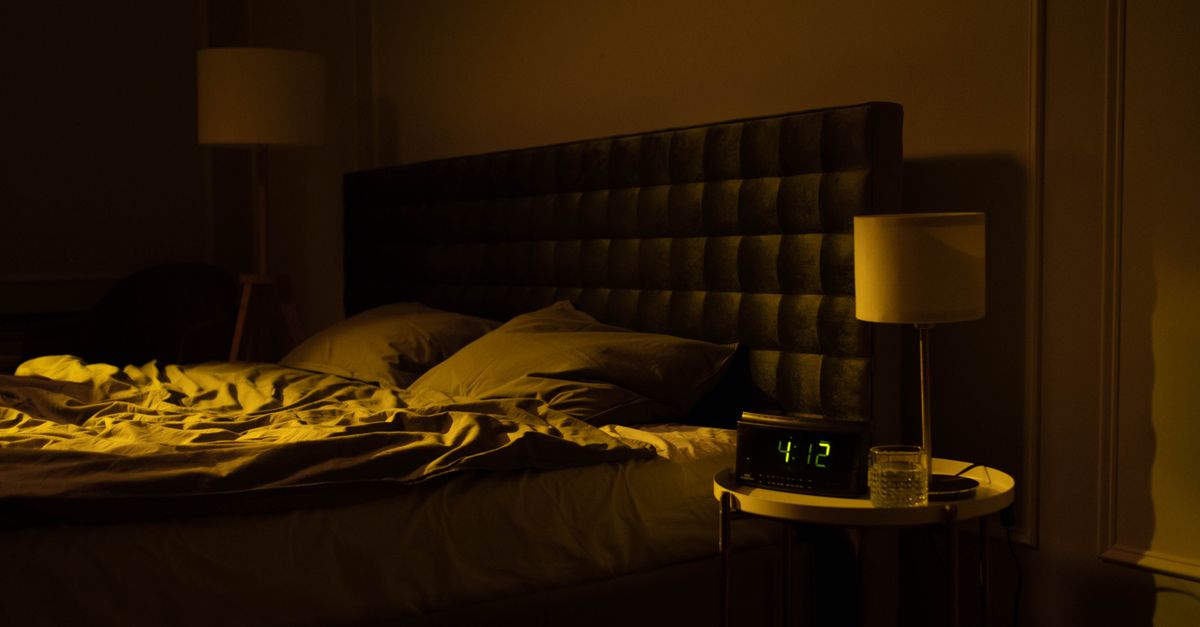
The preference itself shifts too, not just the quantity. A randomised crossover trial found sweet taste preference measurably higher after curtailed sleep than after a normal night. Free living work has found sleep restriction adding several hundred calories a day in snacks, drawn mainly from carbohydrate and landing disproportionately at night.
A late night therefore does two things at once. It keeps you awake through the hours your clock is already pushing appetite up, and it raises appetite again the next day. That compounding is why cravings feel worse after a bad week than after one bad night.
Are you craving sugar because you ate too little earlier?
Frequently, and the mechanism is not exotic. An energy shortfall accumulated across a day does not stay quiet. It presents in the evening as hunger, and sugar is the fastest answer to it. A day of coffee, a token lunch and genuine surprise at ten at night is arithmetic, not a character flaw.
Protein and fibre matter here, and it is worth being precise about why. They extend fullness after a meal. They do nothing to the rate at which you burn energy. A dinner built mostly from refined carbohydrate empties quickly, while the same calories with more protein and vegetable bulk generally do not.
How much of it is habit rather than hunger?
A substantial share, and habit is a real cause rather than a lesser one. Cue driven eating is learned the ordinary way: a specific chair, a specific programme, the end of a shift, a phone in the dark. Hormonal hunger responds to food. A cue responds only to changing the cue.

There is a quick test in the moment. If a boiled egg sounds unappealing but ice cream sounds excellent, the appetite is specific rather than general, which points at cue and reward. General hunger accepts most food.
Does eating sugar at night actually make you gain fat?
Not for the reason usually given. Nothing about the hour converts sugar into abdominal fat in a way it would not have counted at lunchtime. Total intake across the day governs body weight, and the evening matters mainly because it is when a lot of unplanned intake happens.
Timing does appear to do something, and it is worth stating accurately. A controlled crossover trial published in Cell Metabolism in 2022 gave sixteen adults with overweight or obesity identical meals, either early or four hours later, controlling nutrients, activity, sleep and light. Late eating increased hunger, raised the ghrelin to leptin ratio, lowered waking energy expenditure and lowered 24 hour core body temperature. Fat tissue gene expression shifted towards less fat breakdown and more storage.
What that trial did not measure is fat actually being gained. It measured mechanisms, over a short controlled period, in a small group. The fair reading is that late eating plausibly nudges things in an unhelpful direction, and that the nudge is far smaller than how much is eaten in total.
For scale, NHS guidance on free sugars puts the adult limit at no more than 30 grams of free sugars a day, roughly seven sugar cubes, or about 5 percent of daily energy. Free sugars means sugar added by a manufacturer, cook or eater, plus honey, syrups and juice, not the sugar inside whole fruit or milk. Adults aged 19 to 64 exceed that by around 66 percent on average, and it is a daily total rather than an evening allowance.
Is sugar addictive?
The word gets used loosely and the science does not support it well. A 2016 review in the European Journal of Nutrition examined the literature on food and sugar addiction and found little evidence for sugar addiction in humans. In animals, addiction like behaviour such as bingeing appears mainly where access to sugar is intermittent, which the authors attribute to that intermittent access to palatable food rather than to anything neurochemical about sugar.
The distinction has a practical edge, because intermittent access is exactly what a total ban manufactures. Forbidding sweet food, eating it anyway, then forbidding it again is the pattern the animal work associates with bingeing. That is an argument against short abstinence challenges, not for them.
What actually reduces evening sugar cravings?
Here is the honest ranking. Some change the underlying drive, some change only the moment, and a couple are repeated everywhere despite doing very little.
| Common evening fix | What it actually changes | How much it is worth |
|---|---|---|
| A full night of sleep | Lowers ghrelin, raises leptin, reverses the shift towards sweet taste | The largest lever, and the one most often missing |
| Eating enough across the whole day | Removes the shortfall that arrives as evening hunger | Large. Usually why a craving feels uncontrollable |
| Protein and fibre at dinner | Extends fullness after the meal | Substantial, through appetite rather than calorie burn |
| Changing the cue instead of resisting it | Breaks the learned link between a place or a screen and eating | Substantial for cue driven eating. Nothing for real hunger |
| Swapping in fruit, yoghurt or nuts | Adds fibre, protein or fat alongside the sweetness | Useful, if it is a swap and not an addition |
| Drinking water first | Adds a pause. Evidence that thirst is mistaken for hunger is thin | Small, mostly a delay tactic |
| Eating every three to four hours | Changes meal pattern only. Frequency does not alter metabolic rate | Neutral. Suits some people, not others |
| Banning sweet food entirely | Creates the intermittent access linked with bingeing in animals | Frequently counterproductive |
| Trying harder | Nothing, if sleep or total intake are the real driver | Not a strategy on its own |
The first four rows carry almost all of the effect, and they are duller than the rest. Sleep and total intake sit upstream of everything below them, which is why swapping the biscuit for a date rarely holds when the week underneath has not changed.
A craving at nine in the evening is not evidence that something has gone wrong. Part of it is a rhythm running in every healthy person, measurable in a dim laboratory with nothing there to tempt anyone.
When is night eating worth raising with a doctor?
There is a described pattern, reviewed in the medical literature as night eating syndrome: a delayed daily pattern of food intake. Its usual criteria are at least 25 percent of daily intake after the evening meal, or waking to eat at least twice a week, often alongside little morning appetite and difficulty getting to sleep. Estimates put it at roughly 1.5 percent of the general population, and 6 to 16 percent in samples of people with obesity.
Recognising a described pattern is not the same as identifying it in yourself, and no website can do the second thing. If eating at night is waking you, distressing you, or accounting for a large share of what you eat, that is a conversation with a doctor or a registered dietitian. The same goes for cravings arriving alongside persistent thirst or fatigue, or weight that does not match what you are doing.
None of this is a trick for making tonight easier. The urge after dinner is partly a rhythm that cannot be switched off, and what actually moves is sleep, what the day contained, and what the evening cue has learned to expect.
Frequently asked questions
Why do I crave sugar at night but not in the morning?
Because both ends of that pattern are the same internal rhythm. Under laboratory conditions with meals, sleep and light all controlled, hunger sits at its lowest around 8 AM and peaks around 8 PM, and appetite for sweet, salty and starchy food follows the same curve. Low morning appetite and high evening appetite are one phenomenon, not two.
Will a proper dinner stop night cravings on its own?
It helps, and it rarely does the whole job by itself. A dinner with enough protein and fibre extends fullness, which removes hunger as one of the drivers. It does not touch the circadian rhythm, the effect of short sleep, or a cue that has been reinforced for years. If the craving continues after a full meal, one of those three is usually involved.
Are sugar cravings really just thirst?
The evidence for that popular claim is thin. Drinking water before deciding is still worth doing, mainly because it inserts a pause between the urge and the kitchen, and because hydration is worth having for other reasons. Treating it as the explanation for evening cravings tends to leave the actual drivers untouched.
Does cutting out sugar completely stop cravings?
Not reliably, and it can work against you. The animal research most often quoted in support of sugar addiction produces bingeing specifically under intermittent access to sugar, which is what a strict ban followed by a lapse creates. Reviewers of the human evidence found little support for sugar addiction in people in the first place.
Does fruit at night count as sugar?
Not in the way that matters for the official limits. NHS guidance counts free sugars, meaning sugar added by a manufacturer, cook or eater, plus honey, syrups and fruit juices. Sugar inside whole fruit, vegetables and milk is not included. Whole fruit also arrives with fibre and water, which is why it behaves differently from a biscuit.
Can night sugar cravings be a sign of a medical problem?
Cravings on their own are common and are not a reliable sign of anything specific. They are worth raising with a doctor when they come with persistent thirst, persistent fatigue, waking at night to eat, or weight that is not behaving in a way that matches what you are doing. Those questions are answered with tests, not with a checklist.
This article is general information, not medical advice, and is not a substitute for care from a qualified healthcare professional. Speak to your doctor about your own situation.
Leave a Reply