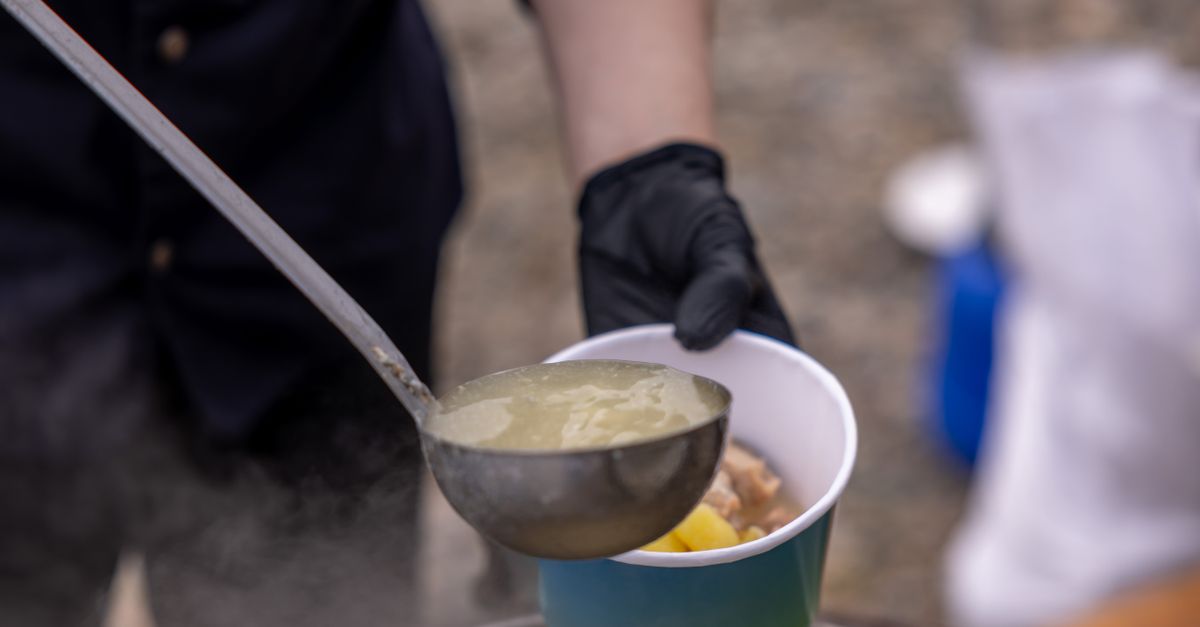
Bone broth does not burn fat and is not a weight loss treatment. It is a warm, savoury, low calorie liquid carrying a small and unpredictable amount of protein, so it can make an eating plan easier to stick to. Whether it helps depends on what it replaces in your day, not on the broth itself.
What is bone broth, and what actually ends up in the cup?
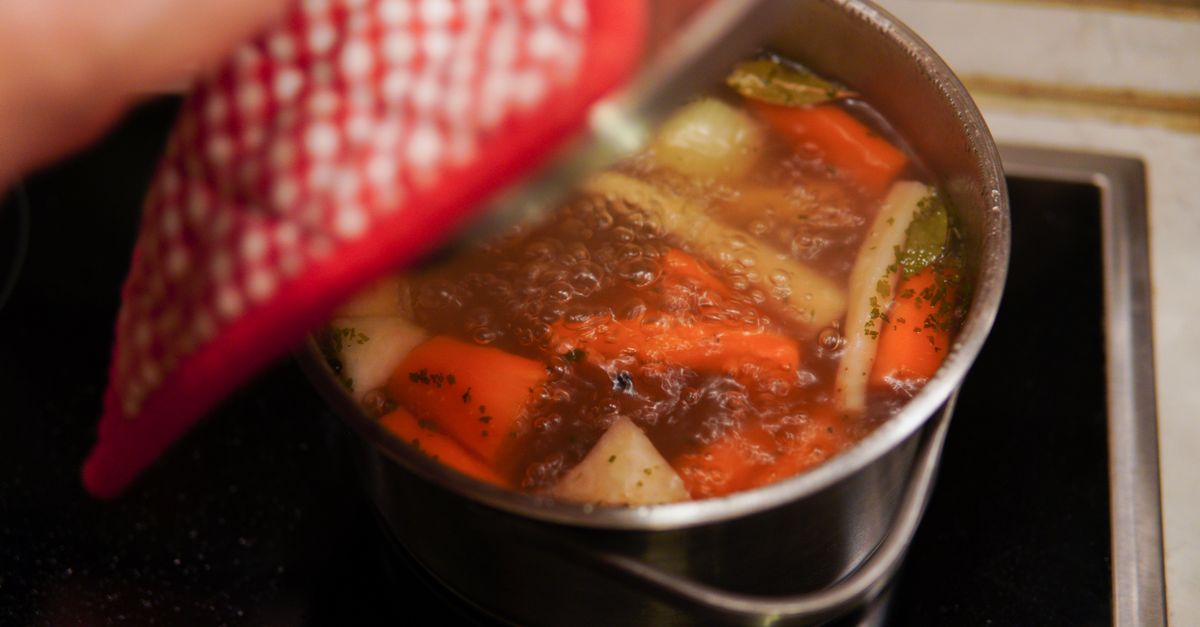
Bone broth is bones and connective tissue, usually with vegetables and often a splash of vinegar, simmered for several hours. The heat breaks collagen in bone and cartilage down into gelatin, which is what makes a good broth set to a soft wobble in the fridge. Minerals leach out at the same time. That is the theory. The useful question is how much of it reaches your cup, and the honest answer is that nobody making broth at home can know.
A 2019 analysis in the International Journal of Sport Nutrition and Exercise Metabolism measured amino acids in bone broths made both to a fixed recipe and to varied ones. The standardised broths delivered significantly less glycine, proline, hydroxyproline, lysine, leucine and hydroxylysine than a 20 gram dose of the collagen supplements used in research, and the non standardised ones varied widely between each other. The conclusion was that broth is unlikely to be a reliable source of those amino acids.
Method moves the numbers too. A 2017 analysis in Food and Nutrition Research reported that lowering the pH, which is what a splash of vinegar does, and simmering beyond about eight hours both increased how much calcium and magnesium came out of the bones, by large factors.
So bone broth is not one food. Two cups made in two kitchens are not the same drink, and a packaged carton is a third thing again. Most claims made for bone broth quietly assume a consistency it does not have.
Does bone broth burn fat or speed up your metabolism?
No, and neither does any other single food. Body weight follows the balance between what you take in and what you use, averaged over weeks.
There is a real effect underneath the metabolism claim, and it is far smaller than it sounds. Digesting protein costs energy, roughly a fifth to a third of the calories the protein itself contains, more than carbohydrate or fat cost. It also scales with how much protein you eat. A cup of broth carries a modest amount, so the energy spent processing it is a rounding error against a whole day. The same caution applies to the temperature of what you drink, worked through in warm water versus cold water for weight loss.
Can bone broth make you eat less?
This is the one plausible mechanism, and it is not really about broth. Higher protein intakes do raise fullness: a 2020 systematic review in the European Journal of Nutrition examining dietary protein and appetite in people with overweight and obesity found that in several of the trials it reviewed, higher protein intakes increased ratings of fullness or satiety.
The catch is the dose. That literature is built on meal sized servings, tens of grams at a time, and a cup of broth is not in that range. If broth helps you eat less, most of what it is doing is what any warm, savoury, low calorie liquid does: it takes up room, it takes a few minutes to drink, and it occupies the moment you would otherwise be reaching for food.
That is not nothing, but it is not a protein effect, so broth has no real advantage over a clear vegetable stock or a mug of miso beyond taste and price. What counts is substitution. A cup instead of a mid afternoon pastry changes your day. A cup alongside the pastry changes your salt intake and little else.
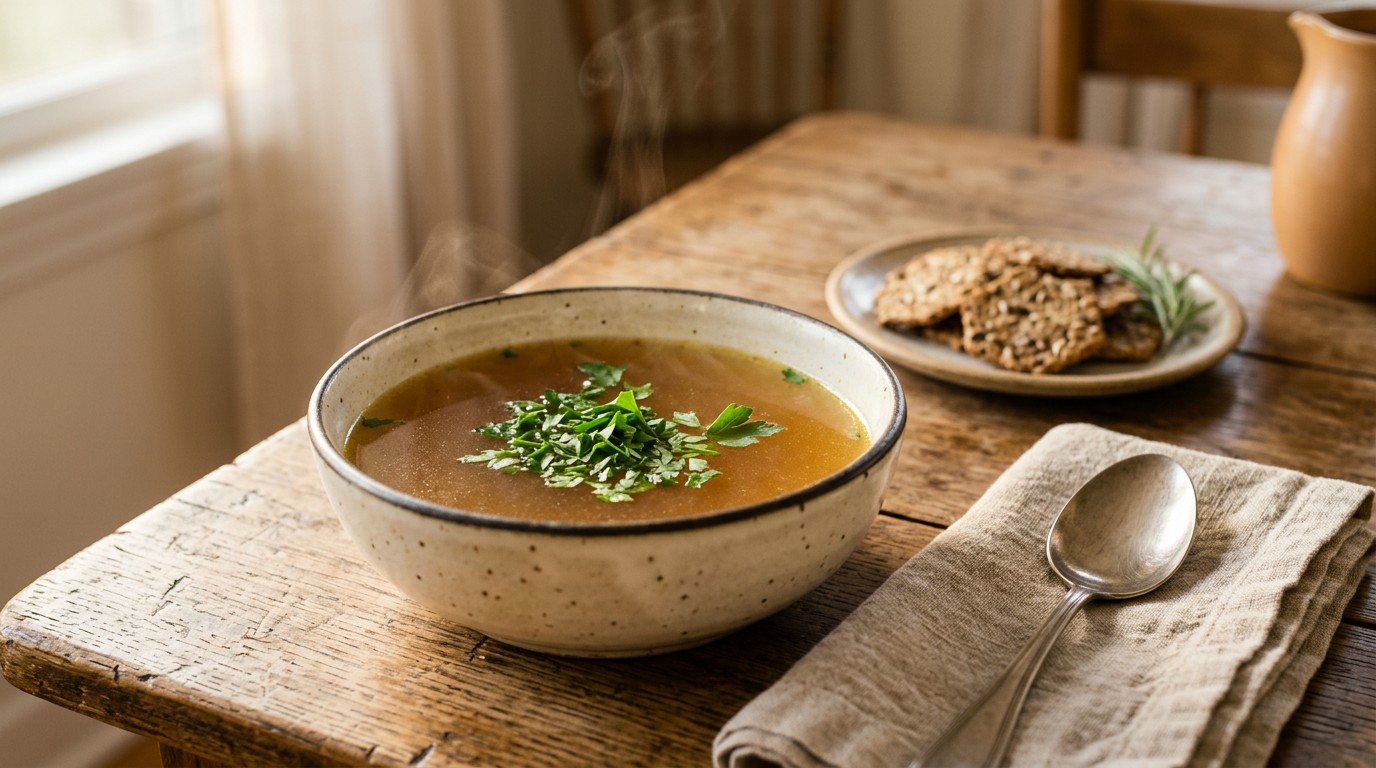
Does the collagen in bone broth do anything for skin or joints?
Collagen supplements have been studied and the results there are mixed rather than empty. The problem is the leap from that research to a mug of broth. Those trials use measured doses of hydrolysed collagen, and broth does not reliably deliver comparable amounts.
There is a second step people skip. Collagen you swallow is digested into amino acids like any other protein. It is not routed to your face or your knees because it began as collagen. Skin firmness after a change in weight is shaped by age, how long the skin was stretched and genetics.
Bone broth or the alternatives: what does each one actually give you?
| What you drink | Protein it provides | What it does for appetite | The honest catch |
|---|---|---|---|
| Homemade bone broth | Small and unpredictable | Warm volume before or instead of food | The recipe does not tell you what is in it |
| Packaged bone broth | Whatever the label states, which differs sharply by brand | The same warm volume effect | Salt per serving usually matters more |
| Clear vegetable stock or miso | Very little | Almost identical to bone broth | Also salty, with no collagen story attached |
| Water or herbal tea | None | Volume and a pause, which is most of the effect | Nothing, which is rather the point |
| A protein rich meal or snack | Meal sized, tens of grams | The effect the satiety research measured | It carries real calories, so it must fit the day |
The pattern is hard to miss. Almost everything bone broth does for appetite, cheaper options do as well. What broth adds is flavour, warmth and the sense of having done something deliberate, which for some people is what keeps a plan alive on a hard evening. If you want the protein end of the table, is paneer good for weight loss runs the same arithmetic, and broccoli as a metabolism friendly vegetable covers the vegetable side.
Is there anything in bone broth worth worrying about?
Three things, in rough order of how likely they are to matter.
Salt. Packaged broths can be heavily salted and a mug goes down quickly. Check the figure per serving, not per 100 millilitres, since the serving is usually larger. This matters more if you have been advised to keep sodium down.
Lead, where the evidence disagrees with itself. A 2013 paper in Medical Hypotheses measured lead in organic chicken broths at several times the level in the water used to make them, 9.5 and 7.01 micrograms per litre in two preparations. That was a small exploratory study in a journal built for preliminary ideas. The 2017 analysis linked above came out the other way, reporting lead and cadmium at only a few micrograms per serving and calling that risk minimal. Both can sit together: bone does sequester lead, and the quantity reaching a cup is small. What has not been shown is harm from broth in an ordinary diet.
It is not a meal. Broth carries nowhere near enough energy, fibre, essential fats or micronutrients to stand in for food. Plans that replace meals with broth replace food with hot salty water, and they tend to be abandoned quickly for that reason.
How would you actually fit bone broth into a day?
If you like the taste, the useful version of the habit is a plain one.
- Name what it replaces. Broth instead of a snack you were not hungry for is a change. Broth on top of everything else is an addition.
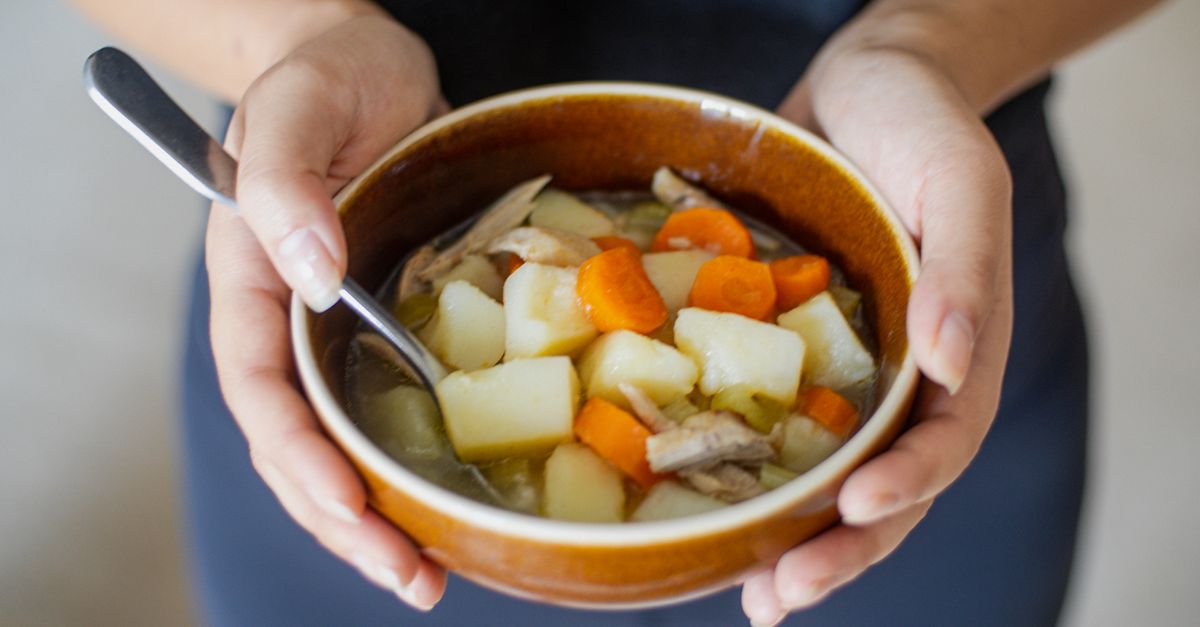
- Use it as a base rather than a meal. Broth with vegetables, lentils or shredded chicken makes a filling low energy dinner, and almost all of that comes from what you added.
- Drink it before a meal if slowing down helps you.
- On packaged broth, read the label for salt first and protein second.
- If you make it, use bones with cartilage attached, add a splash of vinegar, simmer long, then strain and chill. If it sets to a wobble you extracted plenty of gelatin. Skim the fat cap if you are counting calories.
- Skip anything sold as a cleanse or a reset. Those are marketing words, not nutritional ones.
None of it replaces the parts of weight management that do the actual work: the overall pattern of what you eat, sleep, movement, and whether the arrangement is one you can live with. The NHS guidance on managing your weight is built around those, not single foods.
Who should talk to a doctor before making bone broth a habit?
Bone broth is ordinary food and a cup is not a medical event. A conversation with a doctor or a registered dietitian is worth having before it becomes a daily fixture if you:
- have kidney disease, where protein, sodium, potassium and phosphorus may all be managed deliberately
- have been advised to limit salt for blood pressure or heart failure
- have gout, since stock made from bones and meat contains purines
- are pregnant or breastfeeding
- are considering broth in place of meals for longer than a single day
- take medication whose effect is sensitive to what you eat
None of that is a reason to be alarmed about broth. It is a reason to ask someone who knows your history.
This article is general information about food and weight management, not personal medical advice. Weight, appetite and metabolism are affected by health conditions and medications, and a qualified professional who knows your history is the right person to advise on your own situation.
Frequently asked questions
Does bone broth burn belly fat?
No. No food or drink removes fat from one area of the body, and where fat comes off is largely set by genetics. Broth can support a lower calorie day when it replaces something more energy dense, and that is the whole of its contribution.
How much protein is in a cup of bone broth?
It depends on the bones, the recipe and the simmering time, and it varies widely between homemade batches as well as between brands. Packaged broths state a figure on the label. For homemade broth there is no way to know without testing it.
Can you drink bone broth while fasting?
It contains calories and protein, so in the strict sense it breaks a fast. Many people drink it during time restricted eating anyway because it makes the fasting window easier to hold. Whether that matters depends on why you are fasting, which is worth discussing with a doctor if there is a medical reason behind it.
Is store bought bone broth as good as homemade?
For appetite purposes yes, and it has one advantage: the label tells you what you are getting. Homemade broth is usually cheaper and lets you control the salt. Neither version is a reliably rich source of collagen precursors.
How often can you drink bone broth?
One or two cups a day suits most people who enjoy it, with salt being the practical limit rather than anything else. There is no evidence that more brings more benefit, and no amount that is required for anything.
Is bone broth good for gut health?
The gut lining claim is popular but not established in humans. Gelatin is digested like any other protein rather than being applied to the gut wall. If broth gets you eating more vegetables, beans and lentils in soup form, that fibre has a far better evidenced effect on the gut than the broth itself does.
Leave a Reply