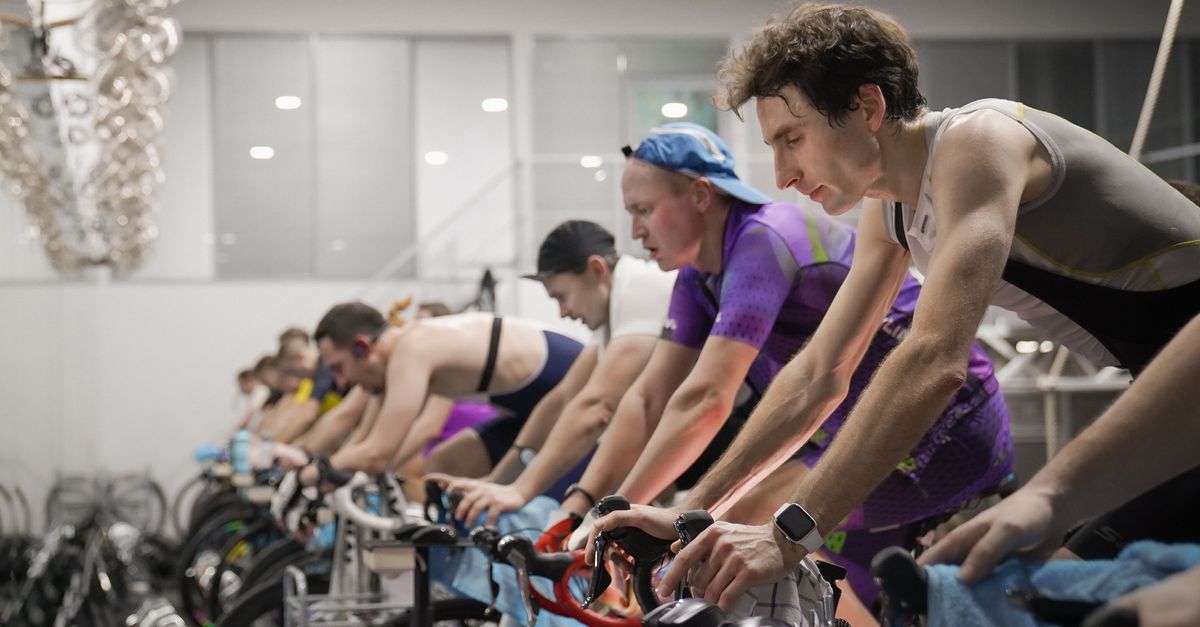
Tabata is a fixed interval protocol: 20 seconds of all out effort, 10 seconds of rest, eight rounds, four minutes in total. Done at genuinely maximal intensity it improves aerobic and anaerobic fitness remarkably fast. What it does not do is replace a calorie deficit, and four minutes of it is still only four minutes.
What exactly is Tabata training?
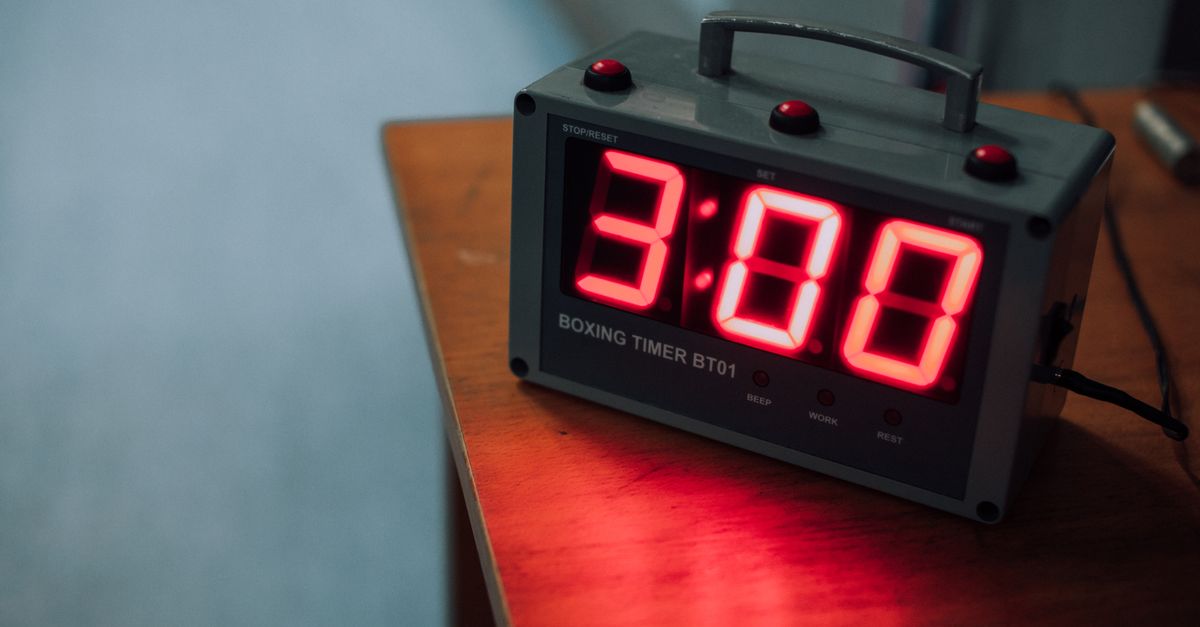
Tabata is not a style of exercise. It is a stopwatch. You can run it with burpees, a kettlebell, a stationary bike or a patch of carpet, and it stays Tabata as long as the clock does this:
- ✔ 20 seconds of work at the hardest pace you can produce
- ✔ 10 seconds of rest, complete rest, not a slow jog
- ✔ Eight rounds ➡ four minutes, and then you stop
The word doing all the work in that list is maximal. In the research the method is named after, the work bouts were set at roughly 170 percent of the riders’ VO2 max, an intensity nobody paces so much as endures. If you can hold a conversation in round six, you are doing intervals, which is a perfectly good thing to be doing. You are just not doing Tabata.
✔ All Tabata is HIIT.
✘ Not all HIIT is Tabata.
What did the original Tabata study actually find?
The protocol comes from a 1996 paper by Izumi Tabata and colleagues in Medicine and Science in Sports and Exercise, Effects of moderate intensity endurance and high intensity intermittent training on anaerobic capacity and VO2max. Two experiments, both on a braked cycle ergometer. One group rode 60 minutes a day at 70 percent of VO2 max, five days a week for six weeks. Seven other men did seven to eight rounds of 20 seconds on and 10 seconds off, on the same weekly schedule.
| What was measured | Steady group, 60 minutes a day | Interval group, about 4 minutes a day |
|---|---|---|
| Aerobic capacity, VO2 max | Rose from 53 to 58 ml/kg/min | Rose by 7 ml/kg/min |
| Anaerobic capacity | No significant change | Up 28 percent |
| Weekly time in the saddle | 300 minutes | About 20 minutes |
| Body fat | Not measured | Not measured |
That last row matters. This was a small study of young, already fit men, and it was measuring energy systems, not waistlines. The subjects were not Olympic speed skaters either, a detail that has quietly grown in the retelling. What the paper does show is striking enough without the embroidery: the short protocol improved the aerobic system as well as the long one did, and improved the anaerobic system when the long one did not.
Does Tabata burn more fat than a longer, gentler workout?
Less dramatically than the internet would like. The afterburn is real. Your body keeps consuming extra oxygen once you stop, which physiologists call EPOC, and hard intervals produce more of it than easy cardio does.
It is also small. A 2024 trial in Scientific Reports, Acute interval running induces greater excess post exercise oxygen consumption and lipid oxidation than isocaloric continuous running in men with obesity, put 21 untrained young men through two calorie matched treadmill sessions and measured the afterburn for 30 minutes afterwards. Intervals came out at about 66 kcal of EPOC, the steady run at about 54. The entire bonus for suffering was around 12 kcal, which is a bite of biscuit.
Note the two things that trial does not say. It was not a Tabata protocol, and 30 minutes is not 24 hours. The claim that your metabolism runs hot for a day afterwards is a much larger promise than anyone has put on a chart.
Which leaves the boring, durable answer. Fat loss is governed by the gap between what you take in and what you spend, held open over weeks. Four minutes of work contributes four minutes of calories no matter how theatrical the breathing. Tabata is not a shortcut around that arithmetic. It is an extremely efficient way to get fitter, and getting fitter is what lets you do more of everything else.
How is Tabata different from ordinary HIIT?
| Feature | General HIIT | Tabata |
|---|---|---|
| Work to rest ratio | Whatever the session calls for | 20:10, always |
| Round length | 30 seconds to several minutes | 20 seconds |
| Block length | 10 to 45 minutes | 4 minutes |
| Effort target | Hard | Everything you have |
| Can you pace it? | Yes, and you should | No, that is rather the point |
| Good for | Building repeatable cardio volume | Fitness gains per minute spent |
How often should you do Tabata?
Two or three sessions a week, on non consecutive days, suits most people. The limit is not motivation, it is recovery: maximal intervals load the nervous system and the joints, and the adaptation happens on the days you are not doing them.
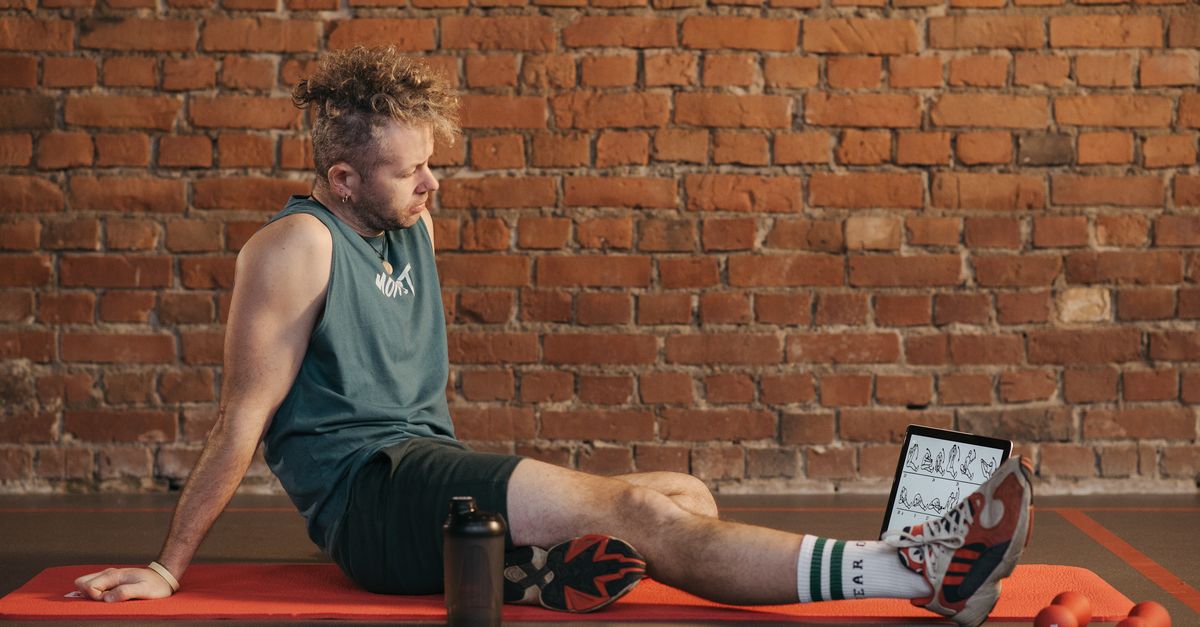
Signs you have gone past useful and into stubborn:
- ❌ Resting heart rate creeping up week on week
- ❌ Performance falling in sessions that used to feel fine
- ❌ Sleep getting worse rather than better
- ❌ Aches that arrive during the warm up instead of after the session
- ❌ Dreading the timer, every time
Persistent fatigue, disrupted sleep or changes to your menstrual cycle are worth raising with a doctor rather than training through. They are also common when training load goes up and food intake does not.
It is also worth keeping Tabata in proportion. NHS guidance for adults aged 19 to 64 asks for at least 150 minutes of moderate activity a week, or 75 minutes of vigorous activity, plus strengthening work on two days. Three Tabata blocks a week come to twelve minutes. They count handsomely towards the vigorous column. They do not cover the sheet. Walking, cycling and a sensible amount of strength training do the rest of the job, and they are the part most people can actually keep doing in February.
Who should not start with Tabata?
Maximal intensity is not a beginner setting. Speak to a doctor before starting this kind of training if any of the following apply to you:
- A heart condition, high blood pressure, or chest pain of any kind
- Pregnancy, or the months after giving birth, unless you have been cleared
- Joint injuries, or a recent operation
- Type 1 or type 2 diabetes with medication that affects blood sugar during exercise
- No regular exercise for a long stretch, or a chronic condition you are managing
Stop the session and get medical help if you get chest pain or pressure, severe breathlessness, dizziness, or an irregular heartbeat. Sharp joint pain means stop that exercise, not push through it. None of this is a reason to avoid exercise; it is a reason to start somewhere gentler and build up.
What does a real Tabata session look like?
Four minutes is the block, not the workout. A complete session runs about 20 minutes:
- Warm up, 5 minutes, until you are warm and slightly out of breath
- Block 1, 4 minutes, one movement or two alternating
- Rest, 1 to 2 minutes, walking about
- Block 2, 4 minutes, a different movement pattern
- Rest, 1 to 2 minutes
- Block 3, 4 minutes, optional and honestly optional
- Cool down, 3 to 5 minutes of easy walking and stretching
Choosing movements is simpler than the exercise library suggests. Pick things you can do with good form when you are tired, because round seven is where technique goes to die.
- 💙 Starting out: sit to stand from a chair, step jacks, marching high knees, wall push ups
- 🟧 Comfortable: jumping jacks, mountain climbers, reverse lunges, push ups, air bike
- 🔥 Experienced: burpees, kettlebell swings, thrusters, tuck jumps, assault bike sprints
Beginners often do better with 20 seconds on and 20 seconds off for the first few weeks, then tighten the rest to 10 once the form holds. That is a modification, not a failure, and nobody at the gym is keeping score.
Food does not need to be complicated either. A normal meal one to two hours before, or something small like fruit or yoghurt if you are training soon after waking. Training completely fasted is fine for some people and leaves others grey and wobbly by round five, which is useful information about your own body rather than a moral test.
This article is general information, not medical advice, and is not a substitute for care from a qualified healthcare professional. Speak to your doctor about your own situation.
Is four minutes of Tabata really a whole workout?
Four minutes is one block, not a training programme. As a standalone session it is a genuinely hard four minutes that improves fitness, and it is far better than nothing on a chaotic day. Most people build a session of about 20 minutes from two or three blocks with a warm up and cool down around them.
Can I do Tabata every day?
Not usefully. Maximal intervals need recovery days to produce the adaptation, and stacking them tends to produce fatigue, worse sessions and niggling injuries instead of progress. Two or three sessions a week on non consecutive days is the usual sensible ceiling, with walking or strength work in between.
Does Tabata burn belly fat specifically?
No form of exercise burns fat from a chosen area. Where your body draws fat from is largely down to genetics, sex and hormones, and no amount of mountain climbers redirects it. Overall fat loss comes from a sustained calorie deficit, and exercise helps by adding to the spending side and protecting muscle.
Do I need any equipment for Tabata?
No. Bodyweight movements such as squats, step jacks, mountain climbers and push ups cover it, and a free interval timer app handles the 20:10 counting so you are not squinting at a clock mid burpee. Kettlebells, bikes and rowers are options, not requirements.
Is Tabata safe if I am new to exercise?
True maximal intervals are not a good starting point if you have not trained recently. Building a base with brisk walking, easier intervals and strength work first is safer and works better. Anyone with a heart condition, high blood pressure, joint problems, or who is pregnant should speak to a doctor before starting high intensity training.
How long before I notice a difference?
Fitness markers usually shift before anything else does. People commonly notice they recover faster between rounds within a few weeks, which is a real adaptation even when the scale is unmoved. The original 1996 protocol ran for six weeks. Body composition moves on a slower timetable and depends far more on overall diet and daily activity than on any single workout.
Leave a Reply