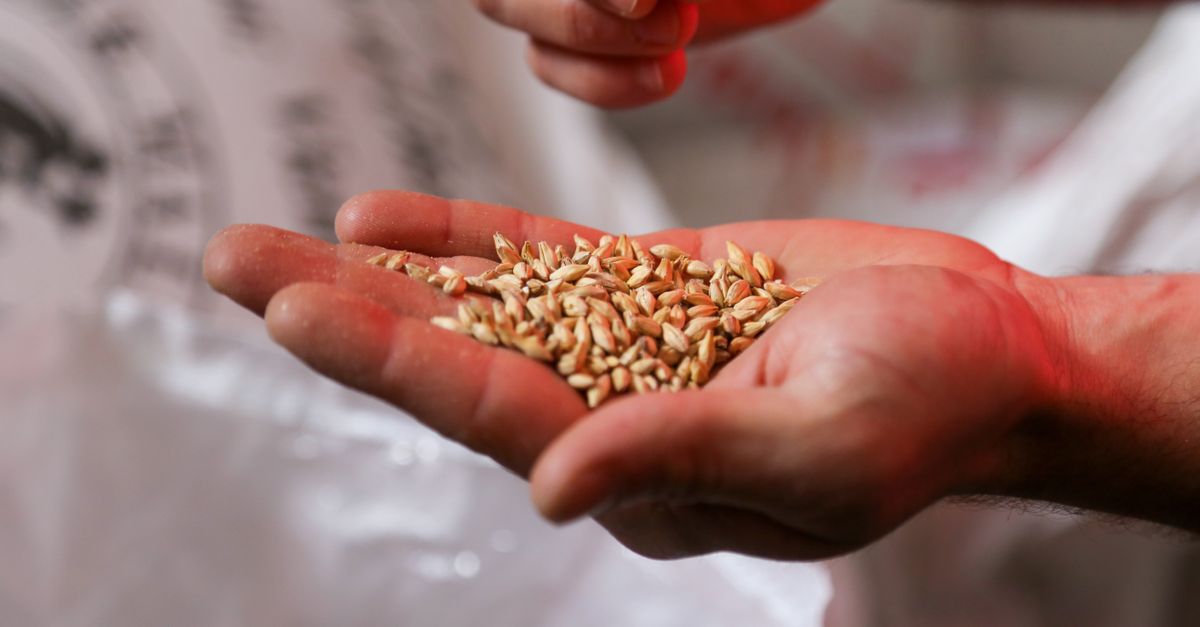
No drink raises your metabolic rate in any way that shows up on the scale, and barley water is no exception. Straining it leaves most of the barley fibre behind in the grain. What it can genuinely do is replace sugary summer drinks with something close to calorie free, and that swap is the part that is measurable.
Does any drink actually raise your metabolic rate?
The idea that a morning glass of something switches your metabolism on comes from a real experiment that did not hold up. In 2003 Boschmann and colleagues reported in the Journal of Clinical Endocrinology and Metabolism that 500 ml of water raised resting metabolic rate by about 30 percent in healthy adults, peaking thirty to forty minutes after drinking.
Other laboratories went looking for it and could not find it. A 2006 reassessment by Brown, Dulloo and colleagues measured energy expenditure after drinks varying in temperature and osmolality. Water at three degrees produced a rise of roughly 4.5 percent, close to what warming the fluid to body temperature would cost anyway. Water at room temperature produced no significant rise at all. The effect remains contested rather than established.
Even the original figure is smaller than it sounds. Resting expenditure over a single hour is around sixty to seventy calories for many adults, so a thirty percent rise across part of an hour is a couple of dozen calories, once, and only if the effect is real. Barley in the water changes no part of that arithmetic.
What is left in barley water once you strain it?
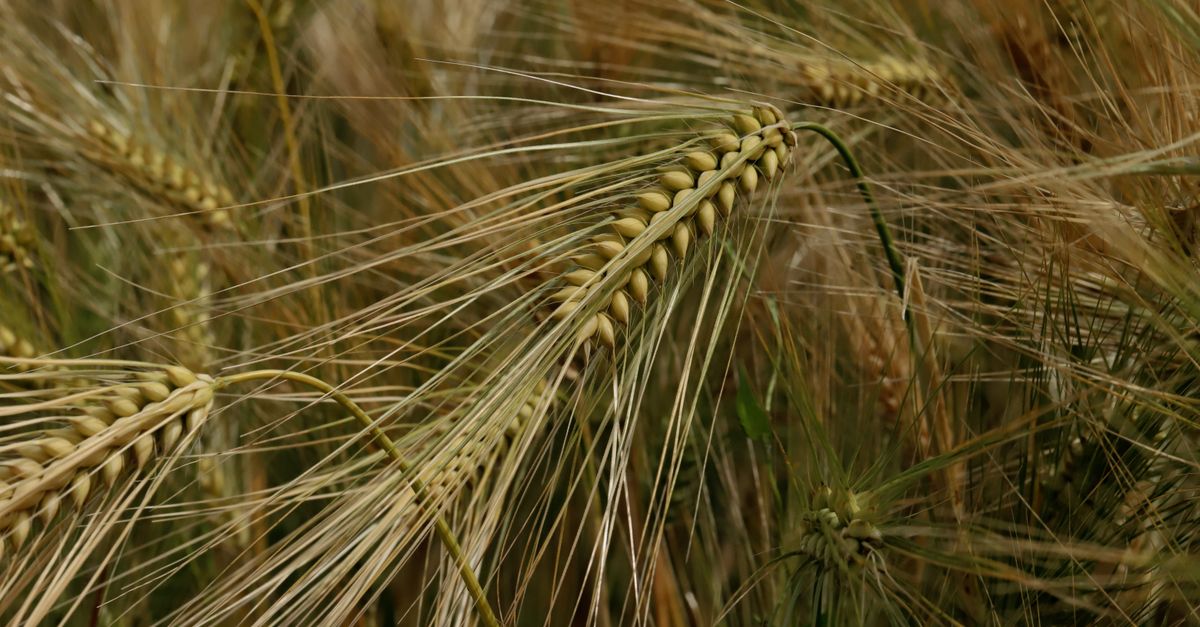
Whole barley is a genuinely high fibre grain, and the fibre carrying most of its evidence is beta glucan, a soluble fibre that also occurs in oats. Barley grain commonly runs around four to six percent beta glucan by weight, varying by variety and by how heavily it was pearled.
Barley water is not whole barley. It is a decoction: a couple of spoons of grain simmered in three or four cups of water, strained, with the softened grain thrown out. Some beta glucan does dissolve. The bulk of the fibre leaves with the grain you discarded, and what dissolved is spread across several glasses.
There is no reliable published figure for the beta glucan in a home made glass, because it depends on the grain to water ratio, the simmering time, whether the barley was pearled or whole, and how hard you strained. That uncertainty is itself the finding rather than a gap to fill in with optimism. A dose you cannot measure is not a dose you can count on.
What does barley beta glucan do, and at what dose?
Two things European regulators have accepted, and neither is metabolic rate or fat burning.
For cholesterol, the authorised claim attaches to three grams a day of beta glucan from oats or barley, for maintaining normal blood LDL cholesterol. For blood sugar, the European Food Safety Authority opinion on beta glucans from oats or barley sets the condition at roughly four grams of beta glucan per thirty grams of available carbohydrate in the meal it is eaten with.
The second condition is the one that gets quietly dropped. The fibre has to arrive alongside the carbohydrate it is meant to blunt. A glass of strained barley water on an empty stomach, which is the routine recommended most often, satisfies neither the dose nor the meal context.
If beta glucan is what you want, the countable route is the grain itself. Pearl or pot barley in a soup or a salad delivers a known amount, and oat porridge does the same job. The strained liquid is the one form where you cannot say what you took.
Why does barley water feel like it is working in hot weather?
Three reasons, and two of them have nothing to do with barley.
Fluid is the first. In heat, sweat losses rise sharply, and mild dehydration shows up as tiredness, headache and poor concentration, all easy to read as a sluggish metabolism. Any unsweetened fluid corrects that.
Volume and temperature are the second. A cold drink is pleasant, it occupies the stomach for a while, and it interrupts the automatic reach for something sweet. That effect belongs to the glass rather than to the grain in it, and it is short.
Displacement is the third, and the only one of the three that touches body weight. If the glass takes the place of a soft drink or a packaged juice, the sugar it displaced is gone from the day. That is arithmetic rather than metabolism, and it works just as well with plain water or unsweetened tea.
Which summer drink swaps are worth making?
Sorted by what each actually changes rather than by reputation.
| Summer drink | What it actually does | How much it is worth |
|---|---|---|
| Plain water, chilled | Replaces fluid, contributes no energy, costs nothing | The benchmark everything else is measured against |
| Unsweetened barley water | Same as water, with a trace of soluble fibre you cannot quantify | Fine if you like it. No demonstrated advantage over water |
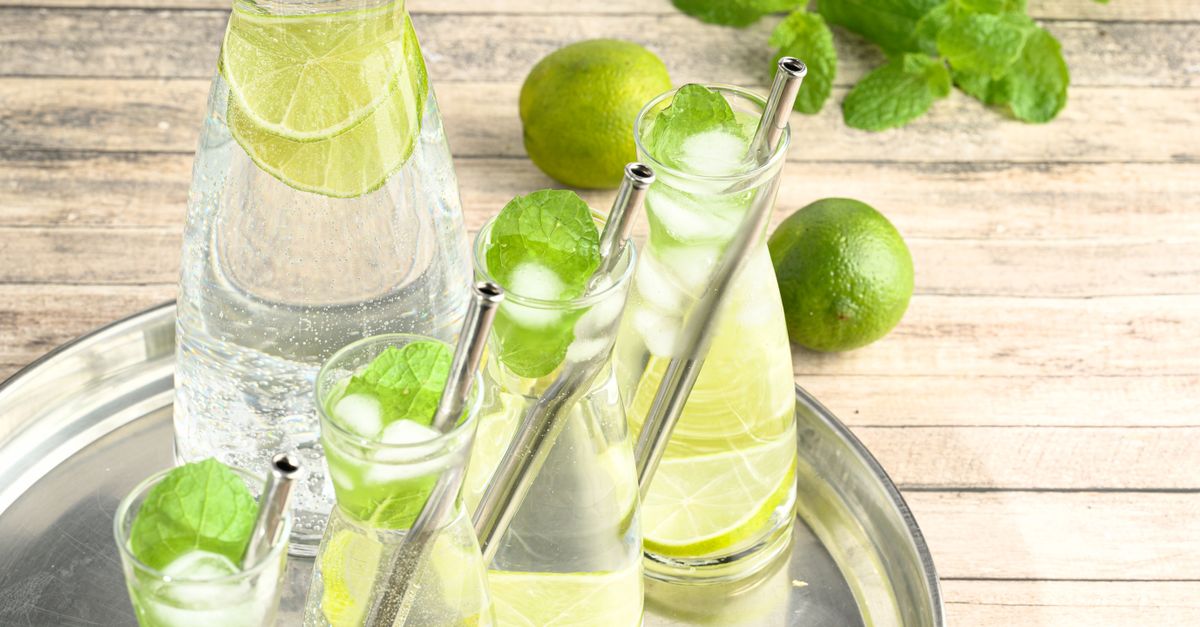
| Water with lemon, mint or cucumber | Makes plain water more likely to be drunk in volume | Useful, entirely through palatability |
| Unsweetened iced tea or black coffee | Fluid plus caffeine, which raises expenditure slightly and briefly | Small and real, easily cancelled by what gets added to it |
| Coconut water | Fluid plus potassium, and roughly 40 to 60 calories a glass | Neutral. It is a light drink, not a free one |
| Bottled lemon barley squash | Depends wholly on the label. Many are sugar sweetened | Belongs with soft drinks unless the label says otherwise |
| Packaged fruit juice | Delivers sugar without the fibre of the whole fruit | Counts as a sugary drink for every practical purpose |
| Regular soda | Sugar in liquid form, poorly compensated for at later meals | The row every swap above is trying to remove |
| Barley water with honey or sugar stirred in | Converts the swap back into a sweetened drink | Cancels the only mechanism that was doing any work |
The ordering is driven almost entirely by sugar and barely at all by ingredient. Once a drink is unsweetened, the gaps between the top rows are small enough that the right answer is whichever one you will keep drinking through a hot month.
Does barley water flush out toxins or reduce bloating?
Flushing toxins is not something drinks do. The kidneys and liver clear waste continuously, and drinking past adequate hydration raises urine volume without raising clearance. More trips to the bathroom is an observation about fluid balance, not proof that anything was removed.
Bloating is more interesting, because a swap can help through what it removes. Fizzy drinks add gas directly. Packaged juices and some sugar free drinks carry fructose loads or sugar alcohols such as sorbitol, both well documented producers of gas and distension in sensitive people. Taking those out is a plausible reason someone feels lighter, and the credit belongs to the removal rather than to the barley. No trial has tested barley water for bloating in humans, so anything stated more confidently than that is invention.
Who has a reason not to drink it?
Barley contains gluten, which is the point most summer drink articles skip. NHS guidance on a gluten free diet lists wheat, barley and rye as the gluten containing grains, and simmering does not remove the protein. Barley water is not a gluten free drink.
- Coeliac disease or a confirmed gluten sensitivity, since the hordein in barley is a gluten protein and malted barley drinks carry it too
- A fluid restriction advised for a kidney or heart condition, where adding drinks is not neutral
- A known barley or grass pollen allergy
- Commercially sweetened versions, if cutting sugar was the point of the swap
Weight that is not moving, fatigue that persists, or thirst that does not settle are worth raising with a doctor or a registered dietitian rather than treating with a drink. Those questions are answered by tests and a proper history.
What actually governs weight through a hot month?
The drink swap has been tested properly, just never with barley. A systematic review and meta analysis of randomised trials, published in Obesity Reviews in 2024 pooled six randomised trials covering 1,729 participants followed for six months or longer, and found a small BMI advantage for the groups who replaced sugar sweetened drinks with a non caloric alternative, on the order of a third of a BMI point between groups. That is a group average rather than a figure anyone should expect personally, and the part doing the work is the absence of sugar, not any ingredient in the replacement.
Water intake on its own has been examined too. A meta analysis of randomised trials in adults with overweight or obesity found modest effects on adiposity measures, again small, and again best explained by displacement rather than by anything thermogenic in the water.
What remains is unglamorous, and it is where the leverage sits: how much you eat across the whole day, enough protein and fibre from real food, sleep, and movement you will repeat once the novelty wears off. Treating a morning glass as the mechanism tends to mean those larger inputs go unexamined for another summer.
Unsweetened barley water is a perfectly good hot weather drink. It hydrates, it costs almost nothing and it displaces sugar. Those are the honest reasons to make a jug of it, and none of them require it to touch your metabolic rate.
Frequently asked questions
Does barley water burn fat?
No drink burns fat. Fat loss follows an energy deficit sustained over time, and the contribution any drink makes is limited to the calories it replaces. Unsweetened barley water contains very little energy, so putting it where a sugary drink used to go removes those calories from the day. That is the entire effect, and plain water produces it just as well.
Is barley water better than plain water for weight?
No trial has compared the two for weight, and there is no mechanism that would predict a difference worth measuring. Strained barley water carries a small and unquantifiable amount of soluble fibre and a small amount of energy, while plain water carries neither. Pick whichever one you will actually drink consistently in hot weather.
How much barley water should you drink in a day?
There is no established amount, because there is no established effect to dose for. Treat it as one of your ordinary daily fluids rather than as a supplement with a schedule. If you have been given a fluid restriction for a kidney or heart condition, the daily total does matter, and that is a question for the clinician who set the restriction.
Is barley water gluten free?
No. Barley is one of the three gluten containing grains alongside wheat and rye, and the gluten protein is not removed by soaking, simmering or straining. Anyone with coeliac disease should avoid barley water as they would avoid barley itself. Industrially processed barley drinks that carry a gluten free label are a separate case and need checking against that label.
Does drinking it on an empty stomach make it work better?
There is no evidence for that, and for the one blood sugar effect barley beta glucan does have, the opposite is closer to true. The authorised claim requires the fibre to be consumed together with the carbohydrate in a meal. An empty stomach removes the only context in which that fibre could do the job it is credited with.
Is barley water a detox drink?
Detox is a marketing category rather than a physiological one. The liver and kidneys clear waste continuously and no drink speeds that process up. Adequate fluid supports normal kidney function, and anything beyond adequate simply leaves as urine. Passing more urine is not the same thing as removing more waste.
This article is general information, not medical advice, and is not a substitute for care from a qualified healthcare professional. Speak to your doctor about your own situation.
Leave a Reply