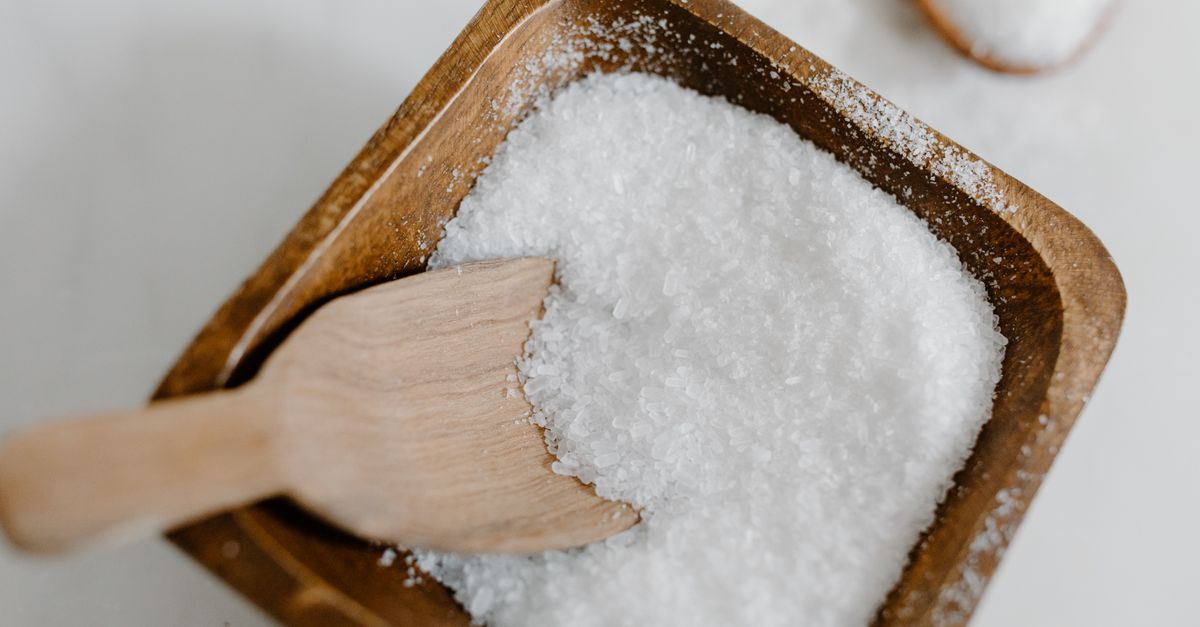
For everyday Indian cooking, iodised salt is the sensible default, because it is the one salt that reliably supplies iodine. Pink, black, sea and rock salts carry roughly the same sodium by weight, so swapping between them changes flavour and price far more than it changes health. Quantity matters more than colour.
What actually differs between one salt and another?
Every salt in an Indian kitchen, white, pink, black or crystalline, is mostly sodium chloride. Purity runs from roughly 97 percent to over 99 percent, and sodium makes up about 39 percent of sodium chloride by weight. A gram of pink salt therefore delivers close to the same sodium as a gram of ordinary table salt. That one fact settles most salt arguments.
Three things genuinely vary: crystal size, trace impurities, and whether iodine has been added. Crystal size matters more than people expect, because home cooks measure by the spoon. A teaspoon of coarse flakes holds less salt than a level teaspoon of fine powder, simply because big crystals pack less tightly. That is a measuring effect, not a health difference.
Trace minerals are the part the marketing leans on hardest and the weakest part of the case. The minerals that tint pink salt sit in the parts per million range. To get a meaningful dose of any of them you would have to eat a quantity of salt that would be a problem in itself, long before it was a benefit.
Why does iodine decide the answer for most Indian kitchens?
Iodine is the raw material the thyroid uses to make its hormones, and those hormones set the pace of energy use across the body. The shortfall that matters most is the quiet one, during pregnancy and early childhood, when iodine is needed for brain development. The NHS guide to iodine and other minerals sets out what the body uses it for.
Soil across much of the subcontinent, particularly the Himalayan belt and the Gangetic plain, is low in iodine, so the crops grown in it are low in iodine too. Fortifying salt was the chosen fix for a practical reason rather than a nutritional one: salt is one of the few things almost every household buys, in fairly steady amounts, at every income level.
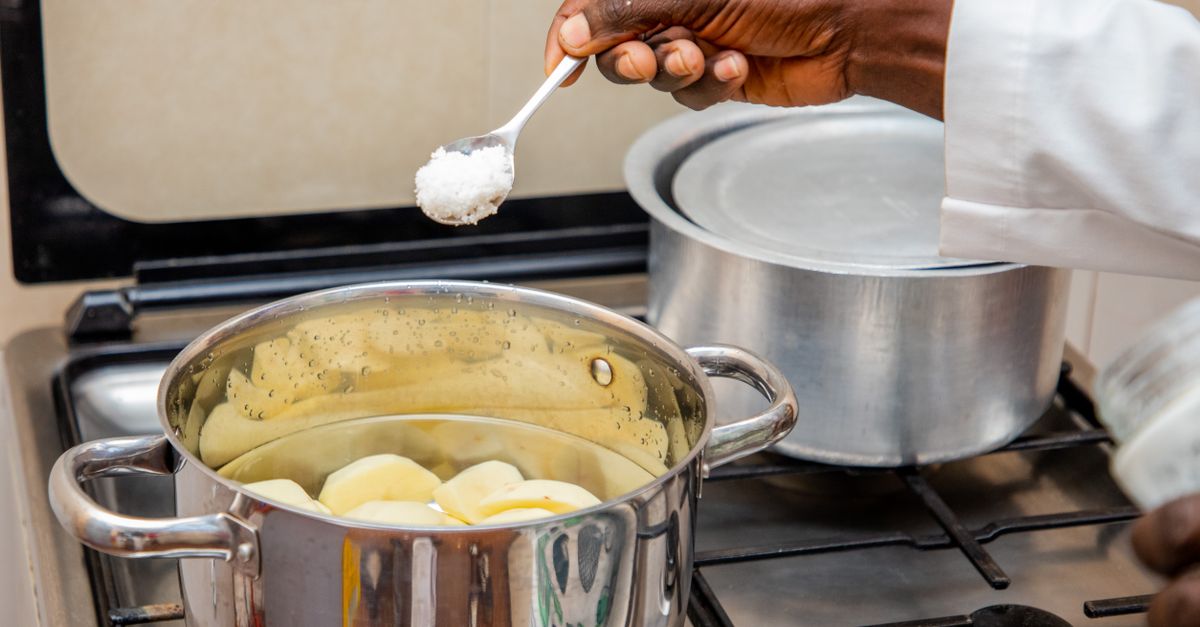
It worked, and the numbers are worth knowing. The first National Iodine and Salt Intake Survey found salt containing iodine in 91.7 percent of Indian households, with 77.5 percent using salt that was adequately iodised, meaning at least 15 parts per million. That is a genuine public health achievement, and a fragile one, because it depends on households continuing to buy the fortified product rather than something that looks more natural on the shelf.
This is why the honest answer is not simply “whichever you like”. Pink, black, sea and rock salts are not usually iodised. Keeping them for flavour alongside iodised salt costs you nothing. Replacing your iodised salt with them removes the most reliable iodine in the average Indian diet, and nothing in the pink crystal puts it back.
How do the common salts compare?
| Salt | Iodine | Sodium per gram | What it is genuinely good for |
|---|---|---|---|
| Iodised table salt | Yes, added | Standard | Everyday cooking and the household iodine supply |
| Himalayan pink salt | Usually none | Standard | Finishing and appearance, the colour is iron oxide |
| Black salt, kala namak | Usually none | Standard | Chaat, raita, jaljeera, for its sulphurous aroma |
| Sea salt | Only if fortified | Standard | Texture and finishing, sometimes a cleaner taste |
| Rock salt, sendha namak | Usually none | Standard | Fasting dishes, by custom rather than chemistry |
| Low sodium substitute | Varies by brand | Lower, part replaced by potassium | Blood pressure, but only with medical guidance |
One column carries the whole argument. Sodium is effectively constant across the first five rows. Only the last row changes it, and that row is also the only one with a real safety condition attached.
Is Himalayan pink salt healthier than ordinary salt?
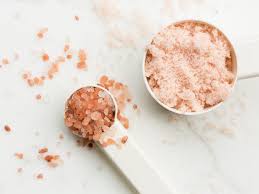
Not in any way that survives arithmetic. Pink salt is rock salt, mined mostly in Pakistan, and the colour comes from iron oxide with traces of other minerals alongside it. Per gram it carries about the same sodium as the white salt in the shaker beside it, and it is usually sold without iodine. Claims that it balances the body’s pH, flushes toxins or lifts metabolism have nothing behind them.
It does have real uses. Coarse pink crystals finish a dish well, they look good on fruit and salad, and the flavour is faintly different. Those are culinary reasons and perfectly good ones. The only thing worth refusing is the health story on the packet, which is usually what the premium is buying.
What is black salt actually for?
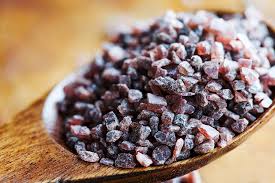
Kala namak earns its place on flavour alone. Its sulphur compounds give a savoury, faintly eggy aroma that nothing else replaces in chaat, raita, jaljeera, nimbu pani or a plate of cut fruit. Substitute plain salt in a chaat masala and you find out within one bite that the dish is not the same.
It is still salt. It is largely sodium chloride, it counts towards the day’s sodium exactly as table salt does, and it does not reliably provide iodine. The traditional claim that it aids digestion is repeated far more often than it has been tested in people. Keep the jar for the taste, which is reason enough, rather than as medicine.
Should you switch to a low sodium salt substitute?
These replace part of the sodium chloride with potassium chloride. They taste slightly metallic to some people, and they do cut the sodium in a given spoonful. The evidence behind them is the strongest in this article.
In 2025 the World Health Organization issued a conditional recommendation on lower sodium salt substitutes, suggesting that adults in the general population use them in place of regular salt, on the basis of trials showing lower blood pressure.
The exclusions get quoted far less often than the recommendation, and they are the part that matters at your own kitchen counter. The advice does not apply to people with impaired kidney function or any condition that limits the ability to clear potassium, and it does not apply to children or to pregnancy. Several common blood pressure medicines push potassium up on their own. If any of that fits your household, ask your doctor before you buy rather than guessing.
How much salt is actually too much?
The World Health Organization advice on sodium is to keep salt below 5 grams a day for adults, which works out at about 2 grams of sodium. NHS guidance sets the adult ceiling at 6 grams, roughly a level teaspoon. Indian intake sits well above both: the National NCD Monitoring Survey of 2017 and 2018 estimated a mean of 8.0 grams a day, 8.9 grams for men and 7.1 grams for women.
Where the salt comes from decides what you can do about it. In much of the West most sodium arrives already inside packaged food, and cooking differently barely moves the total. In Indian diets the bulk of it goes in during cooking and at the table, topped up by pickle, papad, namkeen and ready masala mixes. That is encouraging, because most of the salt in your food is under your own hand.
Does eating less salt help with weight loss?
It changes the number on the scale, which is not the same thing as changing your body. Sodium holds water. Eat a salty meal and the body retains extra fluid for a day or two. Cut sodium sharply and that fluid goes. The scale moves in both directions and neither movement is fat.
This catches people out constantly. A drop after a low salt day reads as progress, a rise after a restaurant meal reads as failure, and neither is telling you anything about body fat. Real fat change is slow and completely hidden by day to day fluid swings, which is why weighing every morning and treating each number as a verdict is such a reliable way to feel terrible about an approach that is working.
The reason to eat less salt is blood pressure and long term heart and kidney risk. That is strong enough on its own. It does not need a weight loss claim bolted onto it, and any product that attaches one to a salt swap is selling something.
How do you use less salt without the food tasting flat?
Palates adjust, but only gradually. Halving the salt overnight makes food taste like cardboard and the experiment ends within a week. Shaving a little off each week works.
- Taste before you salt, while cooking and at the table. A surprising amount goes in by habit, before anyone has checked whether the dish needs it.
- Lean on acid and aroma instead: lemon, tamarind, amchur, kokum, toasted cumin, black pepper, a hotter tadka, plenty of fresh coriander.
- Watch the accompaniments, not the main dish. A spoon of pickle, a papad and a bowl of namkeen can carry more salt than the dal they sit beside.
- Read labels on namkeen, biscuits, bread, sauces, ready masala mixes and instant noodles, where the sodium is already in the packet and no cooking decision of yours will change it.
- Keep iodised salt as the working default, and treat pink, black and sea salt as finishing touches rather than replacements.
None of this requires buying a different salt. It requires using less of whichever salt is already in the cupboard, which is the cheaper answer and, inconveniently for the people selling pink crystals, the one the evidence supports.
Frequently asked questions
Which salt is best for daily Indian cooking?
Iodised salt, for one specific reason: it is the only common salt that reliably supplies iodine, which the thyroid needs and which Indian soil and crops largely lack. Pink, black and sea salt can sit alongside it for flavour, but not in place of it.
Is sendha namak or rock salt better than table salt?
It is not nutritionally better. Rock salt carries about the same sodium per gram and usually no added iodine. Its place in fasting cooking is a matter of custom, not chemistry, and it works perfectly well for that.
Does pink salt contain less sodium than white salt?
Not in any way that matters. Some samples test marginally lower, but the difference is far too small to change your intake. Coarse crystals can mean less salt per spoonful than fine powder, which is a measuring quirk rather than a property of the salt.
Can I use only black salt at home?
Not as your only salt. Kala namak is worth keeping for chaat, raita and cold drinks, but it does not reliably provide iodine, so a kitchen using it alone loses the household’s main iodine source.
Does iodised salt lose its iodine during cooking?
Some loss happens with prolonged heat, strong light and damp storage, which is why a closed container kept away from the stove is sensible. Enough survives ordinary Indian cooking for iodised salt to remain the practical everyday source.
Is low sodium salt safe for everyone?
No. It swaps some sodium for potassium, and that is a problem for anyone with reduced kidney function or on medicines that raise potassium. It is also not intended for children or during pregnancy. Ask a doctor before switching rather than deciding from a label.
This article is general information, not medical advice, and is not a substitute for care from a qualified healthcare professional. Speak to your doctor about your own situation, particularly before changing salt if you have blood pressure, kidney or thyroid concerns.
Leave a Reply