
No single food builds muscle. What governs growth is total daily protein, spread across the day, alongside training that gets progressively harder. Around 1.6 grams of protein per kilogram of body weight per day is where measurable gains stop improving. Chicken, eggs, dairy, fish, soy, legumes and grains all get you there.
What actually builds muscle, the food or the training?
Muscle grows in response to a mechanical signal. Resistance training that gets harder over time is that signal. Food supplies the raw material and the energy to act on it. Neither works without the other, and the order of importance is not the one food lists imply.
The size of the food contribution has been measured. A systematic review and meta analysis of protein supplementation in people doing resistance training found an average of about 0.3 kg more fat free mass than training produced alone, roughly 27 percent more (Morton and colleagues, British Journal of Sports Medicine, 2018). A real effect, and a modest one, averaged across dozens of trials.
Put plainly: the training decides whether you build muscle, and the food decides how well you support it. If the training is not there, no shopping list rescues it. why protein matters for muscle growth covers the mechanism.
How much protein do you actually need in a day?
The same review looked for the point at which more protein stopped helping. It found a breakpoint at about 1.6 grams per kilogram of body weight per day, with a confidence interval running from 1.0 to 2.2. Beyond that, extra protein produced no further gain in fat free mass in the trials reviewed.
That interval is wide, and it deserves reporting rather than rounding away. It means the honest answer is a range, not a target. For someone weighing 70 kg, 1.6 g per kg is roughly 112 g of protein a day, with the interval running from about 72 g to about 154 g.
Two things follow. Most people who eat a protein food at every meal are closer to this than they assume, and the gap is usually breakfast rather than dinner. And pushing past the top of that range has not been shown to add anything, while still costing room on the plate.
Which foods give you the most protein per serving?
Protein density is what separates a food that moves your daily total from one that merely appears on lists. Values below are typical and vary with cut, brand and cooking method.
| Food | Typical serving | Protein per serving | Worth knowing |
|---|---|---|---|
| Chicken breast, skinless | 100 g cooked | About 31 g | Most protein for the fewest calories here |
| Salmon | 100 g cooked | About 25 g | Protein plus the oily fish serving |
| Cottage cheese | 200 g tub | About 22 g | Slow digesting, useful later in the day |
| Lentils, cooked | 200 g | About 18 g | Protein and fibre together |
| Greek yogurt, plain | 170 g pot | About 17 g | No cooking required |
| Firm tofu | 100 g | About 16 g | Most concentrated everyday plant source |
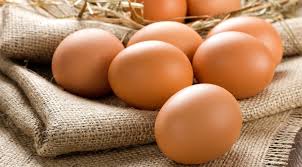
| Eggs | 2 large | About 13 g | Cheap and complete |
| Quinoa, cooked | 185 g, one cup | About 8 g | A carbohydrate carrying some protein |
| Almonds | 30 g handful | About 6 g | A fat and mineral food, not a protein one |
The two entries at the bottom are the ones that get oversold. A handful of almonds carries about one egg worth of protein for more than twice the calories, which makes nuts a reasonable snack and a poor way to hit a protein target. Quinoa contains all nine essential amino acids, unusual for a grain and the fact everybody repeats; what gets left off is the amount, around 8 grams a cooked cup. It is a good carbohydrate that carries protein, not a protein food.
Eggs sit at the sensible end. They are cheap, complete, and the yolk holds most of the choline, vitamin B12, vitamin D and fat soluble vitamins in the egg. Throwing yolks away to chase a slightly better protein to calorie ratio gives that up for very little in return.
Does it matter when you eat your protein?
Far less than the 30 minute rule suggests. A meta analysis of protein timing found the apparent advantage of eating protein close to training disappeared once total daily intake was accounted for (Schoenfeld, Aragon and Krieger, Journal of the International Society of Sports Nutrition, 2013). The studies showing a timing effect had also given participants more protein overall, and the extra protein, not the clock, explained the result. For strength, timing showed no effect at all.
The practical version is that the window is measured in hours rather than minutes. Eating something with protein in it after training is sensible and unremarkable. Rushing home to get a shake down within half an hour is not doing what it is sold as doing. Spreading protein across the day rather than loading it into one evening meal is a reasonable refinement, and it is a refinement: the effect is small next to whether you reach the daily total at all.
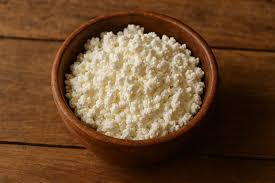
Protein before bed deserves the same treatment. Casein, the dominant protein in cottage cheese and Greek yogurt, does digest slowly, and a protein feed in the evening plausibly supports overnight repair. Whether it adds anything once the daily total is already adequate is much less settled. If a bowl of cottage cheese at night is what gets you to your target, it is doing real work. It is not doing anything the same protein at lunch would not.
Do plant proteins build muscle as well as animal ones?
Yes, given enough of them. Plant sources are less concentrated, and several are lower in specific amino acids, particularly leucine and lysine. Matching a diet built on meat and dairy takes more volume and more variety, not a different principle.
Soy products, tofu, tempeh and soy milk, come closest to dairy and meat on both amount and amino acid profile. Lentils, beans and chickpeas bring protein and fibre in the same food, useful if fullness is part of what you are managing. Combining sources across the day, grains with pulses being the classic pairing, covers the gaps without engineering individual meals.
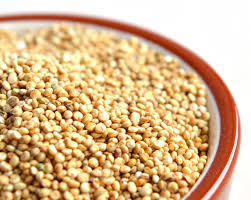
Quinoa belongs here as the base rather than the protein. Quinoa with lentils, with tofu, or alongside eggs does the job. A bowl of quinoa on its own does not.
What about fat, carbohydrate and the rest of the plate?
Protein takes the attention and it is not the only requirement. Carbohydrate fuels the sessions that create the growth signal, and total energy matters too: building meaningful new muscle in a large calorie deficit is difficult, and the deeper the deficit, the more the realistic goal shifts towards keeping the muscle you already have. whether cardio comes before or after weights is a smaller question than whether you are eating enough to recover from either.
Oily fish is worth including for reasons with little to do with muscle. NHS guidance on a balanced diet is at least two portions of fish a week, one of them oily, and salmon fits that while bringing about 25 grams of protein per 100 g cooked. Omega 3 and muscle growth specifically is murkier than food lists admit: findings are inconsistent, and much of what exists comes from older adults or supplement level doses rather than eating fish twice a week. Good food, poor plan.
Which muscle food claims do not hold up?
- Cottage cheese and paneer are the same thing. They are not. Paneer is pressed, considerably higher in fat, and carries no live cultures. A fine food, not a like for like swap.
- Certain fats raise testosterone and so build muscle. Very low fat diets can affect hormones. Shifts within a normal range are not what determines how much muscle you build.
- There is a 30 minute window after training. Not once daily protein is counted.
- This food builds muscle. No food does. Training does, and food determines how well the body can respond.
- More protein is always better. Past roughly 2 g per kg there is no trial evidence of further gain.
How does this fit if you are also trying to lose weight?
Most people reading a page like this want two things at once: less fat, and either more muscle or at minimum no less of it. Those goals pull against each other, because adding muscle wants surplus energy and losing fat requires the opposite.
The middle path is what the evidence supports. Keeping protein towards the upper part of that 1.6 g per kg figure while continuing to train against resistance helps preserve lean mass during a deficit, so more of what comes off is fat. How much, and over what period, depends on your starting point, training history, age, sleep and a good deal nobody can predict from a webpage. Anyone attaching a number of pounds to a number of weeks is guessing.
For a target set for your own body and any condition you are managing, a registered dietitian or your own doctor is the right person to ask, particularly if you have kidney, liver or metabolic conditions where protein intake is not a neutral variable.
The short version: train hard enough that your body has a reason to build, eat roughly 1.6 grams of protein per kilogram a day from foods you will eat repeatedly, and stop watching the clock.
Frequently asked questions
What is the single best food for building muscle?
There is not one. Muscle responds to training, and food supports that response mainly through total daily protein. Chicken breast happens to be the most protein dense common option, and swapping it in changes almost nothing if your daily protein total stays where it was.
How much protein do I need each day to build muscle?
The best available estimate is a breakpoint around 1.6 grams per kilogram of body weight per day, with a confidence interval from roughly 1.0 to 2.2. For a 70 kg person that middle figure is about 112 grams. Above the top of that range there is no trial evidence of further gain.
Do I need protein powder?
No. Powder is convenience, not a category of its own. The measured benefit in the research comes from the protein, not from the form it arrives in. If you already reach your daily total from food, powder adds nothing beyond being easier to carry.
Is the 30 minute window after training real?
Not as described. Once total daily protein intake is accounted for, the timing advantage disappears in the pooled evidence, and it never showed up at all for strength. Eating protein within a few hours either side of training is the sensible version of the same idea.
Can I build muscle on a plant based diet?
Yes. Plant sources are less concentrated and some are lower in particular amino acids, so it takes more volume and more variety rather than a different approach. Soy products come closest to dairy and meat, and combining grains with pulses across the day covers the gaps.
Can I build muscle and lose fat at the same time?
To some extent, and it depends heavily on where you are starting from. It is most achievable for people new to resistance training, returning after a break, or carrying more body fat. Keeping protein high and training against resistance is what protects lean mass either way, and no one can put a timeline on it for you.
This article is general information, not medical advice, and is not a substitute for care from a qualified healthcare professional. Speak to your doctor or a registered dietitian about your own situation.
Leave a Reply