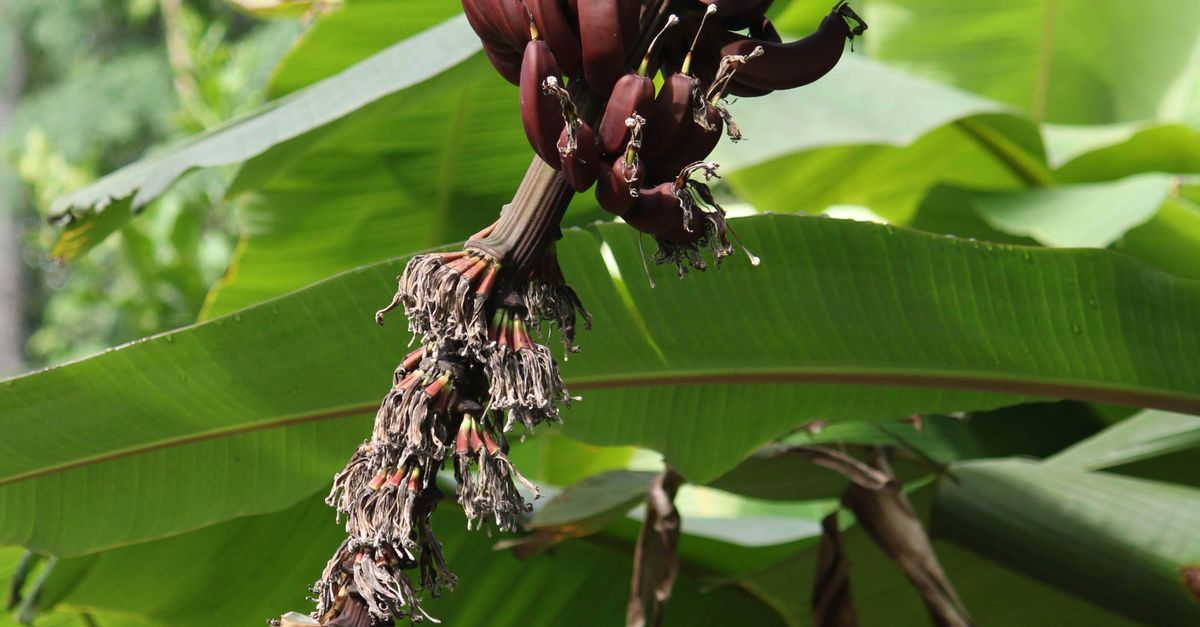
Red bananas are not better for weight loss than yellow ones in any way that has been measured. They carry more carotenoids and a different pigment, which is a real difference in nutrition and a trivial one for body weight. What governs weight is total intake, and a banana of any colour sits inside that total.
What actually is a red banana?
A group of cultivars of the same species as the ordinary supermarket banana, Musa acuminata, sold under names like Red Dacca in Australia and Hongjiaowang in China. They run shorter and stubbier than a Cavendish, with reddish purple skin, denser flesh and a slightly sweeter taste some people read as faintly berry like.
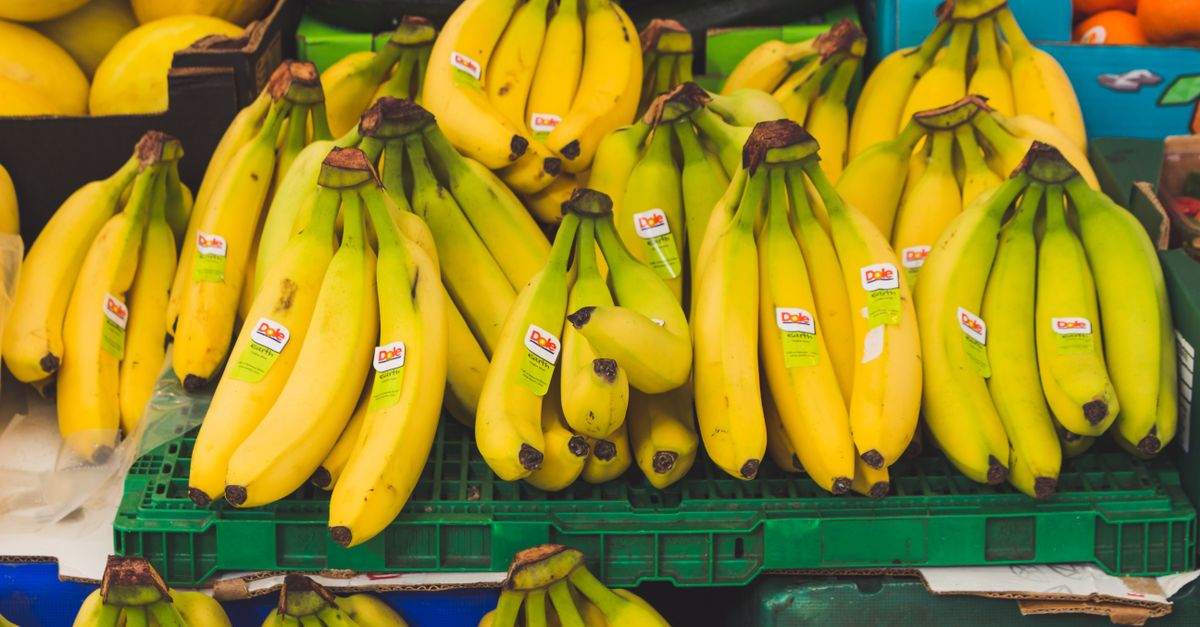
The point worth fixing early is that this is a cultivar, not a different fruit. The starch that converts to sugar as it ripens, the potassium, the modest fibre, the roughly hundred calories in a medium fruit: all still true here. Colour is the variable.
Where does the red colour actually come from?
From anthocyanins in the peel. A comparative pigment analysis published in Food Chemistry compared the red cultivar Hongjiaowang with the yellow cultivar Baxijiao and found the red colour was determined mainly by anthocyanin containing cells in the skin, with rutinoside forms of cyanidin, peonidin, petunidin and malvidin unique to the red peel. In the yellow cultivar, carotenoids were doing the colour work instead.
Where those pigments sit matters. The anthocyanins the fruit is named for are in the part nobody eats, so treating a red peel as evidence of antioxidants arriving in your body skips a step. The pulp is a separate question, and there the red cultivar does come out ahead: the same analysis found higher total carotenoids in it.
Are red bananas nutritionally better than yellow ones?
In one specific respect, yes, and it is not the respect the marketing reaches for. Cavendish bananas are poor sources of provitamin A carotenoids. A survey of banana cultivars grown in Australia measured carotenoid content against flesh colour and found deeper flesh tracking higher levels, with red fleshed cultivars such as Red Dacca among those carrying amounts worth counting. Figures for red banana reach roughly 21 micrograms of total carotenoids per gram of fresh fruit, a retinol activity equivalent near 114 micrograms per 100 grams.
That is a genuine advantage worth having. It is also a vitamin A advantage, and vitamin A has no established relationship with body weight. Being a better source of a nutrient and being a weight loss food are separate claims, run together so routinely that the join stops being visible.
On the measures that would matter for weight, calories, fibre and sugar, the two are close. Composition data for red cultivars is thinner than for Cavendish, and many of the precise looking numbers online are copied between websites rather than measured, so exact comparisons deserve caution.
| Feature | Unripe green banana | Ripe yellow Cavendish | Ripe red cultivar |
|---|---|---|---|
| Provitamin A carotenoids | Low | Low | Higher, enough to count as a source |
| Resistant starch | High, most of the starch | Largely converted to sugars | Largely converted to sugars |
| Typical glycaemic index | Around 30 | Around 51, higher once spotted | Not separately established |
| Fibre and calories | Similar to ripe | About 3 g fibre, about 105 kcal in a medium fruit | Broadly similar, thinner data |
| Tested effect on body weight | None specific | None specific | None specific |
Does a red banana raise your metabolism?
No, and the reasoning offered for saying it does breaks in a visible place. The argument runs: bananas contain potassium and magnesium, those minerals are needed for muscle function, muscle burns calories at rest, therefore bananas raise basal metabolic rate. Every link is true in isolation and the conclusion still does not follow.
The break is between minerals and muscle. Eating potassium does not build muscle tissue. Resistance training and adequate protein do, and in people who are not deficient, potassium simply needs to be present for muscle to work normally. The National Institutes of Health Office of Dietary Supplements puts adequate intake for adults at 2,600 milligrams a day for women and 3,400 for men. A medium banana supplies a little over 400 milligrams, a useful contribution to blood pressure and to normal nerve and muscle function, and not a lever on calories burned. The scale is modest even when muscle is genuinely added: resting muscle burns on the order of thirteen calories per kilogram per day.
Does the vitamin B6 in bananas improve mood and stop stress eating?
This is stated far more confidently than the evidence supports. Vitamin B6 is a cofactor in the conversion of tryptophan towards serotonin, which is real biochemistry. The jump from there to a banana lifting mood and improving food choices has not been shown in a trial, and in people who are not deficient, more B6 does not push serotonin synthesis higher, because the cofactor is not the limiting step.
How much does ripeness change what a banana does?
Far more than colour does, and this is the part of the subject with a real measured answer. A green banana is largely resistant starch, which behaves like fibre: it passes the small intestine undigested and is fermented by bacteria in the colon rather than absorbed as glucose. Ripening converts that starch into sugars.
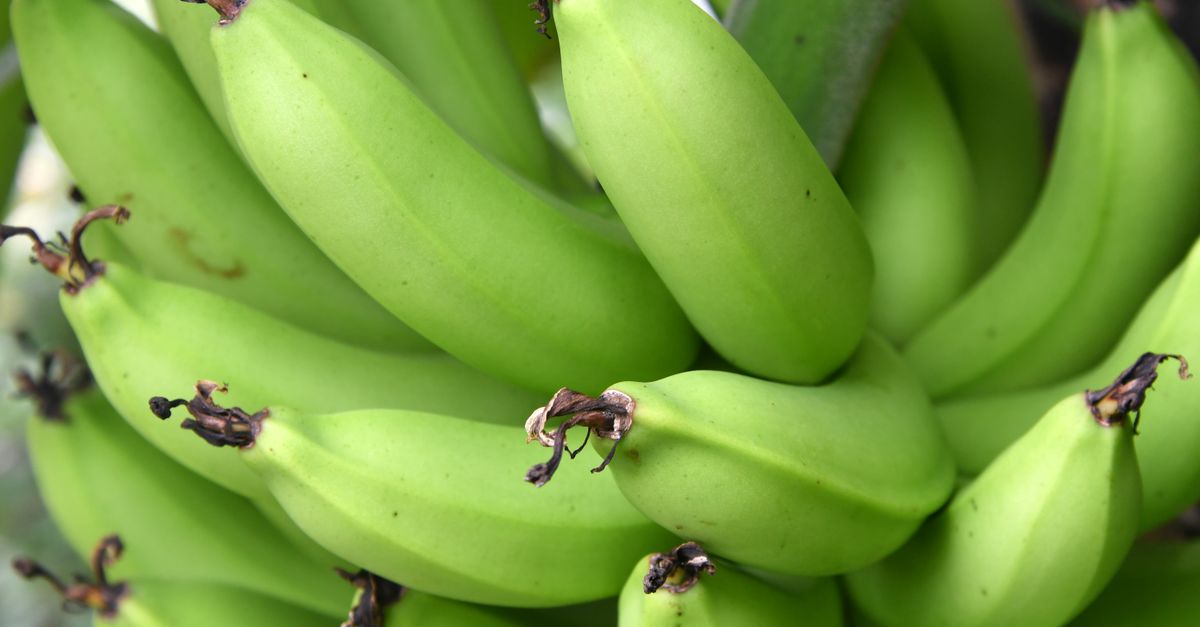
The glycaemic index follows. Unripe bananas measure around 30, firmly low, an evenly yellow one sits around 51, and a spotted one higher again. That spread is wider than anything separating two cultivars at the same stage of ripeness.
So the honest version of the prebiotic claim is narrow. Resistant starch does feed gut bacteria, and green banana is a good source of it. A ripe red banana, chosen because it is sweet, has already converted most of that starch. Buying red instead of yellow changes little. Buying it firmer changes a lot.
Which red banana claims actually hold up?
Side by side the pattern is consistent. The nutritional claims are broadly fine. The weight claims are attached to them without evidence of their own.
| Claim you will see | What is established | What it means for body weight |
|---|---|---|
| Richer in antioxidants than yellow bananas | The anthocyanins are in the discarded peel. Pulp carotenoids are genuinely higher | Nothing. Antioxidant content is not a weight variable |
| A better source of vitamin A | Supported. Red fleshed cultivars carry far more provitamin A than Cavendish | Nothing. Vitamin A status is a separate question |
| Loaded with fibre | Roughly 3 grams in a medium fruit, near a tenth of an adult daily target | Small and real, through fullness across a whole day |
| Boosts metabolism via potassium and magnesium | Both are needed for normal muscle function. Neither builds muscle or raises energy expenditure | None |
| Acts as a prebiotic | True mainly of unripe banana. Ripeness governs this, not colour | Indirect at best, and untested for weight |
| Prevents fat storage by avoiding insulin spikes | A ripe banana raises blood glucose moderately, which is not the same thing | None. Total intake governs this |
| Supports weight management | No human trial has tested red bananas against body weight either way | Unknown, and unlikely to be large |
The same shape turns up around any fruit marketed as a fat burner, including grapefruit. A verified nutritional fact goes at the front, a weight loss conclusion sits behind it, and nothing connects the two.
A fruit does not have to move your weight to be worth eating. Red bananas are a better source of provitamin A than yellow ones, which is a real reason to buy them. It is simply a different reason from the one on the sign above the crate.
Where does a banana actually fit in weight management?
Inside the total, like everything else. Body weight tracks energy taken in against energy used, over months rather than meals, and no single food sits outside that arithmetic. The NHS 5 A Day portion guidance counts one banana as one of the five daily portions of fruit and vegetables, with an adult portion set at 80 grams. That framing is more useful than a rule about how many bananas are permitted, because it puts fruit alongside everything else on the plate instead of treating one item as the intervention.
Where fruit tends to help is displacement. A banana eaten instead of a pastry changes the day. A banana eaten as well as the pastry does not, and that distinction accounts for most of the disappointment people report after adding a supposedly slimming food.
Who should take more care with bananas?
Two situations are worth raising with a professional rather than settling from a website. People managing diabetes are usually working to a carbohydrate target, and a ripe banana carries a meaningful amount of it, so portion and timing are a conversation with a doctor or a registered dietitian rather than a reason to drop fruit. Reduced kidney function is the other, because it changes how the body handles potassium. Anyone advised to limit it was advised by someone looking at their blood results, and that outranks any general article. Banana is also among the fruits that can cross react in people allergic to latex, which is worth getting assessed properly rather than worked out alone.
So: a pleasant, slightly denser banana with a real advantage in provitamin A and nothing measured behind the weight claims stacked on top of it. There is no trial to cite because nobody has run one. What is known about bananas and body weight applies to every variety equally, and the total is what moves.
Frequently asked questions
Are red bananas lower in calories than yellow bananas?
Not meaningfully. Both sit near 90 calories per 100 grams, which works out at roughly 100 to 110 for a medium fruit. Composition data for red cultivars is thinner than for Cavendish and figures vary between sources, but nothing puts the gap anywhere near large enough to register across a day of eating.
Do red bananas help you lose belly fat?
There is no evidence that they do. No human trial has tested red bananas against body weight or abdominal fat in either direction. Fat is also not lost from one chosen area by eating one chosen food, so a claim that names a body part is usually a sign that the underlying research does not exist.
Is the red skin full of antioxidants I am getting?
The pigments are there and you are not eating them. Analysis of red banana peel found anthocyanins in the skin cells doing the colour work, including rutinoside forms of cyanidin, peonidin, petunidin and malvidin. Those stay in the peel. The pulp does carry more carotenoids than a yellow banana, and that is the difference that reaches you.
Does eating a banana at night cause weight gain?
Nothing about the hour turns a banana into fat that would not have counted earlier in the day. Total intake across weeks governs body weight, and the evening matters mainly because it is when a lot of unplanned eating happens. A banana eaten in place of something else at night is not the problem in that picture.
Are green bananas better than ripe ones for blood sugar?
They test lower, yes. An unripe banana measures around 30 on the glycaemic index because most of its starch is still resistant starch, which is not absorbed as glucose. A ripe one sits near 51 and a heavily spotted one higher, as that starch converts to sugars. Ripeness moves this far more than variety does.
Can I eat a banana every day while watching my weight?
For most people a daily banana is unremarkable. NHS guidance counts one banana as one of the five daily portions of fruit and vegetables, so it fits inside ordinary eating rather than needing to be justified. Anyone managing diabetes or kidney disease has specific reasons to check portions with their own clinician, since carbohydrate and potassium both matter there.
This article is general information, not medical advice, and is not a substitute for care from a qualified healthcare professional. Speak to your doctor about your own situation.
Leave a Reply