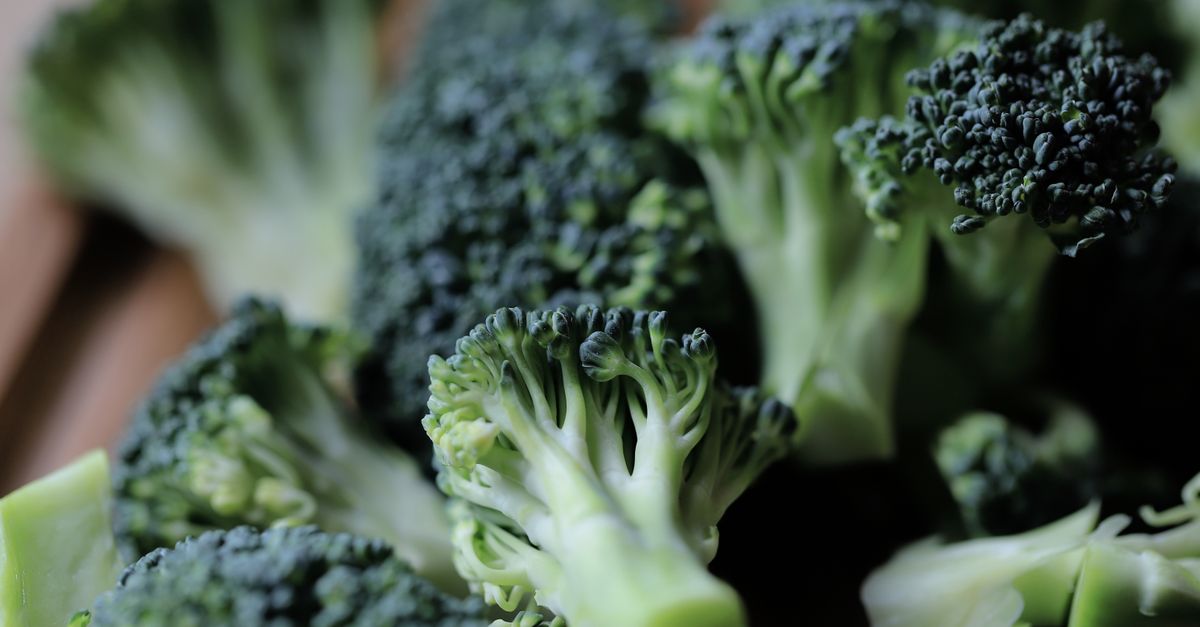
Broccoli does not speed up your metabolism in any measurable way. What it does is fill you up for very few calories, deliver fibre and vitamin C in unusual quantity, and make the rest of your eating easier to manage. That is a genuine advantage, and it is not the same thing as a metabolic boost.
Does broccoli actually boost your metabolism?
Metabolism is the sum of everything your body spends energy on: keeping you alive at rest, digesting what you eat, and moving you around. The first of those is most of it, and it is set largely by how much of you there is, and particularly by how much muscle. No vegetable changes that number.
The part that food does influence is the thermic effect of food, the energy used to break down and store a meal. Across a normal mixed diet it accounts for roughly a tenth of what you eat, and protein is by far the most expensive thing to process. Broccoli is mostly water and fibre, so the energy it costs to digest is real and extremely small. It is a rounding error, not a strategy.
This is the soil the negative calorie food grew out of: the claim that chewing celery or broccoli burns more energy than the food contains. It is a lovely idea, and it has never survived contact with a set of scales. Broccoli gives you more than it costs you. The good news is that it does not need to be a calorie vacuum to be worth eating.
What is actually in a cup of broccoli?
A cup of chopped raw broccoli weighs about 91 grams and carries somewhere near 30 calories. Cook it and the same cup holds closer to 55, because it packs down and you are simply fitting more broccoli in. Both numbers are correct, which is why calorie counts for broccoli look like they disagree with each other in every tracking app ever written.
| Vegetable, raw, per 100 g | Calories | Fibre | Protein | Vitamin C |
|---|---|---|---|---|
| Broccoli | about 34 | 2.6 g | 2.8 g | about 89 mg |
| Cauliflower | about 25 | 2.0 g | 1.9 g | about 48 mg |
| Spinach | about 23 | 2.2 g | 2.9 g | about 28 mg |
| Carrot | about 41 | 2.8 g | 0.9 g | about 6 mg |
| Green peas | about 81 | 5.7 g | 5.4 g | about 40 mg |
Figures vary with variety, freshness and which food database you look them up in, so treat these as close rather than exact. The headline is the last column. Weight for weight, raw broccoli holds more vitamin C than an orange, which tends to startle people who have it filed under bland green side dish. It also holds a great deal of vitamin K, which matters enormously to one specific group of readers and is covered further down.
What does sulforaphane really do?
Sulforaphane is the compound broccoli owes its reputation to. It is not sitting in the vegetable ready to go. It forms when you chop or chew broccoli and an enzyme finally meets a stored precursor called glucoraphanin. In cell cultures and in animals it does a long list of interesting things, which is precisely how it ended up in capsules with a picture of a floret on the label.
Human trials are more sober, and most of them are not testing broccoli at all. They test concentrated broccoli sprout extract, because sprouts hold far more of the precursor than the mature florets you would actually put on a plate.
The most careful recent test was a randomised, placebo controlled trial in 89 people with prediabetes, published in Nature Microbiology. Participants took broccoli sprout extract supplying 150 micromoles of sulforaphane, or a placebo, once a day for twelve weeks. It did not meet its target. Fasting blood glucose fell by 0.2 mmol per litre against placebo, where the trial had been designed to find a drop of 0.3. A subgroup with one particular metabolic profile responded more strongly, and the authors linked who responded to differences in gut bacteria. That is genuinely interesting, and it needs replicating before anyone builds anything on it.
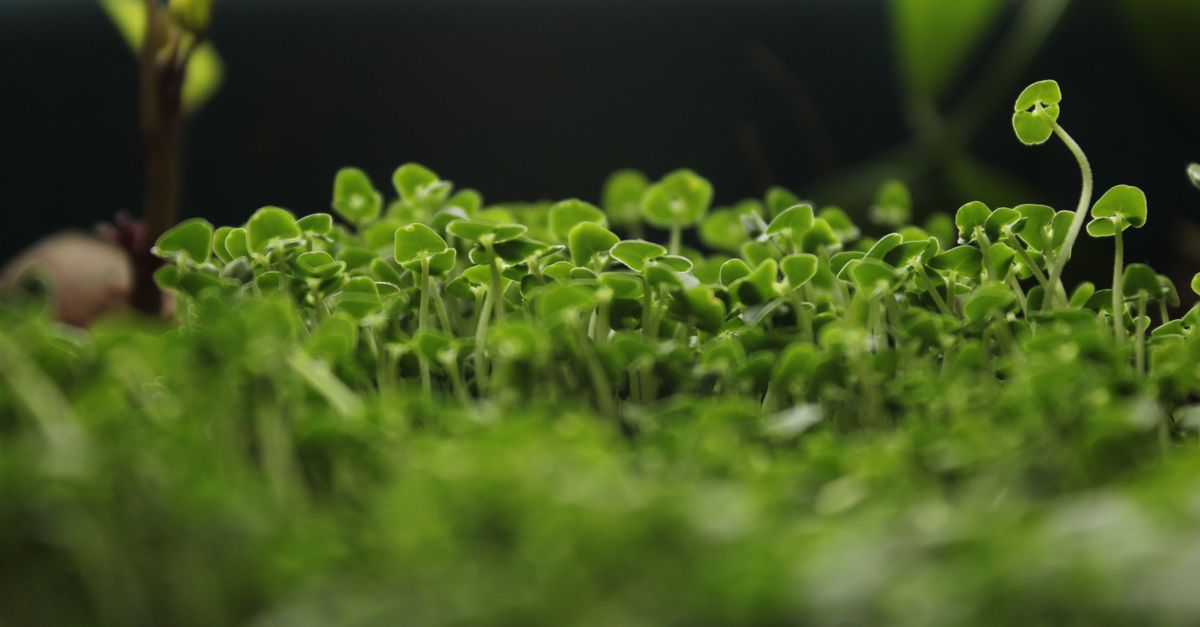
None of that is a reason to skip broccoli. It is a reason to raise an eyebrow at any page that waves sulforaphane research at you while selling a fat burner, because the research was done on a concentrate, at an amount no dinner reaches, and the results were modest even then.
Does broccoli help with weight loss?
Indirectly, and quite reliably, though not by any mechanism involving burning. Broccoli takes up a lot of room for very little energy. The physical volume of a meal is one of the few levers that genuinely changes how full people feel when they put the fork down, and a plate with a serious pile of broccoli on one side is harder to finish and easier to stop eating.
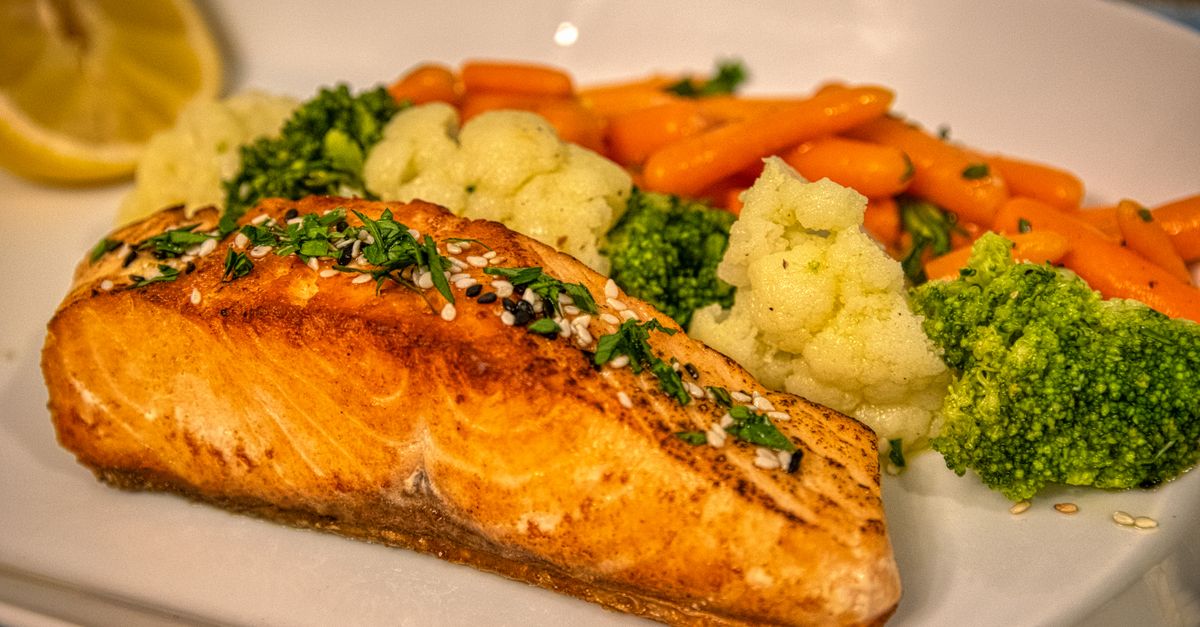
Fibre helps in its own quiet way, by slowing the meal down and feeding the bacteria in your gut. What fibre does not do is meaningfully raise the number of calories you burn in a day. If you have read otherwise, you have read marketing.
So the honest version is boring, which is usually a sign it is true. Broccoli is a cheap, pleasant way to make a smaller portion of everything else feel like a full plate. It does not decide the outcome. The overall pattern of what you eat across a week does, and what a calorie deficit actually is covers the arithmetic that sits underneath all of it. Broccoli also turns up on most lists of anti-inflammatory foods, for reasons that are more about the whole vegetable than any single compound in it.
Does cooking ruin it?
Boiling is the one to think about, and heat is not really the culprit. The compounds in question are water soluble. They leave the broccoli, they sit in the pan, and then you carry the pan to the sink and pour the interesting part away.
A comparison of five cooking methods published in the Journal of Zhejiang University Science B measured what survived each one.
| Cooking method | Glucosinolates lost | Vitamin C lost |
|---|---|---|
| Steaming | no significant loss | no significant loss |
| Boiling | about 41 percent | about 33 percent |
| Microwaving | about 60 percent | about 16 percent |
| Stir frying | about 55 percent | about 24 percent |
| Stir frying then boiling | about 54 percent | about 38 percent |
Steaming came out ahead on nearly everything measured, including the chlorophyll that keeps it looking like food. These are figures from one study on one set of samples, and how much water a method uses changes the answer a lot, which is probably why studies of microwaving disagree so cheerfully with each other. The direction of travel is consistent, though. Keep the water away from it, or keep the water and call it soup.
There is a related idea that chopping broccoli and letting it rest for a few minutes before it meets heat protects the enzyme that makes sulforaphane. The reasoning is sound and the evidence behind it is thin. It costs nothing to do and it is not going to be the thing that changes your health, so do it if it amuses you.
How much broccoli is enough, and can you overdo it?
The NHS counts two broccoli spears as one of your five a day, which comes to roughly 80 grams. There is no target beyond that, and no medal for eating a kilo of it. Variety across the week does more than volume of any one vegetable, partly because different plants bring different things and partly because nobody sustains a diet built on a single green.
Three groups should take more care. Broccoli is high in vitamin K, and the NHS notes that foods high in vitamin K, such as broccoli, can affect how warfarin works. The guidance for people taking warfarin is not to avoid these foods but to keep intake steady rather than swinging from none to plenty, and to discuss any substantial change with the clinician managing the dose.
Second, broccoli is high in fermentable carbohydrate. For people with irritable bowel syndrome it is a well known trigger for bloating and wind, and for anyone else a sudden large increase in fibre can cause the same discomfort until the gut adjusts. Increasing it gradually is easier on everyone involved.
Third, cruciferous vegetables contain compounds that can interfere with the thyroid’s uptake of iodine. This is relevant at intakes well above normal eating, and mainly where iodine intake is already low. Anyone with a diagnosed thyroid condition should raise it with their doctor rather than working it out from an article.
This article is general information about food and metabolism, not personal medical advice. If you are managing a health condition, taking medication, or making a significant change to how you eat, speak to a doctor or a registered dietitian about your own situation.
Does broccoli burn fat?
No. No food burns fat. Broccoli helps with fat loss the way a big salad does, by taking up room on the plate and in the stomach for very few calories, which makes eating less of everything else more comfortable. The burning happens through overall energy balance, not through any ingredient.
Is raw or cooked broccoli better?
Raw keeps the most vitamin C and the most intact enzyme, but plenty of people find raw broccoli hard work and eat far less of it. Steaming preserves nearly everything measured and makes it pleasant to eat. The broccoli you will actually finish beats the broccoli you would not.
Can I eat broccoli every day?
For most people, yes, and it counts towards five a day every time. The exceptions are people taking warfarin, who need steady rather than variable vitamin K intake, and people whose gut reacts badly to fermentable fibre. Both are worth raising with a doctor rather than guessing.
Are broccoli sprouts better than broccoli?
Sprouts contain considerably more of the precursor to sulforaphane than mature florets, which is why trials use sprout extract rather than vegetables. That does not automatically make them better food, and the trial results so far have been modest. Sprouts also carry a higher risk of bacterial contamination than cooked vegetables.
Does broccoli really have more vitamin C than an orange?
Weight for weight, yes. Raw broccoli holds roughly 89 mg per 100 grams against roughly 53 mg for a raw orange. Nobody eats 100 grams of orange peel-free flesh and 100 grams of raw broccoli in quite the same circumstances, so treat it as a fun fact rather than a reason to swap.
Is frozen broccoli as good as fresh?
Close enough that it is not worth worrying about. Frozen broccoli is blanched and frozen soon after harvest, which costs some vitamin C but locks in the rest, while fresh broccoli loses nutrients slowly in transit and in your fridge. Frozen is often the more practical choice.
Leave a Reply