
The cortisol belly and insulin belly labels point at two real hormones, but the sorting rule attached to them is not real. Where fat sits on your abdomen, and whether it feels soft or firm, cannot tell you which hormone is involved. That question is answered by blood tests, not by a mirror.
Where did the cortisol belly and insulin belly idea come from?
Two accurate pieces of physiology got flattened into a quiz. Cortisol genuinely influences how the body stores fat. Insulin is central to how energy is stored and released. Both are involved in abdominal fat, in everyone.
What was added on top is the claim that each hormone leaves a signature you can read off your own body: lower and soft means cortisol, upper and firm means insulin. That mapping does not appear in the clinical literature. It came from wellness content, not endocrinology, and it spread because it hands you a cause and a plan in one sentence.
Can the location or feel of belly fat tell you which hormone is involved?
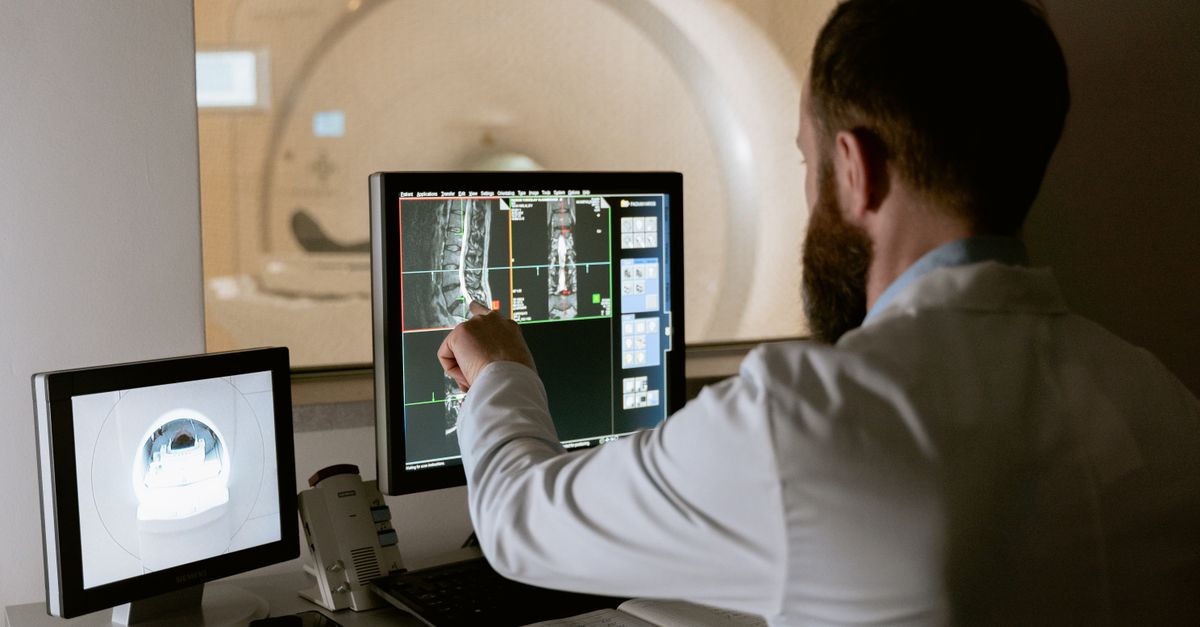
No, and the reason is worth sitting with. Abdominal fat comes in two kinds. Subcutaneous fat sits under the skin and is the part you can pinch. Visceral fat sits deeper, around the organs, and is the kind tied most strongly to metabolic risk. Those two genuinely differ, and even they cannot be told apart by looking or pressing. Separating them takes a CT or MRI scan, with DXA as a practical substitute.
If a scanner is needed for that simpler question, the odds that the softness of a pouch reveals which hormone put it there are small. A soft lower abdomen has ordinary explanations: abdominal wall tone, posture, previous pregnancy, bloating, time of day, genetics. Hormones are somewhere in the list. They are not legible from it.
What does the evidence on cortisol and belly fat actually show?
A real link, broader and blurrier than the label implies. Hair samples measure average cortisol exposure over months, which is closer to chronic stress than a single blood draw. Using that method, Jackson and colleagues, in the journal Obesity in 2017, studied 2,527 adults aged 54 to 87 and found higher hair cortisol went with higher weight, higher body mass index and larger waist circumference.
That says something different from the framing. Cortisol tracked with overall body size, not with a lower belly pattern, and it is an association rather than a direction. Chronic stress also affects sleep, appetite and movement, which act on weight by themselves.
The clearest picture medicine has of sustained high cortisol is Cushing’s syndrome. The National Institute of Diabetes and Digestive and Kidney Diseases lists its signs as weight gain, thin arms and legs, a round face, increased fat around the base of the neck, a fatty hump between the shoulders, easy bruising, wide purple stretch marks and weak muscles, adding that not everyone with the condition has all of them. It is rare, roughly 40 to 70 people per million, and most often caused by long term high dose steroid medication. Note the shape of that list: face, limbs, skin and muscle, not a lower belly.
What does insulin have to do with belly fat?
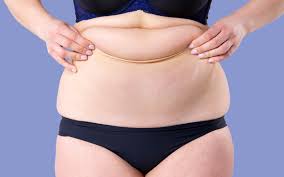
Insulin resistance and abdominal fat travel together reliably, and this part stands on firmer ground. Excess visceral and liver fat are closely associated with insulin resistance. What gets left out is direction. The relationship runs both ways rather than in the single line the insulin belly story implies: fat around the organs contributes to insulin resistance, and insulin resistance changes how fat is stored.
A firm upper abdomen is not a marker of it either. Plenty of people with insulin resistance carry weight elsewhere, or carry very little visible weight, and plenty with a firm midsection have normal glucose handling. Abdominal fat shifts the odds enough to be worth testing for. Testing is what settles it.
What does an honest version of the comparison look like?
| The claim | What is actually established | What it means for you |
|---|---|---|
| Cortisol influences fat storage | Supported broadly. Higher chronic cortisol tracks with larger waists | True of overall central fat |
| Lower belly fat means cortisol | Not established anywhere | Location does not identify a cause |
| Upper belly fat means insulin | Not established anywhere | Neither does the other location |
| Soft versus firm separates the two | Not established. Even visceral and subcutaneous fat need a scan | Texture tells you almost nothing |
| Insulin resistance links to abdominal fat | Well supported, and it runs both ways | Worth testing for, not guessing |
| Tired but wired means cortisol | Non specific. Also stress, short sleep, low mood, thyroid | Fits almost everyone |
| Sleepy after meals means insulin trouble | Common with normal glucose handling too | Not a test |
| An article can tell you which you have | It cannot, and neither can its author | Blood tests and a clinician |
How would anyone actually find out whether a hormone is involved?
By testing, ordered by a doctor with a reason to suspect something. For blood sugar, the usual first steps are a fasting glucose test and an HbA1c, which reflects average blood sugar over the previous couple of months. For cortisol, the National Institute of Diabetes and Digestive and Kidney Diseases describes screening with a 24 hour urinary free cortisol test, a late night salivary cortisol measurement or a low dose dexamethasone suppression test, with two usually needing to agree before a diagnosis is made.
None of that is shape based, and none of it is something a website can do for you. If your weight, energy or cycle feels genuinely off, that is a conversation for a doctor rather than another article, this one included.
What is worth measuring at home instead?
Your waist, and not much else. The National Institute for Health and Care Excellence advises adults to keep their waist to less than half their height, a threshold that holds regardless of how the fat is distributed or what is driving it.
- Measure midway between the bottom rib and the top of the hip bone, roughly level with the navel
- Tape snug against the skin, not compressing it, at the end of a normal breath out
- Compare it with half your height in the same units, and track it over months rather than days
Does the distinction change what you would actually do?
Barely, which is the quiet reason it survives. Both protocols converge: more protein, more fibre, regular meals, daily walking, resistance training, decent sleep, less alcohol. When two supposedly different causes produce identical advice, the sorting was never doing any work. What actually differs between people is circumstance, not belly type. For the mechanics, see what actually works for belly fat and what a calorie deficit actually is.
When is belly fat worth a doctor’s appointment?
Some things warrant a professional look rather than a self assessment. These are reasons to book, not reasons to worry about your shape.
- A rapid or unexplained increase in abdominal size
- Wide purple stretch marks, easy bruising or thinning skin
- Weakness in the arms or legs alongside weight gain
- Excessive thirst, frequent urination or unexplained fatigue
- Irregular or absent periods, or new unexplained hair growth
- Long term steroid medication, the commonest cause of cortisol excess
Frequently asked questions
Is cortisol belly a real medical diagnosis?
No. It is not a recognised condition and no clinician uses the term. The recognised condition of cortisol excess is Cushing’s syndrome, which the National Institute of Diabetes and Digestive and Kidney Diseases describes as rare, roughly 40 to 70 people per million, and which is confirmed with laboratory tests, not by appearance.
Can I tell visceral fat from subcutaneous fat by pressing on my stomach?
No. Telling them apart requires a CT or MRI scan, with DXA as a practical substitute. Waist circumference is the cheap stand in that tracks deep abdominal fat usefully, which is why it is the measurement worth taking at home.
Does stress cause belly fat?
Chronic stress is genuinely associated with larger waists. Jackson and colleagues, in the journal Obesity in 2017, found higher hair cortisol in 2,527 older adults went with higher weight and larger waist circumference. That is an association with overall central fat, and stress also affects sleep, appetite and movement, which act on weight on their own.
Should I eat differently for a cortisol belly than an insulin belly?
The two plans in circulation are almost identical: protein, fibre, regular meals, walking, sleep and resistance training. If two supposedly different causes lead to the same advice, the category is not adding anything you can act on.
What test would show whether insulin resistance is part of the picture?
A fasting glucose test and an HbA1c are the usual first steps, sometimes followed by an oral glucose tolerance test. Which apply is a decision for a doctor based on your history, and no home observation substitutes for them.
Why do so many articles use this framing then?
Because it turns a slow, uncomfortable problem into a legible one with a rule and a plan attached, which is nice to read. The cost is that time spent deciding which belly you have is time not spent on what measurably changes body composition.
This article is general information, not medical advice, and is not a substitute for care from a qualified healthcare professional. Speak to your doctor about your own situation.
Leave a Reply