
Excess body fat changes the chemistry around every egg and sperm cell: more oestrogen from fat tissue, more insulin, more inflammation, and more oxidative stress inside the mitochondria that power those cells. Those changes are real and measurable. What they do not settle is how much your own chances are affected, or whether losing weight first undoes them.
What actually changes inside the cells?
Fat tissue is not inert storage. It behaves like an endocrine organ, releasing hormones and signalling molecules into the bloodstream, and one of its better documented jobs is converting androgens into oestrogen. The US Office on Women’s Health describes the consequence plainly: enough extra oestrogen and the body can respond roughly as though it were already on hormonal contraception, and ovulation stops.
Insulin is the second thread. Higher circulating insulin, common alongside higher body fat and central to how polycystic ovary syndrome behaves, alters signalling inside the ovary and shifts hormone production in ways that interfere with a follicle maturing normally. This is the pathway most fertility clinics actually treat, and it is the same one behind what the trials show about losing weight with insulin resistance, which is where the mechanism has been tested hardest outside fertility.
The third thread is the one the phrase cellular level usually points at. Excess body fat sustains a low grade inflammatory state, and inflammation raises the production of reactive oxygen species. Eggs and sperm are unusually exposed to that. A mature egg carries more mitochondria than almost any other human cell, and sperm motility is powered directly by mitochondria packed into the midpiece, so oxidative damage to mitochondrial membranes and DNA is plausibly more consequential in reproductive cells than elsewhere in the body.
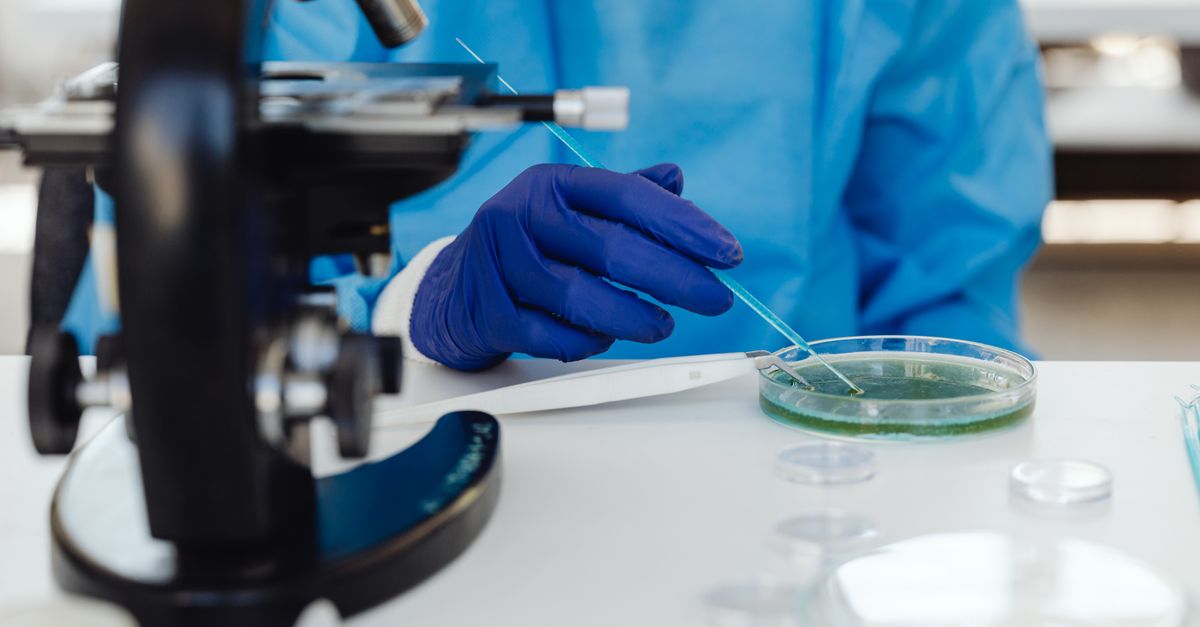
All of this is measurable. Researchers can sample the fluid around a developing egg, count markers of oxidative stress, and look at mitochondrial structure under a microscope. The hard part is connecting any of those measurements to whether a particular couple ends up with a baby.
How far has each mechanism actually been demonstrated?
Not every step in that chain rests on the same quality of evidence, and the gap between the well established steps and the speculative ones is where most confident claims about cellular fertility repair go wrong.
| Mechanism | What has been shown | How far it goes in humans |
|---|---|---|
| Fat tissue producing extra oestrogen | Associated with irregular or absent ovulation | Well established, and the effect reverses when ovulation returns |
| Insulin resistance affecting the ovary | Central to how PCOS disrupts cycles | Well established as a mechanism and routinely treated |
| Chronic low grade inflammation | Inflammatory markers rise with higher body fat | Clear in blood, much less clear inside the follicle |
| Oxidative stress damaging egg mitochondria | Raised markers in follicular fluid, structural changes visible | Mostly laboratory and animal work, not tied to birth outcomes |
| Sperm DNA fragmentation | Higher on average at higher body weight | Consistently observed, poor at predicting one couple’s result |
| Epigenetic changes carried into the embryo | A real signal in animal models | Early, and far weaker in humans than headlines suggest |
Does losing weight first repair the damage?
Here the cellular story runs into an awkward result. If excess fat degrades eggs and sperm through those pathways, then removing the fat before treatment ought to improve outcomes. Two large randomised trials tested exactly that, and neither found the improvement.
A Dutch trial published in the New England Journal of Medicine in 2016 randomly assigned infertile women with a BMI of 29 or above either to a six month lifestyle programme before fertility treatment, or to starting treatment straight away. The lifestyle group did lose more weight, an average of 4.4 kg against 1.1 kg. The rate of healthy term singleton births within two years was 27.1 percent in the lifestyle group and 35.2 percent in the group that went straight to treatment.
The FIT-PLESE trial, published in PLOS Medicine in 2022, compared an intensive weight loss programme with an exercise only programme in infertile women with obesity. The intensive group lost about 6.6 percent of body weight while the comparison group lost essentially none. Healthy live births occurred in 12.2 percent of the intensive group and 15.2 percent of the comparison group, a difference that was not statistically significant.
Neither result suggests weight loss harms fertility. What they show is that a course of weight loss placed in front of fertility treatment did not raise the chance of a baby, and that the months it consumed were not free. Time is not neutral when age is part of the problem.
So does body weight matter for fertility at all?
Yes, and the distinction is worth being precise about. Observational data link higher BMI with irregular ovulation, a weaker response to fertility drugs, fewer eggs collected, lower success rates in IVF, and higher miscarriage risk. That pattern is consistent enough that many fertility services set BMI limits before treatment.
Those limits rest on a measure that the field itself has been moving away from. In January 2025 a Lancet Diabetes and Endocrinology Commission redefined clinical obesity, separating clinical obesity, where excess body fat is actually causing organ dysfunction or physical limitation, from preclinical obesity, where it is a risk factor and nothing has gone wrong yet. It asks for excess adiposity to be confirmed by direct measurement or by at least two anthropometric measures rather than by BMI alone, and it lists 18 criteria across 11 organ systems plus a functional domain. Hypogonadism is one of them, which puts reproductive function inside the definition rather than beside it. None of that changes the trial results above. It does mean a BMI threshold at a clinic door is a cruder instrument than the framework the field is moving to, and the full criteria are in the Commission rather than summarisable in a line here.
But higher weight is associated with worse outcomes and losing weight now will improve your outcome are two different statements, and only the first is well supported. The most plausible reading of the trials is that the mechanism matters most for one specific group: women who are not ovulating. If cycles have stopped and weight loss restores them, the gain is obvious, because conception cannot happen without ovulation. For someone with regular cycles whose infertility has another cause, moving the weight does not necessarily move the cause.
What happens on the male side?
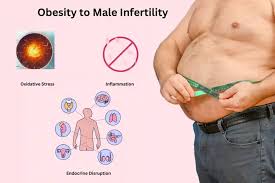
The male picture runs on the same three threads and has been studied less thoroughly. Higher body fat is associated with lower testosterone and higher oestradiol, with reduced sperm concentration and motility, and with higher rates of sperm DNA fragmentation. The mitochondrial argument is at its most literal here, since a sperm cell that cannot generate energy cannot swim.
What is missing is the same thing missing on the female side. Studies of weight loss in men, including after bariatric surgery, have produced inconsistent effects on semen quality, and semen parameters are themselves only a rough guide to whether a couple conceives. A single below average result on one sample is not a verdict on anything, which is why clinicians repeat the test.
Do antioxidant supplements repair the damage?
If oxidative stress is the mechanism, antioxidants are the obvious counter, and they are marketed heavily on exactly that logic. The evidence is thinner than the logic.
A Cochrane review updated in 2022 pooled 90 randomised trials covering 10,303 subfertile men. Its finding was that antioxidants may improve live birth rates, on very low certainty evidence: between 17 and 27 couples per 100 reaching live birth with antioxidants against about 16 per 100 without, a range wide enough to contain no effect at all. Once studies at high risk of bias were removed from the analysis there was no longer evidence of increased live birth. Its literature search stopped in February 2021 and it has not been updated since, which is worth knowing before treating it as this year’s answer. The reviewers called the position inconclusive and asked for larger, better designed trials.
That is not the same as saying these compounds do nothing. It means the honest answer today is that nobody knows, and that anything sold with confidence about repairing your mitochondria is claiming more than has been demonstrated. Anything taken during fertility treatment is also worth raising with the clinician running that treatment rather than added quietly alongside it.
What actually governs your chances then?
For most couples the variables carrying the largest effect are not the ones a cellular framing points at.
- Age, particularly female age, which outweighs almost everything else on this list and cannot be adjusted
- Whether ovulation is happening at all, and how regularly
- The specific cause of infertility, where one has been identified
- How long you have been trying, which by itself predicts a great deal about what comes next
- Sperm parameters, read as a range across repeated samples rather than a single number
- Any underlying condition such as PCOS, thyroid disease or endometriosis
- Body weight, which genuinely belongs on the list and rarely sits at the top of it
The ordering matters for a practical reason. Six months spent on weight loss is six months not spent on investigation, and for anyone in their late thirties that trade is not obviously favourable. The trials above are the strongest available warning against assuming it is.
What is reasonable while the evidence is unsettled?
The parts that hold up regardless of how the weight question resolves are unglamorous. Getting an assessment rather than deferring one, because knowing the cause changes what is worth doing about it. Treating sleep, movement and food as worth attending to for their own sake and for the health of a pregnancy, without loading them with the expectation of a cellular repair that has not been shown to happen. Being sceptical of any source that quantifies how much your fertility will improve, since no honest one can produce that figure for an individual.
Whether to lose weight before treatment, how much, and on what timeline is a conversation with a fertility specialist who knows your age, your test results and your diagnosis. It is not a decision an article can make from the outside.
What has changed since this was first published?
Rechecked on 20 September 2026. The evidence on weight loss before fertility treatment has not moved. The frame around it has.
- The definition of obesity moved, and this page was written as though it had not. The January 2025 Lancet Diabetes and Endocrinology Commission splits clinical obesity from preclinical obesity and asks for more than BMI to diagnose either. A new section above says so, because the BMI thresholds fertility services use sit directly on the measure the Commission is moving past. Added 20 September 2026.
- The Cochrane antioxidant figures are now the actual numbers. 17 to 27 couples per 100 reaching live birth against about 16 per 100, at very low certainty. The review’s evidence search closed in February 2021 and it has not been updated since, rechecked on 20 September 2026. A review that has not moved in four years is not the same thing as a settled question.
- Both randomised trials still stand unchallenged. The 2016 Dutch trial and the 2022 FIT-PLESE trial were rechecked and neither has been superseded by a larger one. The awkward result in the middle of this article is still the awkward result.
Frequently asked questions
Does obesity permanently damage eggs and sperm?
There is no good evidence that it does. Sperm are produced continuously, so the cell population turns over within months. Eggs are not replaced, but the measurable changes associated with body weight are in the environment around them rather than in a fixed defect, and much of the mitochondrial damage work comes from laboratory and animal studies rather than from tracking human pregnancies.
Will losing weight improve my chance of getting pregnant?
It depends heavily on why you are not conceiving. If weight related hormone changes have stopped ovulation, restoring it is a clear and direct gain. If you are ovulating regularly and the cause lies elsewhere, two large randomised trials found that weight loss before fertility treatment did not raise live birth rates.
How much weight loss makes a difference?
The commonly repeated 5 to 10 percent figure comes from observational work on restoring ovulation, not from trials measuring births. The randomised trials that achieved losses in that range did not find higher live birth rates, so the figure is better understood as a threshold where cycles may return than as a promise about conceiving.
Does body weight affect male fertility too?
It is associated with lower testosterone, higher oestradiol, reduced sperm motility and concentration, and more sperm DNA fragmentation. Whether reversing the weight reverses those measures is less clear, and studies including those following bariatric surgery have given inconsistent results.
Do CoQ10 and other antioxidants repair egg or sperm mitochondria?
Nobody can currently say. The largest evidence review, covering 90 trials in subfertile men, rated the certainty as very low and found that the apparent benefit disappeared once studies at high risk of bias were excluded. There is no reliable evidence that any supplement restores mitochondrial function in eggs.
Is it worth delaying fertility treatment in order to lose weight first?
That is exactly what the two trials tested, and the delay did not pay off in either. Because age is the strongest single factor in fertility, months spent on weight loss carry a real cost. It is a question for the specialist handling your case, who can weigh your age and diagnosis against the delay.
This article is general information, not medical advice, and is not a substitute for care from a qualified healthcare professional. Speak to your doctor or a fertility specialist about your own situation.
Leave a Reply