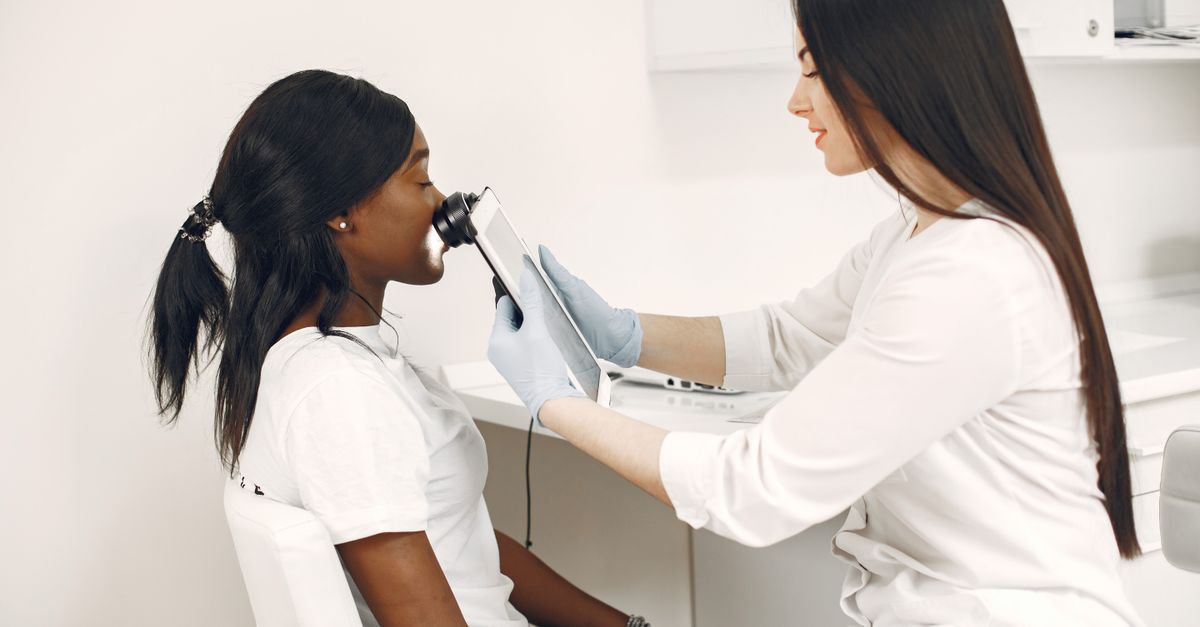
Skin does not shrink back the moment fat leaves. Years of stretching remodel the collagen and elastin underneath, so how much slack you are left with depends mostly on your age, how long you carried the weight and how much came off. Muscle, protein and patience help. Nothing tightens skin overnight.
Why does skin hang after weight loss?
Skin is not cling film stretched over a parcel. It is living tissue, and the part that holds its shape sits in the dermis: collagen, which gives it strength, and elastin, which lets it spring back. Body fat sits underneath all of that. Take the fat away and the scaffold above it is still the shape it spent years becoming.
That scaffold changes when it is held stretched for a long time. In a study of 80 skin biopsies taken during body contouring surgery after major weight loss, published in Obesity Surgery in 2024, collagen content in the dermis was reduced in people who had lost the weight after bariatric surgery and in people who had lost it without surgery. Elastic fibre content in abdominal skin was lower again in the surgical group. The tissue had been remodelled, not merely emptied.
Which is the honest version. Your skin is not being lazy, and it did not fail a test the rest of you passed. It is a different tissue from the one you started with, and how far it can retract is limited by that.
What decides how much loose skin you end up with?
Most of it was decided by things nobody chooses, which is worth knowing before spending money on the bottom of this table.
| What | How much it matters | Why |
|---|---|---|
| How much weight came off | Most | More surface area is left with less behind it |
| How long you carried it | A lot | Prolonged stretching remodels collagen and elastin, and that does not fully reverse |
| Your age | A lot | Skin loses elastin and dermal thickness with age, weight aside |
| Genetics | A lot, and unfairly | Two people losing the same amount get different results |
| Smoking | Real | Tobacco smoke degrades the same dermal fibres |
| Years of sun exposure | Real | Photoageing damages collagen and elastin directly |
| Muscle you keep or build | Moderate, and the one you control | Fills the space fat used to fill, so skin drapes rather than hangs |
| How fast you lost it | Modest, and often overstated | Works mainly through muscle retention rather than through skin |
| Firming creams and wraps | Effectively none for laxity | They sit on the surface and the problem is several millimetres below it |
The top of that table is where the outcome comes from. The bottom of it is where most of the marketing budget goes. That gap is the whole business model of the firming cream aisle.
Does building muscle underneath actually help?
It helps, though not in the way it is usually sold. Muscle does not shrink skin. It occupies the volume that fat used to occupy, so the skin above has something to sit on instead of hanging free. An upper arm with a triceps under it drapes differently from one without.
There is a second effect that matters more. During a calorie deficit, part of what you lose is lean tissue. Resistance training with enough protein is the best tool available for keeping that share small, and muscle you keep is muscle still filling space at the end. What a calorie deficit actually is covers the arithmetic side of that.

Training may also do something modest for the skin itself. In a 16 week trial reported in Scientific Reports, 56 sedentary middle aged women were assigned to either aerobic or resistance training. Both groups improved skin elasticity and the structure of the upper dermis, and the resistance training group also increased dermal thickness. Those were women with ageing skin rather than people who had lost a large amount of weight, so treat it as encouraging rather than as a treatment.
In rough order of how much each one does:
- 1️⃣ Resistance training, two or three times a week. Whole body, progressively loaded, boring and repeatable. This is the lever with the longest handle.
- 2️⃣ Protein through the deficit. It protects lean mass and it keeps you fuller, which quietly protects everything else.
- 3️⃣ A pace you can hold. Mostly because of what it does to muscle, and because plans you abandon do not finish.
- 4️⃣ Time. Skin keeps remodelling for months after the weight stops moving. Judging the result at week six is judging it early.
- 5️⃣ Not smoking, and sunscreen on exposed skin. Slow, cumulative, and the only skin care items on this page with a real mechanism behind them.
What should you be eating while the weight comes off?
Protein first, and then enough of everything else. Protein supplies the amino acids for both muscle and the collagen your body is rebuilding anyway, and a deficit run on very little of it is the fastest way to lose the tissue that was holding your shape. There is no magic food here. There is a plate that repeats.

Vitamin C deserves one honest sentence, because it is genuinely required for collagen synthesis. That is a very different claim from a vitamin C serum lifting an abdomen. Getting enough from food is a low bar that most people clear, and clearing it twice over does not build collagen twice as fast.
Eating for a result you intend to keep is covered in losing weight naturally and keeping it off.
Does losing weight more slowly prevent sagging?
The NHS suggests aiming to lose 1 to 2lbs, or 0.5 to 1kg, a week, and that is a sensible pace for reasons that have nothing to do with skin. It is sustainable, it is compatible with training hard enough to keep muscle, and it does not require you to hate your week.
What a slower pace reliably buys you:
- ✔ More of the loss coming from fat rather than from lean tissue
- ✔ Habits that are still standing after the diet ends
- ✔ Fewer of the grim weeks that end in starting over
What it does not buy you is a guarantee. No trial has shown that speed by itself determines how much loose skin appears, and the popular line that crash diets guarantee sagging runs well ahead of the evidence. How much weight came off, how long it was there and how old your skin is appear to matter more than the calendar did.
Do creams, collagen powders and dry brushing do anything?
Dry brushing turns skin pink for about twenty minutes. That is circulation, and circulation is not collagen. It exfoliates pleasantly and it has never moved a skin fold.
Firming creams face a straightforward problem: the laxity is in the dermis, and a lotion applied to the surface is not reaching the structure that is loose. Topical retinoids have reasonable evidence for dermal collagen in sun damaged facial skin, which is a real finding about a different problem, and none of it shows an abdominal apron lifting.
Collagen peptides are the most interesting of the group and still not the answer. Trials have looked at skin hydration and elasticity in cosmetic ageing, not at laxity after major weight loss, so the population studied is not the population reading this. There is nothing here worth recommending on the strength of the current evidence.
Coconut water is a pleasant drink. Nothing has shown it firms skin, faster or otherwise, and if the mechanism proposed for a product is essentially hydration, hydration is available from the tap.
What do the clinic treatments actually do?
Radiofrequency, focused ultrasound and microneedling all work by injuring the dermis in a controlled way to prompt new collagen. In mild laxity they can produce modest tightening. Evidence quality varies considerably between devices, results after major weight loss are less well studied than the marketing suggests, and no device removes a hanging fold of skin.
Body contouring surgery, such as abdominoplasty, arm reduction or breast surgery, does not tighten skin. It removes the excess. That is why it remains the only reliable option for large folds. It is major surgery with a meaningful complication rate, and the skin changes described in the biopsy study above are part of why healing in this group can be more difficult. There is no weight threshold at which it becomes appropriate. What matters is how much the excess skin affects movement, hygiene and skin health, and that is a conversation for a qualified surgeon rather than an article.
When is it worth seeing a doctor?
Skin folds that stay warm and damp can become irritated, and that irritation can turn into a rash or an infection. Redness that does not settle, soreness, an unusual smell or broken skin in a fold are reasons to see a doctor rather than reasons to buy a powder.
It is also worth talking to a doctor if loose skin is affecting how you move or sleep, if the way you feel about your body has become distressing, or if the weight came off without you trying. Those are all ordinary things to raise with a doctor. How to burn belly fat covers the fat loss side if that part is still in progress.
Frequently asked questions
Will loose skin tighten on its own?
Some of it usually does. Skin keeps remodelling for months after weight stabilises, and mild laxity often improves noticeably in that window. Larger amounts of excess skin, particularly after a very large loss or after many years at a higher weight, tend to improve only partially.
Does exercise get rid of loose skin?
Not directly. Resistance training builds muscle that fills the space fat used to fill, which changes how the skin sits, and it protects lean mass while you are losing weight. It does not remove excess skin, and no exercise targets a specific patch of it.
Do collagen supplements help with loose skin after weight loss?
The trials that exist looked at skin hydration and elasticity in cosmetic ageing rather than at laxity following major weight loss. That is a different question in a different group of people, so the honest answer is that it has not been tested where it matters.
Is losing weight slowly enough to avoid sagging?
It helps, mainly by protecting muscle, and it is not a guarantee. How much weight came off, how long it was carried and your age appear to matter more. Anyone promising no loose skin in exchange for a slower pace is promising something the evidence does not support.
Can creams, oils or dry brushing tighten the skin?
They can improve how skin feels and looks on the surface, and they do not reach the dermal structure that is actually loose. Nothing applied to the outside of the skin has been shown to lift a fold.
When does loose skin need medical attention?
If a fold becomes sore, develops a rash that will not clear, smells unusual or breaks down, that is worth seeing a doctor about. The same goes for skin that limits movement or hygiene, or if how you feel about your body has become distressing.
This article is general information, not medical advice, and is not a substitute for care from a qualified healthcare professional. Speak to your doctor about your own situation.
Leave a Reply