Both matter, and they are not rivals. Calories still set the direction, but food quality largely decides how many you eat without trying. In controlled feeding trials, people given ultra-processed versions of the same nutrition ate several hundred calories more a day. Quality is what makes a calorie deficit possible to hold.
What happened when researchers fed people the same nutrition in two different forms?
Two feeding trials answer this better than any survey of remembered eating, because the researchers controlled the food.
The larger one is a randomised crossover trial published in Nature Medicine in 2025. Fifty five adults in England, all with a BMI of 25 or above and all already getting at least half their daily calories from ultra-processed food, were given two eight week diets in a random order. Both diets were built to the UK Eatwell Guide and matched on nutrients. One was assembled from minimally processed ingredients, the other from ultra-processed products. Nobody was told to restrict anything.
People lost weight on both. On the minimally processed diet the average loss was 2.06 percent of body weight. On the ultra-processed diet it was 1.05 percent. The gap of roughly one percentage point over eight weeks was statistically significant, and it is worth seeing in absolute terms: for an 85 kilogram adult that is about 1.7 kilograms against 0.9. Twice as much, and still not a transformation.
The second is the inpatient trial run at the US National Institutes of Health and published in Cell Metabolism in 2019, indexed on PubMed here. Twenty adults lived on a metabolic ward for four weeks and spent two weeks on each diet. The menus were matched for presented calories, sugar, fat, sodium, fibre and macronutrients, and people ate as much as they wanted. On the ultra-processed weeks they ate around 500 calories a day more and gained roughly a kilogram. On the unprocessed weeks they lost roughly the same.
| What was tested | Nature Medicine, 2025 | Cell Metabolism, 2019 |
|---|---|---|
| Who | 55 adults in England, living normally | 20 adults living on a metabolic ward |
| How long | 8 weeks on each diet, crossover | 2 weeks on each diet, crossover |
| What was held equal | Both diets built to the UK Eatwell Guide | Calories offered, sugar, fat, sodium, fibre, macronutrients |
| Calorie target | None, eaten freely | None, eaten freely |
| Headline result | Weight lost on both, about twice as much on minimally processed food | About 500 more calories a day eaten on ultra-processed food, with weight gain |
The pattern in both is the same, and it is not the one the slogan predicts. Processing did not suspend the arithmetic. It changed how much food people put on the plate.
So does quality beat calories, or does it quietly set them?
Energy balance still governs body weight. What these trials show is that food quality governs energy balance, because it decides how much you eat before you notice you are full. Ultra-processed products are softer, faster to chew, denser in calories per mouthful and formulated to be pleasant. The result is a few hundred extra calories a day that nobody consciously chose.
Put that way, quality over calories is half right. Quality sits upstream, counting sits downstream, and fixing the upstream part often takes care of the rest. It is why the same person can eat freely on home cooked food and lose control on the packaged version of the same dish.
One detail is easy to miss. In the 2025 trial the ultra-processed arm was not junk food. It was guideline compliant ready meals, breakfast bars and packaged versions of sensible dishes, hitting the same nutrition targets. It still came second.
Does your body really burn more calories digesting whole food?
Yes, measurably, though less than the internet suggests. In a small crossover study published in Food and Nutrition Research, seventeen people ate two calorie matched sandwich meals, one made with multigrain bread and cheddar and one with white bread and processed cheese. Energy spent digesting the whole food meal came to 19.9 percent of the meal’s calories against 10.7 percent for the processed one, roughly 130 calories against 73.
That is a real effect pointing the right way. It is also seventeen people, one meal and a single comparison, so treat the exact figures as an illustration rather than a number you can budget with. The same study found no significant difference in how full people felt after the two meals, which is worth knowing, because it cuts against the familiar claim that whole food always keeps you satisfied for hours longer. Fullness tracks protein, fibre and sheer volume more closely than it tracks processing on its own.
Is insulin the reason ultra-processed food leads to weight gain?
The popular explanation is that refined food raises insulin, that high insulin locks fat into storage and low insulin releases it, and that identical calories therefore behave differently. It is a tidy story, and the feeding trials do not support it as the main mechanism.
In the NIH study the difference between the two diets showed up in how much people ate, not in a hidden metabolic switch. In the 2025 trial both arms lost weight while eating as much as they liked. Insulin does rise faster after refined starch and sugar than after intact grains, pulses and vegetables, and that matters a great deal for blood sugar control. It is simply not doing most of the work on body weight in these studies.
If you have diabetes, prediabetes or a family history of either, this is a conversation to have with your own doctor or a registered dietitian rather than a question to settle from an article.
What actually counts as ultra-processed?
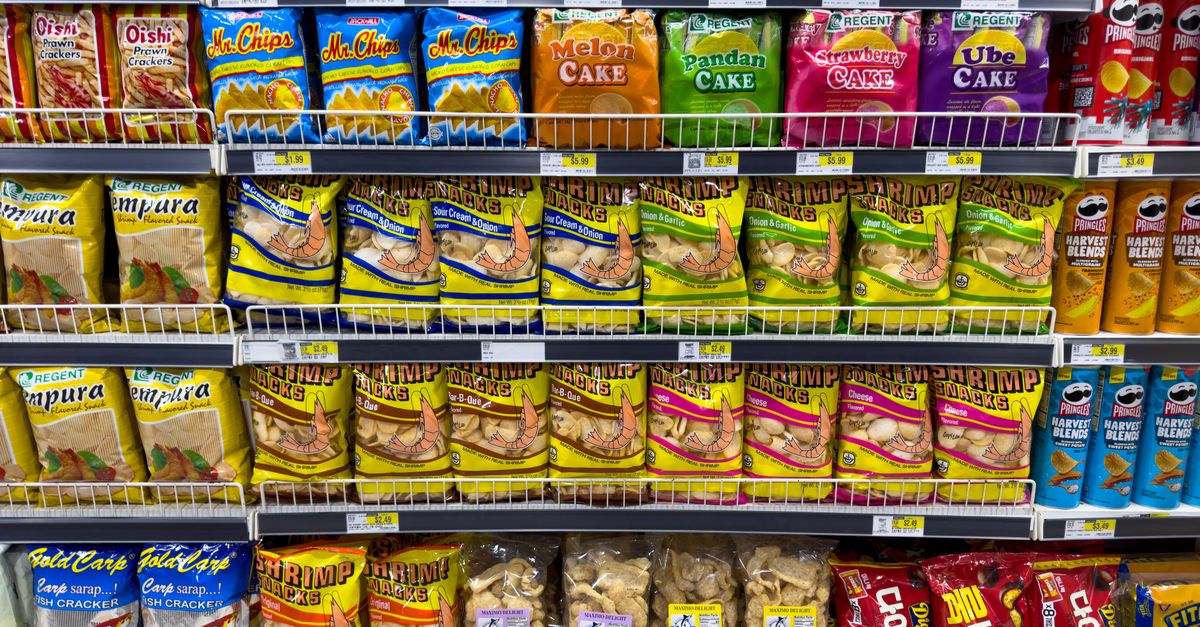
This is where most advice falls apart, because processing is a spectrum and the label gets applied to anything that arrives in a packet. Ultra-processed usually means an industrial formulation built from refined ingredients plus additives you would never keep in a kitchen: emulsifiers, protein isolates, modified starches, colourings, flavourings and sweeteners, combined for shelf life and for how good the product tastes rather than for what is in it.
Frozen peas, tinned beans, plain yoghurt, dried pasta, bagged salad and tinned tomatoes are processed. They are not ultra-processed, and there is no case for avoiding them. Several of them are the cheapest route to getting vegetables and pulses into a week.
The awkward cases matter more than the obvious ones. Supermarket bread, packaged wholegrain cereal and flavoured yoghurt often land in the ultra-processed category on their ingredient list while still supplying fibre, calcium or fortified vitamins. That is why avoid all ultra-processed food is a poor rule for most households and shift the balance is a better one. The same logic applies to the everyday staple comparisons people argue about, such as bread against roti.
| Instead of | Closer to minimally processed | What actually changes |
|---|---|---|
| A breakfast cereal bar | Oats with milk and fruit | More fibre, slower to eat, cheaper per serving |
| A ready meal lasagne | The same dish cooked at home | You control the salt, the fat and the portion |
| Flavoured yoghurt | Plain yoghurt with fruit | Much less added sugar, the same protein |
| Crisps or biscuits with tea | Nuts, fruit or roasted chana | Far harder to eat absent mindedly |
| Fruit juice or cola | Whole fruit and water | Fibre stays in, blood sugar rises more slowly |
How much of the diet actually has to change?
The people in these trials began with over half their calories coming from ultra-processed food, and the intervention replaced essentially all of it, with every meal supplied. That is not a realistic target for anyone shopping and cooking for a household, and the results do not demand it.
The sensible move is to start with what is eaten most often rather than what feels most sinful. Something eaten every morning has more influence over a month than a weekend takeaway does. The NHS Eatwell Guide is a reasonable frame for what a plate should hold, and the NHS target of 30 grams of fibre a day is a more useful thing to aim at than a processing score, because fibre rises naturally as the diet moves in the direction the trials point to.
What does this mean if you are trying to lose weight?
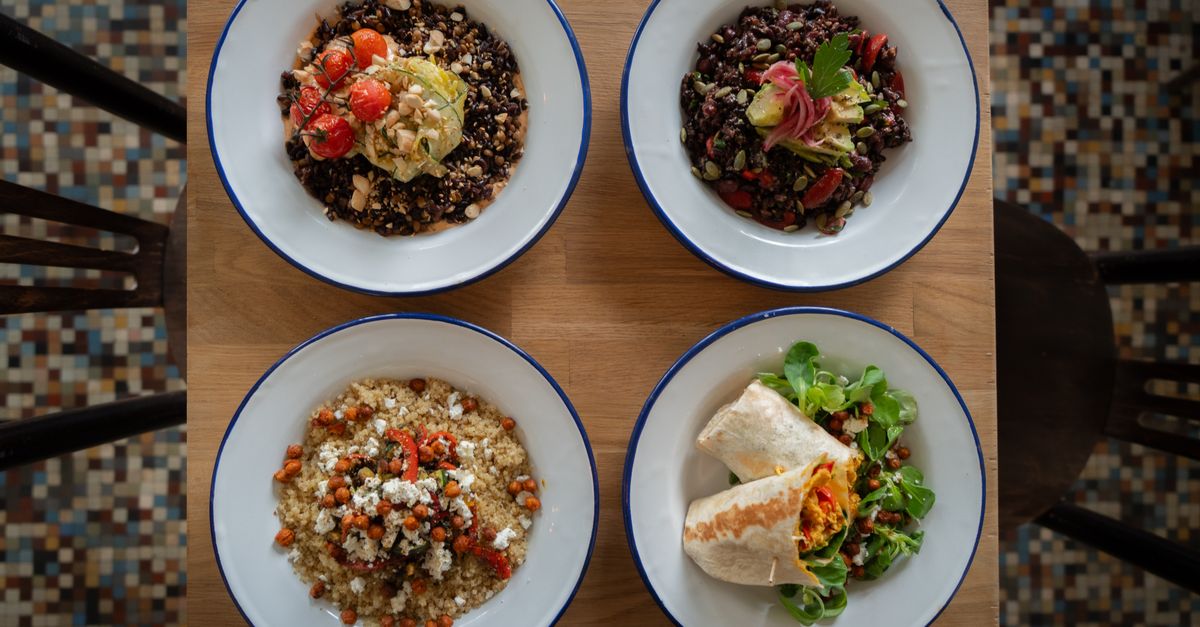
The honest summary is that food quality is the lever that makes a reduction in intake sustainable, not a way to opt out of one. Nobody in either trial escaped energy balance. They found it considerably easier to sit on the right side of it when the food in front of them was less engineered. If you want to see what sitting on the right side of it looks like as actual food, we work through a full day of calorie deficit meals and what it adds up to.
- Change what is in the house before changing what is on a plan, because availability drives intake more reliably than intention does.
- Put protein and fibre in every meal. Both raise fullness, and both are usually the first casualties of a heavily packaged diet.
- Cook the same few dishes properly rather than chasing variety. Repeatable beats optimal.
- Expect the difference to arrive as easier eating before it arrives on the scale.
- Treat any product promising a set amount of weight in a set number of days as a marketing claim rather than a finding.
The companion piece on anti inflammatory foods covers where that evidence is stronger than the headlines imply, and where it is thinner.
Frequently asked questions
Can you gain weight eating only whole foods?
Yes. Whole foods are hard to overeat, not impossible to overeat. Nuts, oils, cheese, ghee and dried fruit are all minimally processed and all dense in calories. Portions still count. The difference is that fullness tends to arrive sooner for the same number of calories.
Is a calorie from crisps the same as a calorie from dal?
As a unit of energy, yes. In practice no, because the two are eaten in very different quantities and digested at slightly different cost. The feeding trials suggest most of the gap comes through appetite rather than through the energy itself behaving differently.
Do I still need to count calories if I eat mostly unprocessed food?
Not necessarily. Plenty of people control intake well enough by changing what they eat rather than by tracking it. Counting is a useful diagnostic for a few weeks if progress stalls and you cannot work out why, but it is not a requirement.
Are all packaged foods bad?
No. Tinned beans, frozen vegetables, plain yoghurt, oats and dried pasta all arrive in packets and all are perfectly good. The category that behaved differently in the trials is industrially formulated products with additives, not food that simply comes in a wrapper.
How quickly does eating less processed food make a difference?
The published trials ran for two weeks and eight weeks and reported group averages, which says nothing dependable about any individual. Anyone watching their own response should think in weeks rather than days, and should expect appetite and energy to shift before the scale does.
Should I speak to a doctor before changing how I eat?
It is sensible if you take regular medication, are pregnant, have diabetes or kidney disease, or have a history of disordered eating. A GP or a registered dietitian can also tell you whether weight is the right thing to be working on at all.
This article is general information, not medical advice, and is not a substitute for care from a qualified healthcare professional. Speak to your doctor about your own situation.
Leave a Reply