Without enough protein, you’ll still train hard but recover slowly and build far less muscle — especially naturally, without anabolic steroids.
Protein provides the amino acids your body needs to repair and build muscle tissue after training. When you lift weights or do resistance training, you create tiny tears in muscle fibers. Protein helps rebuild those fibers stronger — this process is called muscle protein synthesis (MPS).
⚖️ How Much Protein You Actually Need
1️⃣ General Rule for Natural Lifters
- 1.6–2.2 grams of protein per kilogram of body weight per day
(or roughly 0.7–1.0 gram per pound)
👉 Example:
- If you weigh 70 kg (154 lbs) → aim for 110–150 grams of protein/day
- If you weigh 80 kg (176 lbs) → aim for 125–175 grams/day
This range optimizes muscle growth naturally and has been confirmed in multiple studies.
🏋️♂️ Training & Body Composition Matter
| Goal | Recommended Protein Intake |
|---|---|
| Muscle Gain (bulking) | 1.6–2.0 g/kg |
| Fat Loss (cutting) | 2.2–2.6 g/kg (to preserve lean mass) |
| Maintenance | 1.4–1.8 g/kg |
| Sedentary (no training) | 0.8–1.0 g/kg |
When you’re in a calorie deficit, you need more protein to protect muscle.
When you’re in a surplus, you can build effectively with slightly less.
🍳 Quality Matters Too
Focus on complete proteins (contain all 9 essential amino acids):
✅ Animal sources
- Eggs
- Chicken, turkey, fish
- Lean beef, mutton
- Dairy (Greek yogurt, paneer, whey protein)
✅ Plant sources
- Lentils, chickpeas, beans
- Quinoa, tofu, tempeh, edamame
- Pea, soy, or rice protein powder (if you’re vegetarian)
Tip: Combine plant proteins (like rice + beans) to make them complete.
🕒 When to Eat Protein
Timing isn’t everything — total daily intake matters most —
but for best results:
- Every 3–4 hours: Eat 25–35 g protein per meal
- Post-workout: Consume 25–40 g protein within 1 hour after training
(helps maximize muscle repair and recovery)
⚙️ Example Day (for 70 kg person aiming for 130 g protein)
| Meal | Food | Protein (g) |
|---|---|---|
| Breakfast | 3 eggs + oats + milk | 25 |
| Snack | Greek yogurt + nuts | 20 |
| Lunch | Chicken breast + rice + veggies | 35 |
| Snack | Whey protein shake | 25 |
| Dinner | Paneer + dal + quinoa | 25 |
| Total | — | 130 g |
🧩 Bonus: Other Key Factors
- Progressive overload → Train with gradually increasing resistance
- Sleep → 7–9 hours/night (muscles grow when you rest)
- Calorie surplus → Needed for actual growth
- Consistency → Takes months, not weeks
🔍 Quick Summary
| Factor | Ideal Range |
|---|---|
| Protein intake | 1.6–2.2 g/kg (0.7–1.0 g/lb) |
| Meal frequency | 3–5 meals/day |
| Post-workout protein | 25–40 g |
| Main sources | Eggs, meat, fish, paneer, legumes, whey |
| Goal | Support muscle repair, recovery & growth naturally |
Would you like me to give you a custom daily protein plan (with foods and timing) based on your weight, diet type (veg/non-veg), and workout schedule?
You said:
same article in depth and please add catchy headings
ChatGPT said:
Perfect 💪 — here’s a fully detailed, research-backed version of your article with catchy section headings, nutrition science, and natural bodybuilding focus (no steroids, no fluff).
🧩 How Much Protein Do You Really Need to Build Muscle Naturally (Without Drugs)?
Building muscle naturally takes patience, discipline, and — above all — the right protein strategy. Whether you lift weights or do resistance workouts, your progress depends less on fancy supplements and more on how much protein you eat, when you eat it, and where it comes from.
Let’s dive deep into the science of protein for drug-free, natural muscle building.
💥 Why Protein Is the Real “Anabolic” Fuel
When you train hard, your muscles undergo microscopic damage — tiny tears in the muscle fibers.
Protein supplies amino acids, the building blocks your body uses to repair and rebuild these fibers stronger than before. This process, called muscle protein synthesis (MPS), is the biological engine behind muscle growth.
If your protein intake is too low, your body can’t fully rebuild what training breaks down — meaning you won’t gain lean muscle, even with perfect workouts.
⚖️ The Science-Backed Protein Formula
🧠 The Golden Rule for Natural Lifters:
1.6–2.2 grams of protein per kilogram of body weight per day
(Or roughly 0.7–1.0 grams per pound)
This range is where your body maximizes muscle protein synthesis without wasting excess protein as energy.
✅ Example Calculations:
- 60 kg person: 95–130 g/day
- 70 kg person: 110–150 g/day
- 80 kg person: 125–175 g/day
- 90 kg person: 145–195 g/day
Anything above this range doesn’t magically increase muscle growth — it’s like adding more fuel to a full tank.
🧍♂️ Different Goals, Different Needs
| Goal | Protein Intake | Why |
|---|---|---|
| Muscle Gain (Bulking) | 1.6–2.0 g/kg | Supports growth in a calorie surplus |
| Fat Loss (Cutting) | 2.2–2.6 g/kg | Prevents muscle loss in deficit |
| Maintenance | 1.4–1.8 g/kg | Keeps metabolism and lean mass stable |
| Sedentary/No Training | 0.8–1.0 g/kg | Basic maintenance for health |
If you’re trying to lose fat and build lean muscle, staying at the higher end (2.0–2.2 g/kg) gives you an advantage — protein curbs hunger, preserves muscle, and boosts metabolism.
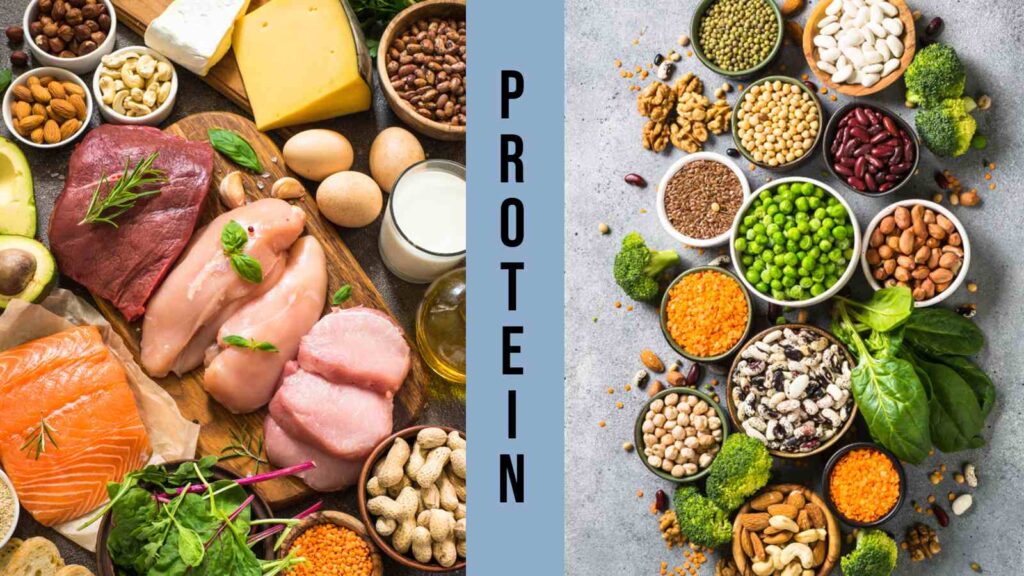
🍳 Protein Quality: Not All Sources Are Equal
🥩 High-Quality Animal Proteins
These are “complete proteins,” meaning they contain all 9 essential amino acids your body can’t make.
- Eggs (6–7 g per egg)
- Chicken breast (30 g per 100 g)
- Fish (25–30 g per 100 g)
- Lean red meat (25–28 g per 100 g)
- Milk, Greek yogurt, paneer (20–25 g per 100 g)
- Whey protein (20–25 g per scoop)
🌱 Plant-Based Proteins
Most plant proteins are “incomplete,” but combining them can make them complete.
- Lentils, chickpeas, kidney beans
- Soy, tofu, tempeh, edamame
- Pea or rice protein powder
- Quinoa (a rare complete plant protein)
💡 Tip: Mix and match — rice + beans, dal + roti, or quinoa + lentils give a full amino acid profile.
🕒 When to Eat Protein for Maximum Muscle Growth
Timing isn’t as critical as total intake, but strategic timing helps recovery and MPS peaks.
⏰ Ideal Protein Timing
- Every 3–4 hours: Eat 25–35 g protein per meal.
- Post-workout (within 1 hour): 25–40 g protein — preferably fast-digesting (whey or eggs).
- Before bed: Casein-rich food (like milk or paneer) to fuel overnight recovery.
🧬 Why? After training, your muscles are more sensitive to amino acids. Feeding them then accelerates repair and growth.
🧁 Sample Daily Protein Plan (for 70 kg Natural Lifter)
| Time | Meal | Protein (g) | Notes |
|---|---|---|---|
| 7:30 AM | 3 eggs + oats + milk | 30 | Kick-start metabolism |
| 10:30 AM | Greek yogurt + nuts | 20 | Mid-morning recovery |
| 1:00 PM | Chicken breast + rice + veggies | 35 | Core meal for muscle repair |
| 4:00 PM | Whey shake + banana | 25 | Post-workout recovery |
| 8:00 PM | Paneer + dal + roti | 30 | Slow-digesting bedtime protein |
| Total | — | 140 g | Perfect range for 70 kg |
💪 Vegetarian? Swap chicken with tofu, soy chunks, or double dal servings.
🧩 How Protein Works Inside Your Muscles
- Resistance training triggers MPS (muscle protein synthesis).
- Dietary protein provides amino acids to repair and grow muscle tissue.
- Leucine, one key amino acid (found in whey, eggs, soy), acts as a “trigger” for MPS.
- Natural lifters must balance protein and recovery — steroids artificially extend MPS, but natural growth depends on diet and sleep.
💤 Don’t Forget Sleep & Recovery
Muscles don’t grow during workouts — they grow when you rest.
- Aim for 7–9 hours of sleep per night
- Include rest days for recovery
- Stay hydrated — dehydration limits muscle repair
- Manage stress — cortisol can break down muscle proteins
🧠 Common Myths About Protein
❌ Myth 1: Too much protein harms kidneys.
✅ Truth: In healthy people, high-protein diets (up to 2.8 g/kg) show no kidney damage.
❌ Myth 2: You can only absorb 30 g per meal.
✅ Truth: Your body digests and uses all protein; it just takes time.
❌ Myth 3: You must take protein powder.
✅ Truth: Food first! Whey or plant powders are just convenient options.
🔥 Bottom Line: The Natural Muscle Builder’s Formula
| Principle | Optimal Strategy |
|---|---|
| Protein intake | 1.6–2.2 g/kg (0.7–1.0 g/lb) |
| Meal frequency | 3–5 meals/day |
| Post-workout | 25–40 g protein |
| Protein quality | Prioritize complete amino acid sources |
| Other essentials | Sleep, training intensity, calorie surplus |
🏁 Final Takeaway
Building muscle naturally is a slow but powerful process. Steroids may shortcut growth, but real strength and lean muscle come from consistent nutrition, training, and recovery.
So before you chase supplements or “magic formulas,” remember this rule:
💡 Muscles are built in the gym — but they’re fed in the kitchen.
Leave a Reply